Remembering Martin Luther King Jr.
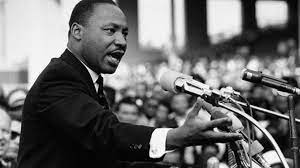
Martin Luther King jr.
By Jamelle Bouie
Opinion Columnist
The way most Americans talk about the Rev. Dr. Martin Luther King Jr., more than 50 years after his assassination, you might think that he gave exactly one speech — on Aug. 28, 1963, in Washington — and spoke exclusively about racial harmony and his oft-mentioned dream of integration.
But King, of course, is a more complicated figure than his sanctified image would suggest, and his body of work — his writings, speeches and interviews — is deeper and more wide-ranging than most Americans might appreciate. With our annual celebration of King’s life on the immediate horizon, I thought it would be worthwhile to look at one of his lesser-known, although by no means obscure, speeches, one in which he discusses the struggle for global peace.
King first delivered “A Christmas Sermon on Peace” on Christmas Eve, 1967, at Ebenezer Baptist Church, where he served as co-pastor. He begins with an observation and a prophetic warning:
This Christmas season finds us a rather bewildered human race. We have neither peace within nor peace without. Everywhere paralyzing fears harrow people by day and haunt them by night. Our world is sick with war; everywhere we see its ominous possibilities.
“If we don’t have good will toward men in this world,” he goes on to say, “we will destroy ourselves by misuse of our own instruments and our own power.”
King wants his congregants and listeners to experiment with nonviolence in arenas beyond the struggle for racial justice in the United States. But to do that, he says, one’s moral and ethical obligations must become ecumenical rather than sectional or parochial:
Our loyalties must transcend our race, our tribe, our class and our nation; and this means we must develop a world perspective. No individual can live alone; no nation can live alone, and as long as we try, the more we are going to have war in this world.
“We must either learn to live together as brothers,” he says, “or we are all going to perish together as fools.”
This sets up the main message of the sermon, which is that all life is interrelated and interconnected. “We are all caught in an inescapable network of mutuality, tied to a single garment of destiny,” King says. “Whatever affects one directly, affects all indirectly. We are made to live together because of the interrelated structure of reality.”
This isn’t an idle call for personal decency; it is a reminder that in pursuit of justice, how we relate to each other in our means will affect our eventual ends.
“We will never have peace in this world,” says King, “until men everywhere recognize that ends are not cut off from means, because the means represent the ideal in the making, and the end in process, and ultimately you can’t reach good ends through evil means, because the means represent the seed and the end represents the tree.”
As King continues his sermon, he moves to familiar ground. He emphasizes the necessity of love and compassion in the struggle for equality. “I’ve seen too much hate to want to hate, myself, and I’ve seen hate on the faces of too many sheriffs, too many white citizens’ councilors, and too many Klansman of the South to want to hate, myself; and every time I see it, I say to myself, hate is too great a burden to bear.”
He also comments on his 1963 speech at the March on Washington, reminding his audience that his famous dream was just that, a dream, and not a reality. “I tried to talk to the nation about a dream that I had, and I must confess to you today that not long after talking about that dream I started seeing it turn into a nightmare,” he says. “I watched that dream turn into a nightmare as I moved through the ghettos of the nation and saw my Black brothers and sisters perishing on a lonely island of poverty in the midst of a vast ocean of material prosperity, and saw the nation doing nothing to grapple with the Negroes’ problem of poverty.”
Nonetheless, King concludes his sermon by reaffirming the dream of his 1963 speech, that “every man will respect the dignity and worth of human personality,” that “the empty stomachs of Mississippi will be filled,” that “men will beat their swords into plowshares” and “justice will roll down like water.”
I think that this is among King’s most powerful sermons, both rhetorically and in the radical humanity of its message. And although he is speaking to questions of war and peace that may not be as acute to Americans in 2023 as they were to Americans in 1967, I think the larger message of obligation and interconnectedness is as relevant today as ever.
Our problems are global problems: a rising tide of chauvinism and authoritarianism; corruption that touches and distorts representative institutions around the world; and, of course, climate change. King’s observation that for any of us to do anything we must rely on the work and labor of someone halfway around the world — “You go into the kitchen to drink your coffee for the morning, and that’s poured into your cup by a South American” — is truer now than it was then, and demands that we recognize the fact, not for self-flagellation but for solidarity.
To connect to laborers around the world, to see that their struggles relate to ours and ours relate to theirs, is to begin to forge the “network of mutuality” that we will need to tackle our global problems as well as to confront the obstacles to our collective liberation from domination and hierarchy.
Most Americans do not think of Martin Luther King Jr. as a democratic theorist, but he is exactly that. And here, in this sermon, he makes clear that what a peaceful and equal society demands — that is, what a truly democratic society demands — is our mutual recognition of each other, here and everywhere.
Comments
No comments yet.
Leave a comment
Comments are reviewed before they appear. Your name is shown with your comment.