DSA NORTH STAR
  • Welcome
  • Principles
  • Join Us
  • Our Strategy
  • Blog
  • About
    • About North Star
    • About DSA
    • Contact
  • Welcome
  • Principles
  • Join Us
  • Our Strategy
  • Blog
  • About
    • About North Star
    • About DSA
    • Contact

Blog, page 10 of 25

Don’t Derail DSA’s Electoral Project

7/11/2023

An argument against a number of resolutions concerning electoral politics for the upcoming national convention.
BY SAM LEWIS - 2023 DSA NATIONAL CONVENTION DISCUSSION
 
Since DSA’s contemporary era started in 2016, the organization’s “big tent” approach has evolved to encompass a broad range of organizing tactics and strategies. Most energy in the organization has been at the local level, and chapters have pursued elections, protests, mutual aid, new publications and media strategies, labor organizing, tenant organizing, coalition building and legislative campaigns, all in pursuit of growing the socialist movement and building power. Much of DSA’s internal political development, including the evolution of its caucuses and factions, has been less about clear ideological differences than about which of these projects members see as most important.
If these different projects all exist within DSA’s big tent, conflict at the national level has largely not been about trying to halt or constrain any particular type of work, but about competition over prioritization and resources. While the organization has had worthwhile debates over our approaches to labor strategy or mutual aid, there has not to date been any effort to seriously clamp down on the diversity of tactics being deployed by DSA locals. The lone exception to this admirably humble and open-minded approach has been electoral politics. This year, delegates will be once again asked to consider at convention massive, disruptive changes to DSA’s electoral work that could undo much of what has been accomplished by DSA members since 2015, and halt the development of the electoral project within DSA.
In some ways, for those of us involved in electoral work the recurring focus on dictating DSA’s electoral approach from above is flattering. It amounts to an acknowledgement that electing socialists to office has a central role in keeping socialism relevant to the lives of everyday people in our present moment. DSA members and delegates are right to take our electoral strategy seriously, and should indeed be focused on how it unfolds.
The stunning success of the two Sanders campaigns, and the election of hundreds of locally and nationally endorsed DSA candidates to office, as well as hundreds more non-endorsed DSA members, are all part of an important development: for the first time in a century, democratic socialism is once again a meaningful current in US politics. DSA’s growth over the same period is intimately tied to this development, as are our prospects for advancing the socialist cause. We cannot take those developments for granted, or think that our leading role in shaping the program and politics of democratic socialist electoral politics is something to which we are entitled. This means delegates must read the proposals at convention carefully to understand their potential impacts, and reject those that could use noble sentiments to justify self-defeating ends.
Many of the proposals on offer at the 2023 convention would have precluded endorsing Bernie Sanders and most of the socialists who are currently advancing our cause in city councils, state houses, and Congress. Too many of the resolutions focus on elevating abstract principles, devoid of political context, as litmus tests that can be used to punish elected officials–for the most part with no argument for how such an approach will advance the cause of socialism. Many of the resolutions focus not on DSA’s endorsed candidates who we actually worked to put in office, but on any DSA member who holds elected office, setting up pointless conflicts and potential purges that are divorced from the source of our political power. Worst of all, some of these resolutions would pull DSA out of the fight against the growing right-wing authoritarian threat in the US, and have us cede leadership of the working-class opposition to liberals by allowing them to be the most effective opponents of right-wing attacks on abortion, trans lives, labor, and democratic rights. Building an elected bloc that can advance our politics and policies means DSA must keep building our electoral threat and keep building public support for our positions–discipline applied robotically by resolution, devoid of context, is a shortcut that is doomed to fail.
Abstract litmus tests don’t build our power
 
Read more. 
https://socialistforum.dsausa.org/issues/2023-dsa-national-convention-discussion/dont-dsocialistforum.dsausa.org/issues/2023-dsa-national-convention-discussion/dont-derail-dsas-electoral-project/ (opens in a new tab)

0 Comments on Don’t Derail DSA’s Electoral Project

Boston DSA cohort drives out Ma.State Assembly Representative Mike Connolly

7/10/2023

State Rep. Mike Connolly has decided to leave the Boston chapter of the Democratic Socialists of America, he announced Monday.
Connolly’s decision comes after Boston DSA introduced a motion last week to expel him. In the motion, a group charged Connolly with a variety of offenses, including endorsing Gov. Maura Healey and not participating in the organization’s endorsement process. Boston DSA would have voted on the expulsion July 23 at its monthly general meeting.
Rather than fighting these charges for much of July, a particularly busy time for the Massachusetts General Court, Connolly said, he will devote his energy toward serving his constituents in Cambridge and Somerville. He has been a reliably progressive candidate and legislator, pushing for electoral reform, criminal justice reform and affordable housing, including rent control and the new notion of “social housing.”
“I need to focus on continuing to represent our community on Beacon Hill and delivering for my constituents,” he said.
The charges against him were largely incoherent, Connolly said, making an example of the first charge accusing him of not engaging with DSA’s already opaque endorsement process: The chapter does not have a bylaw requiring members in elected office to seek the endorsement of the organization.
The DSA motion to expel him cited a 2021 chapter bylaw for endorsed officials, using it to condemn actions Connolly took in 2020.
“As you recall from your fifth-grade social studies class, that’s what they call an ex post facto,” Connolly said.
The motion also accused Connolly of endorsing public officials who “are fundamentally opposed to socialist reforms.” These officials include Healey, State House speaker Ron Mariano and Somerville city councilor Matthew McLaughlin.
Connolly said the was disappointed to see that some in Boston DSA do not understand the necessity of cooperation. “For all of us who want to transform society, we need to understand that it’s going to take building broader coalitions, and it’s going to take working with and persuading those in positions of state leadership,” he said.

In-fight draws national attention

The clash drew national media attention, with Ryan Grim at The Intercept noting “a sizable portion” of local progressives supporting Connolly publicly.
Left-leaning local journalist Jason Pramas was critical of the move in an essay published in Cambridge Day, saying the attempt at ideological purity just divided and diminished an already dwindling movement.
“The tiny faction of the shrinking chapter of the smallish group in question is trying to purge Connolly as if it is somehow in leadership of not just a political party, but a ruling political party – in some kind of Soviet-style communist regime that is the antithesis of the beloved community DSA is supposed to be trying to build in what their members believe will be the better socialist and democratic future to come,” Pramas said.
Politico called Connolly’s departure “a setback for the Boston-area democratic socialists who, after years of making gains on local city councils, are now watching their state legislative ranks dwindle from two representatives to one.” Its remaining representative is Somerville’s Erika Uyterhoeven.
 
https://www.cambridgeday.com/2023/07/10/state-rep-connolly-walks-away-from-the-dsa-organization-criticizing-political-compromises/


https://www.cambridgeday.com/2023/07/10/state-rep-connolly-walks-away-from-the-dsa-organization-criticizing-political-compromises/


3 Comments on Boston DSA cohort drives out Ma.State Assembly Representative Mike Connolly

U.S. Elected Socialists Just Held Their Largest Gathering in Nearly 40 Years

6/30/2023

A recent conference brought together democratic socialist elected officials from across the United States—including Bernie Sanders—to collaborate and strategize on advancing progressive public policy.
DAVID DUHALDE  JUNE 29, 2023
Group photo of democratic socialist elected officials raising their fists on a lawn
Democratic socialist conference attendees outside Gallaudet University in Washington, DC. on the weekend of June 16, 2023. (POLINA GODZ / JACOBIN)
Over the weekend of June 16, 80 democratic socialist elected officials and their aides from across the country came together for the first U.S. socialist policy conference since the 1980s. The event, titled “How We Win: The Democratic Socialist Policy Agenda in Office,” was held at the Gallaudet University in Washington, DC and was hosted by Jacobin, The Nation and the Democratic Socialists of America (DSA) Fund, an educational sister 501©3 nonprofit of national DSA that is focused on pushing progressive policy, preserving socialist history and supporting left-wing activism.
 
Read more: https://inthesetimes.com/article/democratic-socialist-dsa-conference-bernie-sanders-cori-bush


https://www.dsausa.org/democratic-left/dsa-fund-brings-together-socialists-in-office-for-d-c-conference/

https://prospect.org/politics/2023-06-21-socialist-emergence-democratic-tradition/


More info:  

https://prospect.org/politics/2023-06-21-socialist-emergence-democratic-tradition/


0 Comments on U.S. Elected Socialists Just Held Their Largest Gathering in Nearly 40 Years

Cornel West: The primaries call

6/26/2023

BY TOM GALLAGHER
“The unfortunate fact is that a third party campaign in America just won’t add up”
 
In announcing that “We’re talking about empowering those who have been pushed to the margins because neither political party wants to tell the truth about Wall Street, about Ukraine, about the Pentagon, about Big Tech,” West expresses a quite understandable “plague on both your houses” perspective of the sort that generally underlies third party efforts – and not just in the U.S. 
But what may be a viable political option in one country might not be one in another; it all depends upon the rules and laws that govern politics in the respective nations. Nothing illustrates the importance of the differences better than the contrasting experiences of the aforementioned Greens, who find themselves continuously embroiled in defending against charges of facilitating Republican presidencies, and that of their German namesake, arguably the foreign “third party” most familiar to Americans, a party that has successfully entered governments – on both the state and national level – on numerous occasions.  Put in the most basic terms, we could say that the difference lies in the fact that where Germans operate within an “additive” political system, we Americans live in a “subtractive” one.
…..
In our case, on the other hand, should West persist in running a third party presidential campaign, his potential voters will have no such option. Whether West actually considers a second Biden term as bad an outcome as a second for Trump – or a first for DeSantis – I can’t say, but I feel fairly certain that most voters open to his ideas do not. However, under our plurality-winner-take-all system of apportioning a state’s share of the Electoral College, after the voters have cast their votes for different parties there is no way that they can be recombined to block a Trump return. And while a third-party West vote might contribute to an anti-Republican majority in a particular state, it could also contribute to creating a Trump (or DeSantis) plurality in that same time. The system is in that sense “subtractive,” in that a voter who considers Trump (or DeSantis) the worst possible outcome but opts for a third-party subtracts a vote from the only anti-Trump vote count that matters in the end – that of the largest non-Republican party, which will be the Democrats, however welcome or unwelcome that may be to said voter.
Read more.
https://stansburyforum.com/2023/06/22/cornel-west-the-primaries-call


0 Comments on Cornel West: The primaries call

Remembering Gus Newport - DSA Activist

6/22/2023

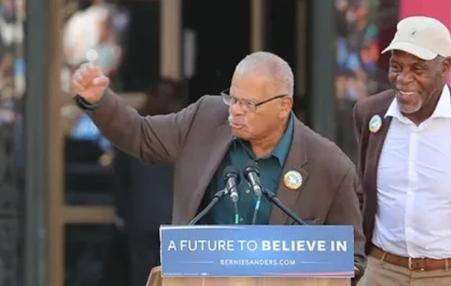
Gus Newport speaking at a Bernie Sanders rally podium reading “A future to believe in”

The former Berkeley mayor's record of accomplishments from civil rights activism to groundbreakin g political initiatives to far-sighted community economic development programs to global solidarity and elder statesman leadership could fill volumes.


Gus Newport, left, and Danny Glover speaking at a 2016 rally for Sen. Bernie Sanders in Oakland. , (Photo: National Nurses United/flickr)

 
Former Berkeley, California Mayor Gus Newport, a titan of progressive politics in the late 20th Century, social justice champion who worked with Malcolm X, and a lifelong humanitarian and internationalist, died June 17 in San Francisco. He was 88.
Gus was the embodiment of the adage of a life well lived. His record of accomplishments from civil rights activism to groundbreaking political initiatives to far-sighted community economic development programs to global solidarity and elder statesman leadership could fill volumes.
Gus Newport, as Mayor of Berkeley, 1979–1986
 
 
“The beauty of Gus,” said actor Danny Glover in an interview (opens in a new tab), “is that I trust him to elevate our story. When you spend time with someone with Gus’s history and character and listen to his stories, you are changed. I hope that a little of my story could resonate with others the way Gus’s stories have resonated with me and so many around the world.”
As a young activist in 1962, leading the Monroe County Nonpartisan League, the largest civil rights group in his hometown of Rochester, NY, Gus shepherded the first successful police brutality case in federal court after the beating of a Black gas station attendant Rufus Fairwell who would win a financial settlement (opens in a new tab) from the city.

Daisy Bates, who led the NAACP campaign to integrate Little Rock’s Central High School in the late 1950s and now organizing in Rochester for the NAACP, introduced him to Malcolm X by phone. Gus and Malcolm worked to defend nine Black Muslims (opens in a new tab) assaulted and arrested in a police raid on a Black Muslim Mosque in Rochester during a worship service.
When Malcolm flew into Rochester, and landed on the tarmac on a cold February day, Gus was waiting in the airport surrounded “by a lot of white men in felt hats and white shirts and ties. (opens in a new tab) When Malcolm walked in and asked, ‘who is Gus Newport.’ I raised my hand and said, “I am.” He said, “Young blood, you got the best-tapped telephone in America. This is all FBI around you.”
He would go on to count Malcolm and Harlem Congress member Adam Clayton Powell as mentors. He assisted Malcolm in founding his Organization of Afro American Unity (OAAU).
In February 1965, after Malcolm’s house was firebombed, Malcolm asked him to join him for a speech in Rochester about his situation. Returning to New York, “when we landed at LaGuardia (opens in a new tab), we were met by the chief of police of New York and the fire marshal. They accused him of firebombing his own home.” Four days later Malcolm was assassinated. Later Gus would help Malcolm’s widow Betty Shabazz with burial and financial support, including with a fundraiser for the family headlined by Dizzy Gillespie, Miles Davis, and Max Roach at the home of Sidney Poitier.
Malcolm, Gus would later say (opens in a new tab), was “the greatest person I think I ever knew,” a “great teacher” and  (opens in a new tab)“one of the dearest friends I ever had.”

Gus would move west after leaving a Department of Labor stint assigned to Puerto Rico and the Virgin Islands, due to a distaste for the politics of President Nixon. A cousin helped him get work  (opens in a new tab)for the city of Berkeley, developing youth employment service programs and as a senior analyst in the City Manager’s office and Parks and Recreation department.
In 1979, Gus was elected Berkeley Mayor, with the backing of the progressive Berkeley Citizens Action coalition on a platform of community economic control, serving two terms until 1986. “I never aspired to run for mayor,” he would relate (opens in a new tab). “I was talked into it by John George, the first African American elected to the Alameda County Board of Supervisors, and Congressman Ron Dellums. Danny Glover (who met Gus while interning with the city of Berkeley) and Harry Belafonte (who he had known in New York) helped with my campaigns.”
More tributes.
Excellent article about Gus “in it for the long haul” (opens in a new tab) published in 2020.
Tribute to Gus in a Berkeley, California publication (opens in a new tab). Gus was the mayor of Berkeley from 1979-1986 and protected housing rights and established commercial rent control, was the first mayor to establish domestic partnership benefits, compared policy notes with contemporaries like Harold Washington and Bernie Sanders, and divested city funds from all companies that supported apartheid South Africa.
Gus in conversation with Danny Glover about the Beloved Community (opens in a new tab), moderated by Rev. Dr. Dorsey Odell Blake, recorded February 13, 2023.

 
Gus was an active leader in DSA. An Honorary Co-Chair.   Read much more. 

Common Dreams. 

1 Comment on Remembering Gus Newport - DSA Activist

Is DSA Really in Crisis?

6/16/2023

DSA is not in crisis, but we are in a new political moment. Will we keep building together or head back to the political wilderness?
By Emmett McKenna

https://socialistforum.dsausa.org/issues/spring-summer-2023/is-dsa-really-in-crisis/ (opens in a new tab)

0 Comments on Is DSA Really in Crisis?

Toward a People-Powered Democracy

6/11/2023

James Mumm
And Scot Nakagawa
https://convergencemag.com/articles/toward-a-people-powered-democracy/

Concern about the mounting MAGA threat is percolating through left and progressive movements, and conversations and convenings are brewing. One such is the 22nd Century Conference: Forging a People-Powered Democracy, set to take place in Minneapolis, MN on July 6 – 9, 2023. Here, the conference organizers reflect on the strategies, alliances, stories and political imagination needed “to turn back the authoritarian tide and create a resilient and inclusive multiracial, feminist, and pluralistic democracy.” This is the latest in the Convergence “Organizing Against Autocracy” series.
 
The struggle between authoritarian minority rule––largely by white Christian nationalists with a reactionary patriarchal, xenophobic, and racist agenda––and multiracial majorities committed to a pluralistic democracy is playing out at every level in the United States from school boards to statehouses, the US House of Representatives and the Supreme Court of the United States.
The US is two years away from the possibility of federal autocracy if the MAGA-controlled Republican Party succeeds in electing the next president and taking control of the US Senate. Such an outcome would consolidate the last 60 years of authoritarian gains that have already eroded majority rule, and lead to sweeping structural changes cementing minority rule for years to come.
The questions at the heart of this struggle between authoritarian minorities and multiracial majorities are fourfold: who is in, and who is out of, our democracy and economy; who deserves dignity; and who gets to decide? In a pluralistic democracy these questions are decided in free and fair elections, where majorities decide policy and minority opinions are protected by the courts without bias and the threats of state violence or extrajudicial violence.
Issues addressed: 
  1. How can we build a shared identity as the multiracial pluralistic majority and a pro-democracy movement across a wide spectrum of constituencies, organizations, and movements?
  2. What does it take to construct majority coalitions for people-powered democracy at this point in time, knowing that anti-racist majoritarianism has rarely been achieved or proven durable in the United States?
  3. How do we develop campaigns that achieve important goals and are also designed explicitly to divide the right and recruit communities and constituencies to pro-democracy majority coalitions? In other words, how can our campaigns animate the base, persuade the middle, and alienate our enemies (those committed to the ideologies of the authoritarian right)?
 
Read more;
https://convergencemag.com/articles/toward-a-people-powered-democracy/
 

0 Comments on Toward a People-Powered Democracy

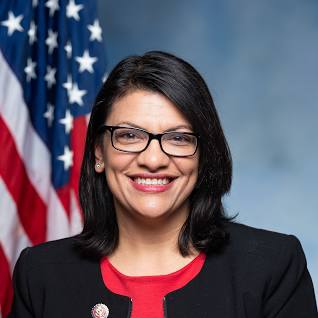
Congressperson Rashida Tlaib On Actions of Congressperson Jamaal Bowman

6/6/2023

Portrait of Rashida Tlaib in front of an American flag

 
It’s meaningful to me when my colleagues in Congress take a stand for Palestinian rights, because it requires a lot of political courage in the face of attacks from those who want to maintain the unjust status quo. 
My colleague Rep. Jamaal Bowman has really stepped up, including by leading a recent letter calling on President Biden and the State Department to ensure that U.S. taxpayer dollars don’t fund human rights abuses by the Israeli government against the Palestinian people.
 
While visiting the West Bank in 2021, Jamaal met with my sity (grandmother) and was then blocked at a military checkpoint near her house.
He experienced in-person what it’s like for Palestinians to live in fear under constant military presence. And he connects it to his own experience as a Black man in the U.S. growing up with intimidating police forces targeting Black communities. Black people and Palestinians are criminalized just for existing.
Our struggles for justice and liberation are interconnected, from the U.S. to Palestine and beyond. We all deserve human dignity and freedom.
 
Human rights organizations around the world have recognized what Palestinians have said for decades: the Israeli government is oppressing the Palestinian people and systematically denying equal rights to Palestinians—in what constitutes apartheid and ethnic cleansing.
And we know that the U.S. is complicit, sending billions of dollars each year to the Israeli military and silencing criticism of Israeli policies. That’s why we need to keep building power in the U.S. Congress to advocate for change. Let’s start by supporting members of Congress like Jamaal Bowman, who are taking the lead despite being targeted for speaking up.
Thank you so much.
In solidarity,
Rashida 
June, 2023. 
 
 Please note; At the request of a reader, the following notice has been added. The above post was from fund raising letter from the Congresswoman.  We did not include the asking for funds because we do not wish to engage in the requirements of of finance regulations for funding.  We are not a 501 c3.
We believe the above use is appropriate.  And, we find that the above qualifies as Fair Use as described in law and the regulations of our blog.
10. Fair Use Guidelines for Quoting Other Articles and Posts
If you are ever unsure about whether you are on weak ground regarding fair use
guidelines and quoting others’ writing, you should check out the Electronic Frontier
Foundation’s discussion of copyright laws. The EFF writes:
 
Short quotations will usually be fair use, not copyright infringement … if you are commenting on or criticizing an item someone else has posted, you have a fair use right to quote. The law favors ‘transformative’ uses — commentary, either praise or criticism, is better than straight copying — but courts have said that even putting a piece of an existing work into a new context (such as a thumbnail in an image search engine) counts as ‘transformative.’

We have transformed the post by eliminating the fundraising,

 
The Electronic Frontier Foundation also has a broader legal guide for bloggers posted on its site


0 Comments on Congressperson Rashida Tlaib On Actions of Congressperson Jamaal Bowman

Why Democrats Rescued the Deal

6/2/2023

More Democrats than Republicans voted for the Biden-McCarthy deal. Here’s why.
 
By Harold Meyerson 
American Prospect
 
JUNE 1, 2023 - There are nine more Republicans in the House of Representatives than there are Democrats, but last night, there were 16 more Democrats who voted for the debt ceiling deal than there were Republicans. Seventy-eight percent of House Democrats voted to pass it, while just 68 percent of the Republicans did.
 
Of the many ways to look at this disparity, let’s start with this one: The deal did far less than the Democrats had feared, while, correspondingly, it did far less than the Republicans had hoped.
 
Perhaps the more historically illuminating contrast, though, is that between where the Democrats were at during the last debt ceiling deal, in 2011, and where they’re at today. The 2011 deal was an economic disaster that Democrats joined Republicans in abetting. Despite unemployment having only inched down from its double-digit 2009 apogee, the Obama administration had become committed to debt reduction, and came to agreement with Republicans on a deal that mandated cutting close to a trillion dollars over the next ten years. The deal ensured that the recovery from the 2008 financial crash would proceed by dribs and drabs, condemning millennials, in particular, to stumble through the decade with far less purchasing power and life options than their elders had when they were young.
 
And yet, it was the political pushback from the young that prompted the Democrats’ escape from the straitjacket of fiscal orthodoxy. It provided a forum for Bernie Sanders and Elizabeth Warren to call for new versions of New Deal economics, a call to which Biden and most congressional Democrats responded by backing the neo-Rooseveltian Build Back Better bill and, when they couldn’t pass that, at least passing massive public investments in green energy production and infrastructure construction.
 
Which is why Biden’s approach to the Republicans’ demands was nothing like Obama’s. Instead of a decade of cuts, the current deal goes for just two years, at a vastly smaller dollar amount. That creates the possibility that should the Democrats hold the White House and Senate in 2024 and win back the House, they can (and surely will) return to the still-to-be-enacted agenda of 2021, on which they will be campaigning next year as well (with the signal addition of national legislation re-legalizing abortion).
 
Biden and the Dems will still have to put the concessions made in yesterday’s deal into a broader context if they’re to hold the party’s progressive base. The Pipeline Payoff to Joe Manchin can be justified to those who pay attention to such things as a key to helping the Democrats hold on to their Senate majority in the next election, but to the majority of voters who aren’t political junkies, that will fall flat. A more effective case is to acknowledge it was a noxious deal, but when put against Biden’s overall climate-related record—in particular, the new spending on green energy—it is a fetid but small potato. Unfortunately, Biden has little if any rhetorical capacity to articulate how transformative his achievements have been, which just makes surrenders and shortcomings like the Manchin deal stand out all the more.
 
My sense is that all the Democrats who voted last night—the Againsts as well as the Fors—felt some level of relief that the concessions were markedly short of what they could have been, and that the default was being avoided. My sense is also that all the Republicans who voted last night felt a corresponding frustration that they had labored so loudly and brought forth such a mouse. That may begin to explain why there were fewer Republican yes votes than Democratic ones last night; the other reasons—gerrymandered districts, right-wing media, white straight male Christian nationalist panic, [your suggestion here]—await further elucidation. ...Read More (opens in a new tab)
 
https://prospect.org/blogs-and-newsletters/tap/2023-06-01-why-democrats-rescued-debt-ceiling-deal/
 

0 Comments on Why Democrats Rescued the Deal

‘What if the attack on the U.S. Capitol succeeded?’

5/29/2023

What Could’ve Happened Here
A high profile new graphic novel asks the question, ‘What if the attack on the U.S. Capitol succeeded?’
BY PAUL BUHLEMAY 26, 2023
 
 The first installment (opens in a new tab) of a four-issue, foundation-funded, high-profile comic series bears the subtitle, “What if the attack on the U.S. Capitol succeeded?”
That pretty much capsulizes the storyline. I am a little surprised, and not just as a nonfiction comics editor and critic, that so little discussion of that dark possibility seems to still linger in the air. Perhaps we all breathed such a deep sigh of relief when the January 6, 2021 attack on the U.S. Capitol failed that we chose not to think in those terms. The pursuit of criminal indictments (opens in a new tab) against at least some of the perpetrators seems to have taken up all the oxygen.
In 1/6: The Graphic Novel, we have a well-paced narrative in the superhero or noir styles of mainstream comic books today, which makes sense, given the graphic novel’s creators—Alan Jenkins, Gan Golan, and Will Rosado. That it comes with publicity urging the reader to check out additional resources available in a study and action guide underlines the seriousness of the project, but it also points to a certain limitation: the absence of anything like humor or irony. The Adventures of Unemployed Man (opens in a new tab) (2012), by Golan and Erich Origen, a projection of superheroes out of work, had an abundance of both and proved str
See it here. 
https://progressive.org/magazine/what-couldve-happened-here-buhle/ (opens in a new tab)


0 Comments on ‘What if the attack on the U.S. Capitol succeeded?’

Freedom Advisory Against Florida Fascism

5/24/2023

MAY 24, 2023
Today, the Democratic Socialists of America is issuing a freedom advisory for the people of Florida in opposition to the fascist actions of its politicians. We recognize the travel advisory issued by Florida Senator Rick Scott as part of a continued pattern of red-baiting and attacks against Black organizations like the NAACP in our country’s history. Scott’s “socialist travel advisory” is a mocking response to the NAACP rightfully warning people about the openly hostile laws created and upheld by Florida Senator Rick Scott and Governor Ron DeSantis that target African Americans, people of color, and LGBTQ+ individuals. 
While we disagree that the Biden administration is attempting to erase capitalism, the Democratic Socialists of America openly acknowledge our goal of replacing capitalism with a more just and democratic social and economic system. The billionaire class cuts essential social services such as education and social security, demands workers work harder for less pay, pollutes our air and water and drives climate change, promotes racist police violence, and uses a culture of hyper-individualism that puts us against each other and alienates us from the kinds of collective, democratic organizations necessary to challenge those in power and win the rights we all deserve. Reactionaries like Senator Scott have always opposed democratic socialists like Dr. Martin Luther King Jr, who fought for the civil rights and dignity of Black people, poor people, and workers of all races. 
Under the authority of elected officials like Senator Scott and Governor DeSantis, Florida has:
  • Half of their residents living close to or below the poverty line
  • Made it harder for immigrants to provide for their families by criminalizing nearly 5 million people
  • Worked to silence teachers and unions advocating for better pay and better working conditions
  • Banned people from accessing abortion and related care 
  • The most disenfranchised citizens in the United States, with 1.5 million disenfranchised voters
  • Banned minors from gender affirming care, drag shows, and discussions of LGBTQ+ issues and resources in schools
  • One of the highest rates of mass shootings 
  • Delayed evacuation during hurricane devastation that resulted in deaths and damages
DSA members in Florida and across the country vow to fight against fascism while we still can. We are unapologetically socialist because we share a vision of a society where we have democracy in every aspect of our lives: in our workplaces, in our economy, at the ballot box, and in our communities. Working people in Florida deserve better than Scott and DeSantis’ dangerous threats.
We know that capitalism is inherently opposed to freedom. A society where the vast majority of our lives is spent working for someone else’s profit is not free. A society where a person can only have food, housing, or healthcare if it is profitable for someone else to provide it to them is not free. A society where humans are powerless to fight an ongoing mass extinction and where our movement across land is criminalized is not free. 

They fear us because of the future we promise. Join us in the fight for our lives and against the fascism that promises to destroy everything we hold dear. Another world is possible.
 

0 Comments on Freedom Advisory Against Florida Fascism

Labor Power and Strategyby John Womack Jr., ed. by Peter Olney and Glenn Perušek

5/22/2023

Review by Leo Casey
 Excerpt. 
Related flaws Strategic Thinking, Past and Present
Womack’s theory is not without insights. It is important to think strategically about labor organizing, and to prioritize organizing work and drives that can have the greatest impact. Disruption can create leverage for working people, and disruption on a mass scale, affecting various sectors of the economy, can yield greater leverage. Serious thought should be given on how to amass and deploy leverage won through disruptive strikes and job actions.

None of this is entirely new or foreign to the U.S. labor movement. There have been numerous organizing initiatives over the last two decades—undertaken by Change to Win, the Teamsters, UNITE HERE, the Communications Workers of America, the International Longshore and Warehouse Union, the United Food and Commercial Workers, the Retail, Wholesale and Department Store Union, and more recently, independent unions—that focused on the logistics sectors: transportation, distribution, and communications. What is missing is not a theory of why it is important to organize Amazon, Apple, Google, Microsoft, and Walmart, but a critical inventory of these efforts—what successes they have had, where and why they have fallen short, and what could be done to move them forward.
     Similarly, the most forward-looking contemporary union organizing employs strategic planning and campaigns rooted in the insights found in Labor Power and Strategy, with an eye to identifying and exploiting the vulnerabilities of recalcitrant employers. Disruptive strikes and job actions are key points of exposure for an employer. But they are by no means the only potential weaknesses that unions can target. Strategic campaigns build community support, employ political leverage, attack brand reputations, generate consumer boycotts, organize shareholder revolts against management, and use social media pressure. The more of these tactics that can be brought to bear, and the more they work in tandem, the greater the pressure on the employer, and the more likely a campaign will end in victory.
      One of the responses in Labor Power and Strategy, “Thirty-Two Thousand Hogs and Not a Drop to Drink” by Gene Bruskin, provides a brief account of one successful strategic campaign in this vein, undertaken by the UFCW and workers in the world’s largest slaughterhouse against the meat processing and packing corporation Smithfield. After many years of unsuccessful efforts to win union recognition against an employer that flouted labor law, the UFCW organized a strategic campaign using many of the tactics listed above, which led to an employer agreement to halt its anti-union actions and victory. This example highlights the limitations of Womack’s singular focus on creating leverage through disruptions of production: strategic campaigns are designed to employ many different types of leverage against employers, most of which are external to the production in Womack’s theory are revealed when it is applied to labor history, including the two historic strikes that demarcate the period of U.S. labor strength. The 1936–37 sit-down strike targeted factories that were indispensable for the manufacture of cars across General Motors’ operations. Womack discusses at some length the UAW’s organization of the strike—especially its decision to focus on the factory in Flint—as an illustration of how his theory works in practice.
 Read more in Dissent. Spring, 2023. 
 
Leo Casey is a veteran teacher union leader and the author of The Teacher Insurgency: A Strategic and Organizing Perspective (opens in a new tab).
 
Published in Dissent.  Spring. 2023. 
 

0 Comments on Labor Power and Strategyby John Womack Jr., ed. by Peter Olney and Glenn Perušek

Resolutions on DSA Governance Structure

5/16/2023


We, the North Star Steering committee are asked to discuss ( and potentially endorse) the convention resolutions transforming the size of the NPC, and of the Steering Committee of the NPC.
 
We share this excerpt for your consideration and interest. 
 
The Resolution is here. ( In two parts)
 
Proposal Compendium
The initial 2023 Convention Compendium (opens in a new tab) is now available. DSA members can now review all of the Convention proposals in the Compendium and submit Amendments to proposals. Amendments are due June 28, 2023.
 
 
Proposed amendment. 
Article VIII. National Political Committee 
Section 1. 
The National Political Committee (NPC) shall be the collective leadership and the highest decision-making body of the organization between meetings of the Convention. It shall meet at least four times a year. 
Section 2. 
The members of the NPC shall be one three representatives of the Youth Section and 1648 delegates elected at the national convention. Of the elected members, no more than eight twenty-five shall be men and at least fiveseventeen shall be racial or national minority members of DSA. In the event that these minority positions are not filled at the Convention, the position(s) shall be filled by the NPC, except that only minority members of DSA may be elected to fill such vacancies. In case of other such vacancies, except a vacancy of the Youth Section Representative, the NPC shall appoint a member of the organization in good standing to serve until the next Convention. No person shall serve simultaneously on the National Staff and the NPC. 
Section 3. 
The National Political Committee shall elect a Steering Committee (SC) and may remove members of the SC or elect a new SC for any reason. It shall be constituted as follows: 

It shall be composed of the five thirteen people who shall be elected by the NPC from among its at-large members, and the including at least one Youth Section representative to the NPC. It shall include no more than three seven men and at least three people one person of color. The National Director and the Youth Section Organizer shall be ex officio members, without vote, of the SC. 
The SC shall be responsible for decision-making between meetings of the NPC and for the supervision of all offices and staff of the organization. It shall be responsible for planning meetings and agendas for the NPC and for coordinating the work of the committees of the NPC. 
A quorum of the SC shall be half of its voting members. It shall meet at least bimonthly, in person or by conference call. 
In person meetings of the SC shall be open to all members of the organization. However, the SC may hold executive sessions if 60% of its members vote to do so in order to discuss personnel and related financial matter 
Section 4. 
The at-large members of the NPC shall act as liaisons to the Commissions and the Regional, State and Local organizations as prescribed by the Bylaws. The NPC shall have responsibility for staff, finances, publications, and education. 
Section 5. 
A quorum of the NPC shall be more than half of its members. The NPC shall assume office immediately upon its election to serve a two-year term or until its successors are elected. 
Section 6. 
Meetings of the NPC shall be open to all members of the organization. However, the NPC may hold executive sessions if 60% of its members vote to do so in order to discuss personnel and related financial matters. 
Section 7. 
An NPC member may be removed for malfeasance or nonfeasance by a two-thirds vote of the NPC, with nonfeasance defined to include unexcused absences from two or more consecutive meetings. 
Section 8. 
The NPC SC shall be responsible for hiring and discharging staff as necessary 
no more than three men and at least one person of color. The National Director and the Youth Section Organizer shall be ex officio members, without vote, of the SC. 
The SC shall be responsible for decision-making between meetings of the NPC and for the supervision of all offices and staff of the organization. It shall be responsible for planning meetings and agendas for the NPC and for coordinating the work of the committees of the NPC. 
A quorum of the SC shall be half of its voting members. It shall meet at least bimonthly, in person or by conference call. 
In person meetings of the SC shall be open to all members of the organization. However, the SC may hold executive sessions if 60% of its members vote to do so in order to discuss personnel and related financial matters. 
The meetings of the SC shall be chaired by one of the National Co-Chairs of the DSA. 
Democratize DSA 2023 
Authors: Sam L., New York City & Renée P., East Bay 
Companion Constitution and Bylaws Change 
Whereas, the proposed “Democratize DSA” constitutional change would, if it passes, increase the size of the NPC from 17 to 51, which would create 34 new vacancies upon the adjournment of the 2023 DSA Convention, 
Whereas, in the event of NPC vacancies, DSAʼs constitution provides that the NPC should “appoint . . . member[s] of the organization in good standing to serve until the next Convention,” 
Whereas, the 2023-2025 NPC will be tasked by the DSA constitution with filling the vacancies that would be created by the passage of the “Democratize DSA” constitutional change if it is enacted by this Convention, 
Whereas, the purpose of the “Democratize DSA” constitutional change is to make DSAʼs national leadership more democratic, deliberative, accountable, and representative of DSAʼs membership, which purposes will only be served if the expanded NPC is elected in the same way as the NPC members elected at this convention; 
Therefore, be it resolved, in the event of the passage of the “Democratize DSA” constitutional change, within 90 days of the adjournment of the 2023 DSA Convention, the NPC shall fill the newly created vacancies in a manner as close as possible to that used by delegates at the 2023 National Convention to elect the seventeen sitting NPC members. This method shall be: 
  1. Issue a call for chapters and national working groups to nominate NPC candidates in the same fashion as candidates were nominated prior to the convention. 
  2. Reopen the form used prior to the 2023 convention for NPC candidates to nominate themselves for the new NPC vacancies. 
  3. Organize Zoom forums featuring the candidates and open to all DSA members. 
  4. Conduct an online vote by those DSA members who were delegates to the 2023 DSA 
national convention, using the same voting method as was used to elect the sitting NPC members at the 2023 convention, with a recorded ballot, and with votes and results public to DSA members. 
  1. The NPC shall appoint those members selected through this vote to fill the NPC vacancies. 
Be it additionally resolved that in the event of the passage of the “Democratize DSA” constitutional change, DSAʼs Articles of Incorporation shall be updated to reflect that the Steering Committee of the NPC is the board of directors of DSA within the meaning of the Code of the District of Columbia.

Be it additionally resolved that in the event of the passage of the “Democratize DSA” constitutional change, the powers and duties given to the National Political Committee by Resolution 33 of the 2017 National DSA Convention, as amended by the 2021 National DSA Convention, shall be reassigned to the Steering Committee of the National Political Committee. 
The entire resolution is here.
Proposal Compendium
The initial 2023 Convention Compendium (opens in a new tab)
 

0 Comments on Resolutions on DSA Governance Structure

U.S. Border Policy

5/11/2023

A crying young child holding on to the bars of a wire fence

About Immigration

Regardless of where we come from, what our color is, or how
we worship, every family wants the best for their children. But
today, certain politicians and their greedy lobbyists are putting
all of our families at risk. They rig the rules to enrich themselves
and avoid paying their fair share of taxes, while they
defund our schools and threaten seniors with cuts to Medicare
and Social Security. Then they turn around and point the finger
for our hard times at new immigrants—even tearing families
apart and losing children. When we reject their scapegoating
and come together across racial differences, we can make this a
nation we’re proud to leave all of our kids—whether we’re white,
Black, or brown, from down the street or across the globe.
Ian Haney-Lopez.  
Merge Left. 


0 Comments on U.S. Border Policy

President Biden should do “whatever it takes” to avoid an economic catastrophe

5/10/2023

Weaponizing the debt limit should not be normalized
President Biden should do “whatever it takes” to avoid an economic catastrophe
    
Recent reports indicate that the debt limit “X-date” could come as early as June 1. On this X-date, the U.S. Treasury will no longer have enough cash in its accounts at the Federal Reserve to meet all the legal spending obligations legislated by Congress. These obligations include paying holders of U.S. Treasury debt, Social Security checks, and reimbursements to doctors treating patients covered by Medicare and Medicaid. The normal way of dealing with such a cash shortfall—selling new debt issues and depositing the proceeds into the Treasury’s account—is exactly what the debt limit will make impossible on that date.
If the X-date comes and nothing is done except the federal government fails to fulfill its spending obligations, economic calamity will ensue: People who depend on programs like Social Security and food stamps will suffer, and the spillover effects on the larger economy would certainly cause a recession—and a truly horrible one if the stalemate lasted for any significant amount of time.
The factor forcing this terrible outcome would not be any implacable economic reality, it would simply be Congressional Republicans weaponizing the absurd political institution that is a statutory debt limit that can only be adjusted through acts of Congress. With a responsible Congress, the debt limit would be a silly inconvenience to policymaking. But twice in the past 12 years, Republican-led efforts in Congress have brought the nation to a near-crisis—and the current near-crisis could still graduate into a real crisis in coming weeks.
In 2011 (the last instance of protracted debt limit brinkmanship), the GOP demands for large spending cuts did mammoth damage to the living standards of U.S. families by sabotaging the economic recovery from the Great Recession and financial crisis of 2008–09. This time around, the GOP demands are not just for recovery-damaging spending cuts, but also for a complete do-over on already passed legislation; Speaker McCarthy’s recently released list of demands includes rolling back student debt relief as well as the Inflation Reduction Act’s (IRA) climate provisions and enhanced enforcement against the nation’s rich tax cheats.
The cuts to IRA climate provisions would be literally catastrophic—the act’s climate provisions are the only thing keeping the U.S. economy on a path of needed emissions reductions to contain the worst damages of climate change. Further, hundreds of billions of dollars of planned private investment have already begun based on the incentives provided in the IRA. Stripping these climate provisions away would snap the economy back to a path toward climate catastrophe and be a huge waste of society’s resources.
All of this clearly calls for abolishing the debt limit to keep irresponsible Congressional majorities from holding the nation’s economy hostage to its policy preferences in the future. But what makes today’s debt limit showdown so bad is how normalized it has become—often with the encouragement of too many in D.C. policymaking circles who should know better. Many institutions and people who had argued forcefully in the past that the debt limit should not be wielded to force policy concessions—from business lobbies to former Treasury Secretaries to bipartisan think tanks—have instead this time blessed the absurdly shallow “deal” put forward by Speaker McCarthy. If this drive to normalize debt limit brinkmanship does not spark an economic meltdown this time, we all know where it leads next time.
This makes it imperative that the Biden administration does whatever it takes to keep the debt limit from binding our nation’s continued prosperity (yes, the nod to Mario Draghi is intentional). Their negotiations with Speaker McCarthy cannot include spending cuts or special legislative processes that make it easier to enact cuts going forward (no supercommittees).
Some defenders of the debt limit claim that it is good because it forces Congress to “reflect” on the nation’s fiscal trajectory. Former Trump administration budget director Mick Mulvaney made this claim about how the debt limit should be treated: “…the debt ceiling is really that buzzer that goes off when your battery is busted in your smoke alarm. It always goes off at an inconvenient time, it is always a pain to change it, but you always do it.”
This analogy is predictably terrible as a description of the real world. A faulty battery in a smoke detector can’t burn your house down. The debt limit could. But if Mulvaney really thinks that’s how the debt limit should operate, then a deal could be constructed consistent with this interpretation: each debt limit breach should lead to an entire day of legislative debate in Congress over the nation’s fiscal trajectory. And that’s it.
If the Speaker doesn’t agree to that deal, then the administration should use the range of accounting and legal workarounds available to them to keep the debt limit from binding. These are all suboptimal relative to debt ceiling abolition in the short run, but in the long run they will end up implicitly codified (unless the Supreme Court wants to take responsibility for forcing an unnecessary economic crisis) and will take the prospect of a debt limit crisis off the table of future presidents and Congresses. This would be a huge gift to the future.
 
Josh Bivens and Samantha Sanders 
May 9, 2023
Economic Policy Institute
Economic Policy Institute 


0 Comments on President Biden should do “whatever it takes” to avoid an economic catastrophe

AI Shows Innovation is all Collective

5/8/2023

Which Makes Socialism the Only Coherent Economic Future in an AI World

by Nathan Newman

May 8, 2023 (opens in a new tab)

We have a new technology in AI by that is designed to strip-mine the common cultural and scientific capital of our society- and reordering production to ensure people continue to contribute and get compensated for renewing the commons will be a massive political task.

So much focus on the dangers of AI is on what jobs will get destroyed, with others arguing technology often creates new jobs out of increased productivity. That’s the history of technology and it’s reasonable to argue AI may not be different from that reality.

But where AI is different is that it is clearly a technology that is based not just on increasing the productivity of a particular worker, as did the industrial loom or the assembly line, but makes dominant companies more profitable by, in practice, borrowing the work of other people on an ongoing basis.

This means markets will inherently fail to price the value of everything being produced with the help of AI. The company using AI may make money and they may pay their employees (how well being a big issue), but those producing the borrowed knowledge for that production won’t get paid.

So the question is less will there be jobs in the future, but instead who will control them and will the people ultimately producing the knowledge we depend on most be the ones making any money in that future?

Call it socialism or some other word, but as a society, we will need to deploy substantial non-market policy solutions to address the distortions in our economy that will be the result of expanding use of AI.
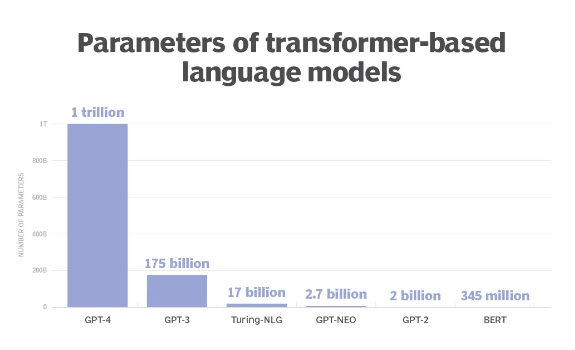
Bar chart: parameters of transformer-based language models. GPT-4: 1 trillion; GPT-3: 175 billion; Turing-NLG: 17 billion; GPT-Neo: 2.7 billion; GPT-2: 2 billion; BERT: 345 million
The Power of AI is Based on the Amount of Knowledge Borrowed from the Rest of Humanity

The newest AI systems like Chat-GPT are based on training what are called Large Language Models (LLMs) - see here for a longer explanation - which involves feeding massive amounts of data into the computers. In the case of the newest Chat GPT-4 system, this involves feeding 100 billion words into the system which gets translated into even greater numbers of variables, called parameters, that respond to user requests to deliver whatever they ask the AI to produce. Other AIs import similar levels of images or other kinds of data for various specialized purposes.

In a matter of a few years, the number of parameters in these systems has gone from a few billion to over a trillion. The leaps in power from the recent AI releases are all about the orders of magnitude of additional information used in those systems. People are hearing about AI for the first time in many cases because the amount of information fed into the systems has just crossed a threshold that allows the AI to combine them in ways that effectively mimic what a human being would produce.


The core technology is impressive but it’s the degree of scavenging of other peoples’ work that creates the awe-inspiring results people are talking about.
Whether delivering an essay on a particular topic, writing a short story, creating s new image with customized features, or writing computer code for specific purposes, Chat GPT and other AI systems clearly will be able to replace a wide range of tasks currently done by human beings. Even if the final product has limits, it can save time by producing a good first draft that may just need refining and fact-checking by a human expert.
For average users not just looking to cheat on their homework, one of the most popular AI tasks has been creating eye-popping visual images, taking a few words of text describing the goal, and producing a digital picture or even an animation from those words. But the inspiration for these images has to come from somewhere and many artists are up in arms complaining about their art being used as part of the training data. Even though no images are exact duplicates of existing art, advocates identify patterns of inspiration that seem to influence the results. See this Vox video for more on how the process works and some of the debate among artists.

Lack of AI Sentience is a Disappointment for Many- but Copying Has Always Underlied Intellectual ProgressStill, merely noting the borrowing of ideas in modern AI doesn’t solve the problem of how to economically recognize the contributions synthesized into the final product.
Many imagined that artificial intelligence would come from machines given super-intelligence that would understand the world so well that they would perform tasks far better than humans.
That current AI is based on synthesizing the work of human beings with no apparent self-awareness is kind of a letdown with those expectations. Since IBM’s chess-playing computer, Deep Blue defeated then-world champion Garry Kasparov in a 1997 match based on brute-force calculations, most of the AI world reluctantly admitted that large-scale calculations would win out over attempts at self-aware machines- and Chat GPT and similar systems are the result.
However, the disappointment may be misplaced, since the training of AI systems is closer to how “genius” humans operate than we want to admit.
Malcolm Gladwell in his book, Outliers, detailed how research had shown that experts in every field often distinguish themselves by their time spent practicing and learning from others in their field- what Gladwell popularized as the “10,000-hour rule” for the amount of time spent by identified experts, whether athletes or artists or scientists, to claim top spots in a field. A famous example is Bill Gates who was in a position to pioneer software in the personal computer field because as a teenager he had unusual access to a computer at the University of Washington, where he had a chance to rack up thousands of hours of practice absorbing the best ideas in the field when that was impossible for others his age. Some inherent skill and tenacity in pursuing dedicated practice matters for human beings- but that’s what sheer computing power can deliver for the computer equivalent.
That genius comes from exposure to others’ work is hardly a new concept. Isaac Newton is one of the certified geniuses of the last millennium - and he readily argued his ideas came from “standing on the shoulders of giants.” While Newton invented calculus, critical to modern math and science, so did Gottfried Leibniz in the same period, reflecting their joint exposure to the emerging new pool of mathematical knowledge being developed in the 17th century. Calculus was less the result of individual genius than the inevitable synthesis of the work of the new herd of emerging mathematical endeavors in that period.
Pablo Picasso was blunter about the dependence of genius on others- famously saying “Good artists copy, great artists steal.” His own cubist artistic innovations were heavily influenced by exposure to the art of African masks only recently made available (via colonial plunder) to the European art world.  And no, Africa was not compensated for the art inspired by their work.
The dilemma is such borrowed innovation has become ever more central to the economy. Google built a trillion-dollar-plus business based on the singular insight that computers were too stupid by themselves to decide what was worth linking to in a search engine. Instead, Stanford students Larry Page and Sergey Brin decided to survey what other humans decided was worth linking to on their web pages, then Google would prioritize links with the most sites linking to them from the sites that other people linked to- the chain of links borrowing the judgment of millions of people to decide what was worthwhile on the web.
The problem was that by linking directly to articles, Google links bypassed the front pages of newspapers and ended up gutting the advertising revenues of newspapers and other publications. Magazines and newspapers had themselves always been the aggregators of the insights of their own writers, picking up income as readers’ eyes passed over advertisements as they moved from one article to the next, compensating writers (usually poorly) with the proceeds. The disaggregation of article links on the web means that Google gets advertising revenue while sharing none of it with those they link to. The correlation of rising Google revenue with collapsing newspaper revenue is clear.
Newspapers may try to compensate by piling popup ads into the middle of articles, but that increasingly unpleasant reading experience reflects the growing market failure of the modern knowledge-based marketplace.
What happened to newspapers is likely to happen to a wide swathe of industries as AI tools make it far easier to borrow the product of others in any industry for no compensation. You can’t have functioning markets if the price of many skills becomes zero or near zero for many companies borrowing them via new AI tools.
Market-Based Policy Tools Can’t Save an AI-Dominated Economy Where Innovation Externalities Go UncompensatedTaking a step back, a technological advance that lets so many more people benefit easily and cheaply from knowledge is an incredible gain for humanity - and is only a “problem” because we are depending on markets to compensate those producing the original knowledge being shared.
Economics deals with this kind of “problem” under the label of externalities - the idea that many kinds of production either have costs not contained in the price, like pollution, which get labeled “negative” externalities, and other kinds of production have broader social benefits not captured in the market price, so-called “positive externalities.”

Negative externalities are theoretically addressed in economics by any policy that forces companies to internalize those costs, whether through regulation or taxes on those factors of production with negative impacts. The failure to enact effective carbon taxes shows this is more of a theoretical success for economics, but there is at least a market-like approach for solving the problem.
But economists have never had a clear market-based policy solution to positive externalities, usually encouraging some form of government subsidy for activities with such positive gains for others.
Education is the clearest example of something that benefits the person receiving it but also helps society as a whole through higher productivity and a higher-skilled workforce. Older systems of master-servant relationships had internalized the educational process in those trades, with the master paying for the training, then recouping some of those costs through the apprenticeship period of work. In the industrial period, workers were moving from job to job too often, so employers had far less to gain from paying for multiple years of their workers’ education so people were left on their own to pay for education. Because the societal benefits of education were now diffuse, most nations implemented public schools as the solution, the first mass socialist program of the 19th century across modern nations.
That solves the incentive problem of people seeking education or other goods whose value benefits others but doesn’t address how those benefiting from those externalities pay for it. In the past, businesses at least had to hire workers to gain access to the skills acquired through education or past on-the-job learning, but in the age of AI, the 10,000 hours of learning by experts across a field are easily borrowed by companies with no compensation needed.
One way to understand new AI systems is they are incredible engines for plundering positive externalities across the economy.
Can’t Intellectual Property Laws Save Markets in the Age of AI?Some hope we can tweak intellectual property laws to make sure those whose work is borrowed in training AI systems get paid, creating some version of micro-transactions to maintain a market in innovation. Three artists have already filed class action lawsuits against multiple generative AI platforms for using their work to train AI systems without permission.
The problem here is that the bar for proving intellectual property infringement is high for good reasons. First, to be a violation, work has to be copied wholesale with no substantial transformation and the original work copied itself has to be original. AI systems do transform and synthesize other works, so any legal standard that said, for example, that a derivative work based more than 50% on another work is a violation would just lead to AI systems building in a 49% ceiling on borrowing from any particular work.
And there is such a wide range of day-to-day innovation that we have never treated as patentable but that gets embodied in the brains of experts in every field. The messy law of trade secrets has been used in some cases to try to value the ideas falling below the threshold of patent and copyright protection, but usually in ways that have more harmed the rights of workers to leave their employers than to effectively compensate those creating that innovation. If anything, the law is moving away from trade secret protection with the FTC recently proposing restricting the use of employer non-compete clauses and tightening when allegations of misappropriation of trade secrets would be allowed
Some of the lawsuits against AI systems argue it should be illegal for the AI systems to even view borrowed art or other work without getting permission first. But if it is illegal for AI models to scrape knowledge of many art images or computer code or literary works, would it then be illegal for human artists to store images of other art in their brains and be inspired by it to create their art or other works?
Using the law to stop borrowed innovation is a double-edged sword since tightened standards might easily be met by an AI system, but applied to human innovators might lead to rabid fear of lawsuits, kill what is known as “fair use” in the intellectual property field, and undermine the actual benefits of positive externalities in innovative fields that are dependent on creative borrowing.
And it’s not really a market system if we end up with an endless parade of lawsuits where courts analyze and assign monetary values to each innovation. That’s just pretending unelected judges are not acting as government regulators - and assumes that judges largely lacking content expertise in a field would do better in assigning compensation than experts appointed by the executive branch in rewarding artistic, scientific, and other forms of innovation.
Trying to identify the daisy chain of measurable influence on innovation by others is a bit of a fool’s errand. The Velvet Underground was a notoriously uncommercial band, but as music producer Brian Eno is reported to have said, "The first Velvet Underground album only sold 10,000 copies, but everyone who bought it formed a band." Would the group have had to sue those 10,000 bands to recoup the real value of their contribution?
Take this problem into the world of computer code, legal writing, and all the other areas where AI is likely to have an impact on undermining compensation for innovation and expertise - and the problems multiply in trying to have the legal system decide these issues. And do progressives really want John Roberts’ Supreme Court to have the final say on who gets compensated in our economy?
Better to find some other approach to rewarding valuable work untethered from micro-transactions for each thread of its influence. Encourage a thousand flowers to bloom and let the AI aggregators/synthesizers produce the tools that improve all our lives.
How about Using Antitrust to Stop the Concentration of Economic Power Due to AI?Some might hope more vigorous antitrust enforcement could give those producing new innovations a better chance against dominant players using AI to scavenge their work. That the two companies most identified with the new AI push— Microsoft via its role supporting Chat-GPT and Google deploying its Bard AI — have both been targets for antitrust action reinforces the idea that antitrust might help save market competition as a tool to manage the future.
There’s little question that the economy is increasingly concentrated in fewer corporate hands. 75 percent of U.S. industries have increased their concentration levels over the past two decades, driven by increasing returns to scale and network effects that have reinforced the advantages of scale. Conversely, business startups have fallen off dramatically across industries over the last few decades, as this Brookings graphic highlights. Many startups see their goal as less becoming viable companies than getting bought up by big fish in their industries with a big payday for their founders.

One impact of market concentration noted by analysts is a long-run decline in U.S. business investment, which has fallen to less than half of its level in the 1970s, which is consistent with the idea that firms are increasingly benefiting from absorbing positive externalities of others from outside their firms rather than from returns on internal investments.
Tech activist and author Cory Doctorow has described what he calls the enshittification of economic and social activity on digital platforms, as users and businesses, and employees are lured into the use of such platforms, then their contributions are drained into the pockets of shareholders as the experience of everyone else gets worse.
Yet I am extremely skeptical antitrust can return us to some ideal where market competition delivers greater equity for all actors in the economy. I say that as someone who spent a few years in the 1990s at a group called NetAction arguing for antitrust action against Microsoft and spent a chunk of the last decade writing about and advocating for antitrust action against Google and other tech platforms.
Antitrust can only really work if monopoly practices have undermined fundamentally sound markets, while all evidence is that it is the breakdown in the functioning of markets that has empowered monopoly. A large part of that has been due to the scavenging of positive externalities from others driving economic concentration, as the rise of Google described above reflects. And the coming explosive use of AI technology is only going to accelerate that dynamic across far more industries.
Breaking up a few whales into a gang of slightly smaller barracudas isn’t going to reduce the scavenging of others’ work and expertise or improve economic equity in the overall economy in the age of AI. Antitrust can eliminate some of the worst practices of enshittification (in Doctorow’s colorful phase) and restrict other anti-social behavior by the currently dominant players, one reason I am still enthusiastic about the “new antitrust” advocates like current FTC chairwoman Lina Khan. However, antitrust is ultimately a limited tool in addressing the fundamental problems that will expand in the coming AI-driven economy.
Where to Start with Policies for the New AI Economy
I’m not going to lay out a full program for socialist renewal of the economy in a post-AI world - I’ll leave that to future essays - but a few key principles are clear.
  • First, over the last century, we have seen developed nations socializing investments in more and more sectors of the economy as their positive externalities were recognized, from primary to secondary to post-secondary education, as well as health care, clean energy, and other sectors. The Internet itself was largely a product of government investments via university research - and its privatization is part of what’s driven many of our current problems with economic concentration in the tech sector. AI will expand the realms where positive externalities are a factor, so should demand far more government intervention across the economy.
  • Second, and at a minimum, we need to fight for a clear recognition that the super-profits of concentrated industries across the economy are not somehow “earned” but are the product of the collective knowledge of society as a whole - which means taxes on those profits should be heavily increased to reclaim the social inputs driving that wealth. Those taxes in turn should be reinvested in promoting innovation and expertise across the economy, much of which may not earn money in post-AI marketplaces, but which still fuel the social knowledge that enriches us all.
  • Third, we need to rejuvenate public investments in and democratic decision-making over the development and deployment of science and technology in society. We are seeing the deployment of AI being controlled by big corporations because federal research and development (R&D) spending crashed from a high of 2.5% of GDP in 1964 down to just 0.61% by 2018. We need a massive rejuvenation of federal support for a wide range of technology researchers at universities and non-profits across the nation to encourage more public-interested research and to support the kinds of basic research private companies are far less likely to invest in - but that is critical for our long-term economic health.
  • Finally, we need a significant new kind of investment in the arts, humanities, and other areas of public life which are feeding into the AI algorithms but are increasingly finding little compensation in the marketplace. Grants and prizes overseen by artists, writers, musicians, journalists, and others in the social sciences and humanities should create an alternative revenue stream for those cultural workers.
Addressing the overall economic concentration in the economy and the failures of market solutions to managing positive externalities in an AI world will be a more complicated task but we should begin working towards non-market models of production, with everything from universities, open source software, consumer and employee-owned cooperatives and other options being supported to build that alternative. Micropayments à la Patreon and substack may play a small role in that, but that works only for knowledge production that has clear immediate value but will ignore a lot of labor whose value becomes obvious only over time.
Many liberals have tended to treat socializing education and health care as a small diversion from market economics, but when you have to deal with compensating for the distortions AI will be wrecking in the core of the economy, we are talking about more than social democracy or however people might want to characterize Denmark.
AI can be one of the greatest technological gifts possible for humanity if we deploy it in the right way. Or it can just gobble up the seed corn of innovation while leaving little left for future harvests as inequality grows across the economy. That is going to be the major economic and political battle for the coming era.

0 Comments on AI Shows Innovation is all Collective

Democrats Shouldn’t Fall for McCarthy’s Debt Limit Ransom Attempt

5/4/2023

by Max Sawicky

First published May 2, 2023 in In These Times

Contrary to some expectations, Speaker of the House Kevin McCarthy (R-Calif.) has managed to unite his caucus around an austerity plan dubbed the “Limit, Save, Grow Act,” which is being used as ransom for not blowing up the economy with a debt default by the U.S. government. Democrats are charging that the plan would cut benefits to veterans and food stamp recipients, among others, while Republicans have issued outraged denials. So what’s really going on?

McCarthy is accusing President Biden of endangering the economy by refusing to negotiate on the debt ceiling. Of course, it would be easy for the ceiling to be lifted absent the obstruction by McCarthy himself. His is the “stop me before I kill again” strategy.
 
A failure to raise the debt ceiling is feared to impede the federal government’s ability to pay its bills, including interest due on bonds held in the private sector. Failure to pay interest due, on time, would represent a default — the global financial implications of which are unknown, and possibly catastrophic.
The debt ceiling is a legal fact, but it is directly contradicted by an alternative fact: the U.S. Constitution stipulates that the government must make good on its debts. So one suggested resolution of this conflict is for the Treasury to simply ignore the debt ceiling and go on about its routine operations.

Read more: 
https://inthesetimes.com/article/mccarthy-debt-limit-ceiling-democrats-biden
 

0 Comments on Democrats Shouldn’t Fall for McCarthy’s Debt Limit Ransom Attempt

North Star Members Encouraged to Become Delegates to Convention

5/3/2023

NS members are encouraged to become candidates for being a delegate to the national convention. 
 
Delegate elections by chapters continue through June 6. Contact your local chapter.

From the national office: As DSA prepares to support this important labor fight, we also continue to plan for our upcoming Convention. We are happy to announce this year’s theme: Unite! Organize! Win! Thank you to everyone who submitted their ideas, visuals, and suggestions. The winning theme was born out of a combination of submissions, with the grounding notion that our task as socialists requires unity, organization, and a plan to win. To that end, we are also sharing our finalized Pre-Convention Discussion Guide. (opens in a new tab) Please use this discussion guide to prepare for Convention and the adoption of DSA’s national strategic direction for the next two years — one rooted in a firm analysis of how to best organize our class toward the advancement of socialism in the current moment. We also encourage you to run for NPC or delegate in your chapter and to read through our Convention hub for updates and important information. (opens in a new tab)
 
It may be easier than you think to become a delegete
Often locals are unable to fill their allocated number of delegates.  So, if you apply, you may win.
 
North Star will coordinate working with NS delegates at the convention.
 
 
Posted by.
Duane Campbell
 

0 Comments on North Star Members Encouraged to Become Delegates to Convention

May Day: Celebrate by Fighting for Unions & Better Wages! Solidarity!

5/1/2023

Black-and-white portrait of Henry Wallace


International Workers' Day, also known as Labor Day in most countries and often referred to as May Day, is a celebration of working people that is promoted by the international labor movement (opens in a new tab) and occurs every year on May Day (opens in a new tab) (May 1).
 
Biden's 12.6m jobs is 6 times as many jobs  (opens in a new tab)as were created in the 16 years of the last 3 Republican Presidencies, combined. “Wall Street didn’t build this country. The middle class built this country. And unions build the middle class.” - President Biden
 
Workers are rising up across the country to unionize and demand better wages and rights - like Amazon (opens in a new tab) workers, LA Teachers (opens in a new tab), Starbucks workers (opens in a new tab), railroad workers (opens in a new tab), Iowa Tyson meatpacker workers (opens in a new tab), and many more across the country
post by Heather Booth


0 Comments on May Day: Celebrate by Fighting for Unions & Better Wages! Solidarity!

North Star Resolutions Gain Access to the DSA Convention

4/29/2023


The  North Star Resolution on Unite to Fight the Ultra-Right has been completed. We have 330 recognized e mails.
It has been submitted on time.  A work plan was added as per requirements. Further discussion of the work plan will follow.
Thank you to all who so hard to accomplish this project.
 
This resolution basically seeks to implement the North Star strategy as described in our strategy document.  Thus, NS  strategy will be discussed organization wide.  Our Strategy
 

Thank you to the North Star members who signed the resolution and who asked their friends to sign. And, thank you to the several allies not in North Star and from other caucuses who endorsed the resolution.
 
Recall, in prior conventions we only needed 100 signatures for resolutions. 
 
We have reached out often and  repeatedly to NS members, and many friends and allies.  Thank you to the callers, and the Convention Planning committee. 
 
The campaign brought out the best of North Star.
Now, it will be a resolution probably for discussion  at the convention. 

We have received the report that the Big Tent Resolution has also been filed.  The third resolution, On Defense of Immigrant and Refugee also gained enough signatures to be considered at the convention. 
#20. On the Defense of Immigrants and Refugees
https://tinyurl.com/20DefenseofImmigrantRefugees
 Consider becoming a delegate. 
We continue to encourage members to become delegates to the convention. There will be an organized North Star presence at the convention. And, you will get to meet some of the active members face to face.
 
Duane Campbell
NS Steering Committee


0 Comments on North Star Resolutions Gain Access to the DSA Convention

THE UKRAINE WAR HAS NEVER BEEN AMERICA’S WAR

4/28/2023

U.S. imperialism is not behind the conflict. 
By Lawrence S. Wittner | 
Although supporters of the Russian invasion (opens in a new tab), occupation, and annexation of Ukraine blame “U.S. imperialism” for the Ukraine War, the U.S. role has been relatively minor. The major actors have been Ukrainians, striving for independence, and Russians, striving to end it.
For centuries, a great many Ukrainians, chafing under Czarist and, later, Soviet rule, longed for national independence. This rejection of Russian domination―based in part on Stalin’s extermination of four million Ukrainians (opens in a new tab) through starvation―was confirmed in 1991 when the leaders of the disintegrating Soviet Union authorized a plebiscite.  In the voting, more than 90 percent (opens in a new tab) of Ukrainian participants opted for independence rather than membership in the new Russian Federation. Accordingly, Ukraine was recognized by Russia and the rest of the world as an independent, sovereign nation.
This agreement on Ukraine’s sovereignty was firmed up by the 1994 Budapest Memorandum (opens in a new tab), under which the Russian, U.S., and British governments pledged to respect its independence and borders. For its part, Ukraine agreed to, and did, turn over its very substantial nuclear arsenal to Russia.
 
 
Read more.
https://fpif.org/the-ukraine-war-has-never-been-americas-war/
 

0 Comments on THE UKRAINE WAR HAS NEVER BEEN AMERICA’S WAR

Taiwan and Self-Determination as a Core Principle

4/21/2023

by Trent Trepanier

First published in Socialist Forum (opens in a new tab)

Taiwan's self determination is at the heart of the most challenging geopolitical contest of the century. Democratic socialists need an approach which is at once peaceful, socialist, and democratic.

The International Committee (IC) of the Democratic Socialists of America (DSA) has created many worthwhile campaigns over the years. As of writing, the IC has campaigns pertaining to Cuba, Venezuela, Ukraine, China, Okinawa, Korea, Brazil, Yemen, and the United States (US) military. Notably absent from the China campaign is direct reference to the people of Taiwan and their desires for either the status quo, for reunification with mainland China, or for de facto and de jure independence. Such self-determination must, I will argue, be at the core of DSA’s foreign policy vision, regardless of broader competition amongst large powers. To neglect the wishes of those caught in the middle of great power rivalries is to play the very game of great power competition the Left ought to fundamentally oppose. This necessarily includes the decision of Taiwanese voters as to their political future, free from coercion or threats from powers both near and far.

In this article my aim is to lay out the foundations for a potential IC campaign regarding Taiwan predicated on the principle of self-determination which, in my view, is central to any democratic outlook on world politics. To provide this foundation I will discuss what I perceive to be the primary interests of China and the US, the two most prominent great powers in the region as it regards Taiwan. From there I will detail the policy positions of the various parties in Taiwan regarding the question of reunification or independence. I will then conclude with proposals which could make up a Taiwan campaign. Given Taiwan’s importance to the most challenging geopolitical contest of the century, the IC must lay out a roadmap which is at once peaceful, socialist, and democratic.

Chinese and American State Interests

Beijing views reunification with Taipei as a core interest and has been abundantly clear in this respect. President Xi Jinping said in a 2018 speech “the people on both sides of the [Taiwan] Straits are one family with shared blood, culture, bonds, and aspirations.” Furthermore, in the same speech Xi spoke of the “shared [historical] trauma” between those in Taiwan and those on the mainland. This remark about historical trauma is deeply rooted in not only Chinese subjugation at the hands of Western powers (its “Century of Humiliation” from 1839-1949), but in the People’s Republic’s own pressures during the Cold War stemming from its varying relations with both Washington and Moscow. Additionally, the Chinese Civil War which brought the Communist Party to power in 1949 has effectively been in a stalemate as the successors of the defeated Kuomintang (KMT) retreated to Taiwan and have governed the island ever since. Reunifying mainland China with Taiwan would, almost regardless of the means, be a victory for Beijing, which would fully bring back into the fold what it sees as the rightful jurisdiction of China.
Taiwan also represents for China broader geopolitical and economic ambitions in its home region of the Asia-Pacific. Roughly a quarter of all world trade passes through the Malacca Strait which runs between Indonesia, Malaysia, and Singapore, with much of those goods either going to or coming from China. This includes sixty percent of China’s oil imports. Additionally, Beijing’s Nine-Dash Line claims nearly the entirety of the South China Sea as China’s territory, which directly conflicts with the claims made by the Philippines, Vietnam, and Brunei. While the Nine-Dash Line has been rejected by the International Court of Arbitration, China and the other claimants in the region have built and militarized artificial islands to reinforce their respective claims. Especially regarding Vietnam and the Philippines, both of which are close security partners of the US, the ongoing disputes in the South China Sea raise tensions amongst the world’s two leading economies and military powers.
By contrast, US interests stem largely from its alliance network in the Asia-Pacific and open shipping lanes in the South China Sea, and it views both as potentially threatened by a more assertive China. According to the White House’s 2022 National Security Strategy, Washington views Beijing’s efforts regionally and globally as meant to coerce and erode its own alliances, as well as to “create more permissive conditions for its own authoritarian model.” Materially speaking, the South China Sea reportedly contains 190 trillion cubic feet of liquefied natural gas and 11 billion barrels of oil, according to the Center for Strategic and International Studies. On the island of Taiwan itself, the Taiwan Semiconductor Manufacturing Company is the third largest semiconductor company worldwide and the largest manufacturer of semiconductor chips which are required for advanced technologies. China, of course, is just as aware of these material factors as the US. The contest between them boils down to who controls those resources, as well as who writes the rules in international institutions on how those resources are to be extracted and distributed.
Situated at the epicenter of this contest over material resources, ideological contestation, and institutional governance are the Taiwanese people. Beijing advocates the “One China Principle,” which holds there exists only one China, Taiwan included, and the People’s Republic of China (PRC) is the sole government of all of China. By contrast, Washington promotes the “One China Policy,” which agrees with the PRC view there is one China with the PRC as its the sole legitimate government. The US, however, only acknowledges the PRC’s position that Taiwan is part of China, while neither endorsing this position nor promoting Taiwanese independence. The aim of Beijing’s position, therefore, is reunification with Taipei, while Washington’s is maintaining the status quo of de facto Taiwanese independence. This US position serves to reinforce the belief in China, as Wang Jisi noted in 2021, “that the United States is driven by fear and envy to contain China in every possible way.”
Washington’s approach of “strategic ambiguity” toward Taiwan—refusing to state directly whether the US would militarily defend the island in the event of an invasion from the mainland—aims to maintain a status quo that is becoming increasingly less tenable. During the Cold War, strategic ambiguity regarding Taiwan was a means of checking the spread of communism in Asia. Bringing the KMT back to power on the mainland was an impractical goal, so the US arrived at a policy that, as US Secretary of State Dean Acheson wrote in 1949, “would avert civil war but nevertheless preserve and even increase the influence of the National (Taiwan) Government.” This policy of maintaining the status quo worked so long as Beijing’s power was no match for Washington’s. While this may still be the case in terms of sheer military expenditure and gross domestic product, Washington is limited by its global spread of military installations whereas Beijing’s forces are concentrated precisely in the area of dispute. This relative equilibrium of forces in the western Asia-Pacific thus makes for a more dangerous situation.

Domestic Taiwanese Politics

Inside Taiwan the question of independence, status quo, or reunification is not clear-cut. According to the Election Study Center at National Chengchi University in Taipei, a majority of Taiwanese support one of the following three options: maintain the status quo and decide on either independence or reunification at a later date, maintain the status quo indefinitely, or move toward independence over time. The two largest political parties, the Democratic Progressive Party (DPP) and the KMT have directly opposing views on the question, complicating the matter further. The ruling Pan-Green Coalition headed by the DPP favors either the status quo or Taiwanese statehood. In 2021 Taiwan’s President and then DPP leader Tsai Ing-Wen wrote “Taiwan, by virtue of its very existence and its continued prosperity, represents at once an affront to the narrative and an impediment to the regional ambitions of the Chinese Communist Party.” Tsai insisted Taiwan would not pursue “adventurist” policies, but it would also “not bend to pressure.”
The KMT, the same Nationalists who fought against the Communists in the civil war, favor reunification with the mainland. The occasion for Xi’s speech referenced earlier was a visit by Lien Chan, an honorary chairman of the KMT. Relations between Beijing and Taipei, therefore, are often contoured by the internal political balance of power on Taiwan. Although the survey just mentioned suggests Taiwanese favor the status quo above any sudden change in status, the results of the 2022 election of city mayors delivered a loss for the DPP, with the KMT picking up the most seats. The DPP’s showing was so bad, in fact, that President Tsai resigned her position as party leader, though not as president. 2024 will mark the next presidential election for Taiwanese voters. Given their seeming preference for the status quo, the increasing shakiness of that status quo with respect to the Sino-American rivalry, and the recent win by the KMT, 2024 could become a flashpoint that erupts into a true catastrophe.

A Taiwan Campaign

The centrality of Taiwan’s status in what is likely to be the most consequential geopolitical contest of the century demands a detailed response from DSA’s IC and the broader Left around the world. As democratic socialists, the two defining terms of that label ought to mean something in how a Taiwan campaign is constructed as well as to the goals it pursues. Self-determination, as Lenin wrote in 1914, “means [at least under capitalism] the political separation of these nations from alien national bodies, and the formation of an independent national state.” Ultimately self-determination means the ability to act autonomously without fear of outside compulsion. It seems wholly reasonable, then, to equate self-determination with democracy. As such, an IC campaign on Taiwan should promote the ability of Taiwanese to choose their political future for themselves without threats or pressure from either China or the US.
Unfortunately, anti-capitalism does not currently have much staying power in Taiwan. While the ruling Pan-Green Coalition is made up of mostly social democratic parties, the only outwardly socialist party is the Labor Party (LP), which has minimal influence. Worse still, the LP’s position on the status of Taiwan is reunification under the auspices of the “one country, two systems” principle that previously applied to Hong Kong, something Taiwanese do not, at least at present, support. A Taiwan campaign ought to be centered on the struggle against both imperialism and global capital, which necessitates reaching out and working with those with similar ideals, with democracy and socialism at the core of their politics. Reaching out the LP and the various social democratic parties alongside supporting the Taiwanese labor movement would, therefore, create a space for an anti-imperialist and anti-capitalist coalition to form and challenge the now dominant parties. As Ming-sho Ho noted, the Taiwanese labor movement has gained ground within the neoliberal order by garnering support from wider social movements, and the IC ought to play a similar role in its outreach to the island.
The biggest difficulty with this approach is that the Taiwanese voting public seems to hold a position similar to that of the US, even if they do so for different reasons. What makes matters worse is the Washington consensus on China, as Senator Bernie Sanders wrote of in 2021, “views the U.S.-Chinese relationship as a zero-sum economic and military struggle.” Voters in Taiwan and decision makers in Washington appear to desire what US China policy experts Jude Blanchette and Ryan Hass have described as kicking “the can down the road.” This strategy, though, is likely to back Beijing into a corner, the very thing Blanchette and Hass said should be avoided, as any increase in the capability of Taipei to defend itself in the meantime will be seen in Beijing as undermining its core interests. Should this course be taken, which is substantively no different than the current American course of strategic ambiguity, decision makers in Beijing will believe their counterparts in Washington are trying to preserve what G. John Ikenberry referred to as “‘The Real Liberal Bet’” with regard to the latter’s policy of engagement with China since the end of the Cold War: “The far more important goal was to build a liberal-oriented international order dominated by the United States and its allies” (emphasis added). This statement begs the question as to whether China could ever hope to become one of America’s allies in such an order. If not, China would be in a perpetual state of subordination, perhaps relegated to the semi-periphery for decades. Even if there could have been a Sino-American alliance, it remains doubtful whether it would be an alliance of equals.
Given Washington’s recent efforts at containing China’s technological advancements in chip technologies and more, combined with Beijing’s recent diplomatic success in bringing Riyadh and Tehran to normalize relations along with its proposed peace plan to end the Russo-Ukrainian War, political momentum seems to be swinging away from the former and toward the latter. This provides an opportunity to push back against US hegemony, but it also presents a risk as Beijing, has its own ambitions regarding the future of Taiwan, irrespective of what Taiwanese may desire.
I wrote previously any Leftist international cause should have at its core a democratized and empowered United Nations and reject the increasing trend of multipolarity. As polarity is generally understood in international relations to mean the distribution of power centered on states or “poles,” it inherently carries connotations of a lack of self-determination. Rather than center a Taiwan campaign around any specific outcome (independence, unification, or the status quo) such that would only inflame the trend of multipolar competition between Beijing and Washington, it should emphasize the process of democracy, both in the political as well as the economic sphere. Producing videos on the history of Taiwan, the US and China competition in the region, and the importance of self-determination to any socialist cause could be one part of such a campaign. Another part could be reaching out to all the Left-leaning parties, labor organizations, and other social movements in Taiwan as a means of building a democratic and anti-capitalist coalition which could refocus the debate on Taiwan’s status to one more consistent with democratic socialist values. Though Lenin noted the centrality of nation-states in the abovementioned quote, there is no reason we must do the same. Self-determination of Taiwan need not mean allegiance to any national flag and its institutions, but could mean adherence to the values of anti-imperialism and anti-capitalism through a process of collective decision-making.

Read more at Socialist Forum (opens in a new tab)

0 Comments on Taiwan and Self-Determination as a Core Principle

Capitalism's Fascist Temptations

4/19/2023

by David Anderson

In 1928, U.S. Treasury Secretary Andrew Mellon pushed the Federal Reserve Board to aggressively hike interest rates to control inflation and credit-fueled stock market speculation. They did, and, as a result, the New York Stock Exchange suffered the worst crash in its history in October 1929.

Mellon advised President Herbert Hoover to liquidate labor, liquidate stocks, liquidate farmers, liquidate real estate. It will purge the rottenness out of the system. High costs of living and high living will come down. People will work harder, live a more moral life. Values will be adjusted, and enterprising people will pick up from less competent people. The Great Depression would follow.

Mellon was the country's most powerful banker and a prominent industrialist with a gigantic business empire. He was Secretary of the Treasury from March 9, 1921 to Feb. 12, 1932 under Republican presidents Warren Harding, Calvin Coolidge and Herbert Hoover.

Mellon emphasized cutting taxes on the rich. The top marginal tax rate fell from 73% in 1922 to 24% in 1929. 

The Great Depression was a result of a crisis of overproduction. The Roaring 20s experienced an economic boom but too many commodities were produced than could be profitably sold.

During the decade, income inequality exploded. Historian Becky Little notes that by 1928, the top 1% of families received 23.9% of all pretax income. About 60% of families made less than $2,000 a year, the income level the Bureau of Labor Statistics classified as the minimum livable income for a family of five. At the beginning of the 1920s, rural America's economy was already in a depression.

We are socialized to think the boom-and-bust economic cycle is somehow natural. It is irrational, cruel and stupid. There were more than 60 banking crises in the industrialized world between 1805 and 1927.
Increasingly during a crisis, many people turn toward charismatic authoritarian leaders.

In the final week of the 1928 election, Andrew Mellon gave a radio address to promote Herbert Hoover.

He compared Democrats to the new regime in Russia. But in Italy, he said, the Bolshevik menace was met and vanquished. Benito Mussolini had not only saved Italy from any possible danger of economic and social collapse, but had  improved the well-being of the people of the country. The Italian government Cooperated in accordance with established economic laws.

Many prominent American rightwingers like Mellon were enthusiastic supporters of Mussolini and his regime with the new name of  Fascism.

In 2008, a global financial debacle occurred and Federal Reserve chair Ben Bernanke didn't intervene until two big banks had collapsed.

What happened? There was a run on a basically unregulated shadow banking system.

Deregulation also created a housing bubble of subprime mortgages by predatory lenders who targeted poorer people who hadn't qualified for a loan previously.

In Feb. 2009, CNBC commentator Rick Santelli delivered the rant heard around the world n the Chicago Mercantile Exchange. As a financial analyst for the business news channel, he denounced the government for  promoting bad behavior by subsidizing the loser's mortgages instead of rewarding people that could carry the water instead of drink the water.

He called for a tea party.

Santelli didn't mention the government  bailouts of Wall Street bigshots. His rant was promoted by  Rush Limbaugh, Sean Hannity and the Drudge Report. A movement was born. Implicitly and sometimes explicitly racist, it attracted suburban, white small business and professional types and was funded by libertarian capitalists like the Kochs.

 In 2010, they would help the Republicans win their victories in the elections. The Tea Party still exists. It morphed into MAGA.

The current bank troubles grew out of Trump administration deregulation (which was supported by many Democrats). The anti-government tech bros of Silicon Valley now are whining and yipping for the feds to rescue them. 

The  MAGA mega-donor Peter Thiel, the leading Silicon Valley libertarian who promoted cryptocurrency and floating tax refuges beyond the reach of government. His firm promoted a run on the Silicon Valley Bank through social media. In 2009, Thiel wrote that democracy is no longer compatible with freedom. He explained:

"The 1920s were the last decade in American history during which one could be genuinely optimistic about politics. Since 1920, the vast increase in welfare beneficiaries and the extension of the franchise to women  two constituencies that are notoriously tough for libertarians  have rendered the notion of âcapitalist democracy into an oxymoron."

Boulder Weekly is dedicated to illuminating truth, advancing justice and protecting the First Amendment through ethical, no-holds-barred journalism and thought-provoking opinion writing. 

Source URL: https://portside.org/2023-04-10/capitalisms-fascist-temptation (opens in a new tab)

0 Comments on Capitalism's Fascist Temptations

It Is Time to  Get Out the Vote On Our Resolutions

4/14/2023

 Please assist.
 
The North Star convention planning committee , along with important volunteers, and our steering committee have been working hard to qualify our  resolutions for the convention.
Thank each of you who have already shown your support and signed the resolutions.
 
For our first resolution, we currently  have 280 signatures.  We need at least 50 more. The 280 count includes several duplicates and a few persons who are not DSA members. We need around 350 to be safe.
 
This is an important development within our grasp.  For prior conventions resolutions required 100 signatures and we qualified resolutions with 150 or so signatures.   We are almost double our past work—but we need a final push.  Will you assist?
 
We need our supporters to contact 3-5 additional DSA members each ( or more if you are willing).  We need these signatures prior to April 28.  Signature links below.
  
This week’s events in Tennessee and in the battle defend reproductive freedom show the vital necessity of working together with other groups to defeat the Right.  We should  encourage DSA chapters and individuals to participate in a popular front campaigns.   That is the first resolution.  You can make the difference.  
 
The North Star steering committee endorsed two resolutions and one amendment, which our members co-authored:
 
#16. Uniting Against the Ultra-Right resolution. https://tinyurl.com/dsa23UR  (This is our priority item.)
 
By this resolution DSA commits to engage in the electoral arena to fight the MAGA -Fascist Right wing in the U.S.  This resolution is an application of our NS strategy for DSA. We argue that DSA should contest campaigns in the electoral season, not stand outside of electoral politics.  There are competing views within DSA which we oppose. 
 
We propose that locals and individuals  work with a broad front of voters  against the US ultra-right which includes MAGA. neo confederates, Oath Keepers, Proud Boys, ALEC, militias, too many Republicans, and numerous reactionary super PACs, foundations, and think tanks.  The resolution also proposes improving cooperation among DSA  chapters and our sister organizations that is necessary in order to organize the broad front against the right. 
 
The Steering Committee also endorsed 
 
#17. Big Tent bylaws amendment to damp down the urge to purge.
https://tinyurl.com/dsa23BT

#20. On the Defense of Immigrants and Refugees
https://tinyurl.com/20DefenseofImmigrantRefugees
Resolution #20 has now achieved its 300 signatures. However, like our # 16 there are several duplicate signatures, so the campaign  for those last few signatures continues. 
 
You can use these links in outreach to your friends and allies.
 
Don’t wait another day.  Please  do not rely upon others to make this happen. It is up to us. You and I.   Please assist NS to make it over this hill. 
 
Duane Campbell
Co-Chair.  NS Steering Committee 
 
Uniting Against the Ultra Right. White nationalists, sexists, and anti-queer activists are the most energized they’ve been in decades. DSA should urgently work in cooperation with like-minded organizations to establish a broad front that is committed to the defeat of the ultra right. 2023 DSA National Convention. Sign on to support this resolution: https://tinyurl.com/dsa23UR

0 Comments on It Is Time to  Get Out the Vote On Our Resolutions

Sign the Resolution: Uniting Against the Ultra Right

4/13/2023

Uniting Against the Ultra Right. White nationalists, sexists, and anti-queer activists are the most energized they’ve been in decades. DSA should urgently work in cooperation with like-minded organizations to establish a broad front that is committed to the defeat of the ultra right. 2023 DSA National Convention. Sign on to support this resolution: https://tinyurl.com/dsa23UR

1 Comment on Sign the Resolution: Uniting Against the Ultra Right

Newer posts >>
<< Older posts

Principles (opens in a new tab)
Join Us (opens in a new tab)

Our Strategy (opens in a new tab)
Blog (opens in a new tab)
Twitter (opens in a new tab)
Facebook (opens in a new tab)

The opinions expressed here are those of members and allies of DSA North Star Caucus meant to educate, inspire discussion and encourage comradely debate.


RSS Feed


North Star caucus members

antiracismdsa (opens in a new tab) (blog of Duane Campbell)

Authory (opens in a new tab) and Substack (opens in a new tab) of Max Sawicky

Socialist Education

Online University of the Left (opens in a new tab)

Left Periodicals

Democratic Left (opens in a new tab)
Socialist Forum (opens in a new tab)
Washington Socialist (opens in a new tab)
Jacobin (opens in a new tab)
In These Times (opens in a new tab)
Dissent (opens in a new tab)
Current Affairs (opens in a new tab)
Portside (opens in a new tab)
Convergence (opens in a new tab)


The Nation (opens in a new tab)
The American Prospect (opens in a new tab)
Jewish Currents (opens in a new tab)
Mother Jones (opens in a new tab)
The Intercept (opens in a new tab)
New Politics (opens in a new tab)
Monthly Review (opens in a new tab)
n+1 (opens in a new tab)
+972 (opens in a new tab)
The Baffler (opens in a new tab)
Counterpunch (opens in a new tab)
Black Agenda Report (opens in a new tab)
Dollars and Sense (opens in a new tab)

Comrades

Organizing Upgrade (opens in a new tab)
Justice Democrats (opens in a new tab)
Working Families Party (opens in a new tab)
Poor People's Campaign (opens in a new tab)
Committees of Correspondence for Democracy and Socialism (opens in a new tab)
Progressive Democrats of America (opens in a new tab)
Our Revolution (opens in a new tab)
Democracy for America (opens in a new tab)
MoveOn (opens in a new tab)
Black Lives Matter (opens in a new tab)
Movement for Black Lives (opens in a new tab)
The Women's March (opens in a new tab)
Jewish Voice for Peace (opens in a new tab)
J Street (opens in a new tab)
National Abortion Rights Action League (opens in a new tab)
ACT UP (opens in a new tab)
National Organization for Women (opens in a new tab)
Sunrise (opens in a new tab)
People's Action (opens in a new tab)
National Network for Immigrant and Refugee Rights (opens in a new tab)
Dream Defenders (opens in a new tab)


  • Home
  • Principles
  • Join Us
  • About
  • About DSA
  • Our Strategy
  • Blog
  • Contact

© COPYRIGHT 2019 - 2026. ALL RIGHTS RESERVED.