DSA NORTH STAR
  • Welcome
  • Principles
  • Join Us
  • Our Strategy
  • Blog
  • About
    • About North Star
    • About DSA
    • Contact
  • Welcome
  • Principles
  • Join Us
  • Our Strategy
  • Blog
  • About
    • About North Star
    • About DSA
    • Contact

Blog, page 20 of 25

Why Antifa Street Fighting Is Not a Strategy to Defeat Fascism

9/8/2020

Riot police advancing through tear gas smoke at a street protest


Leo Casey
The following piece was originally written in opposition to a resolution proposed to the 2018 convention of the Metro DC chapter of the Democratic Socialists of America, “Supporting Anti-Fascist Organizing.” (opens in a new tab) It is published here because it addresses issues that continue to be of major concern, given ongoing violent clashes between groups of Antifa and groups of fascists and proto-fascists in various parts of the United States.

As democratic socialists we have always been anti-fascists, because the essence of fascism — its authoritarianism, its racism, its misogyny, its homophobia and its suppression of independent unions, political freedom and civil liberties — runs completely counter to the principles and moral values that are most important to us. The question that we grapple with is not “do we oppose fascism,” but “what is the most effective way to defeat fascism?”

Resolution One is entitled “supporting anti-fascist organizing within the Metro DC Democratic Socialists of America (MDC DSA),” which would seem to be a consensus position for democratic socialists. But the seemingly innocuous language of the resolution — and in particular the resolved “That Metro DSA recognizes the need for a diversity of tactics to defeat fascism” — actually proposes a particular political direction that is destructive of anti-fascist organizing and would be deeply damaging to MDC DSA. “Diversity of tactics” is a term of art that has a particular political meaning — one that treats street violence as a legitimate political tactic. In the context of anti-fascist organizing, “diversity of tactics” is commonly understood as a claim that Antifa street fighting with fascists is a legitimate tactic that deserves support.

Why is support for Antifa street fighting with fascists a serious political mistake and contrary to our principles and values?

First, our own recent experience is that fascists are most effectively countered when there is the broadest possible mobilization of democratic forces in opposition to them. A powerful example of this type of mobilization was the extraordinary anti-fascist demonstration in Boston, a week after Charlottesville and the murder of Heather Heyer. The streets were filled (opens in a new tab) with tens of thousands of Bostonians from unions; churches, synagogues and mosques; neighborhood and community groups; Black Lives Matter and civil rights organizations; and feminist and LGBTQIA organizations, among others. The pitifully small numbers of white supremacist neo-Nazis were completely outnumbered and soundly politically defeated.

Contrast that to the scenes of small groups of Antifa fighting street battles with fascists in Berkeley, which were completely avoided by the people and popular organizations of the city, despite the fact that the left and anti-fascism is as strong there as in any American urban center. Street fighting and violence is opposed by the very people we would want to involve in mass anti-fascist demonstrations, and in overwhelming numbers. By contrast, fascists thrive on violence: it is central to their identity. Unlike Boston, where they disappeared after their humiliating defeat, the street fighting of Portland (opens in a new tab), Berkeley (opens in a new tab) and Seattle (opens in a new tab) has only encouraged fascists to return for repeat performances.

Second, our history tells us that mass mobilizations of the broadest type, including all democratic forces, is the way to defeat fascism. Antifa claims as their inspiration groups that opposed the rise of Nazism and Italian Fascism with street fighting. They seem oblivious to the fact that such street fighting — and divisions on the German and Italian left that prevented united opposition to fascism — led to the victory of Nazism and Italian Fascism, not their defeat. A bloody world war which claimed millions and millions of lives had to be fought to undo that victory of Nazism and Italian fascism.

Moreover, the practice of street fighting on the American left, such as that indulged by the Weathermen in their early days, led to ultra-leftism, extreme political isolation, and further adventurism that did profound damage to the anti-Vietnam War movement and the left itself. But Antifa is either unaware of this history, or choses to ignore its lessons.

Third, the adoption of tactics such as street fighting and the secrecy used to organize and execute them has historically been a most fertile ground for agent provocateurs and infiltrators of various sorts. An open, democratic political culture is our best defense against such efforts against us.

Fourth, the macho posturing associated with street fighting, so strikingly evident in the past in 1930s Germany and Italy and in 1960s Weathermen, is deeply at odds with the socialist feminist values that define DSA.

Fifth, there are serious legal ramifications to support for Antifa street fighting, that would put MDC DSA and its elected leadership, as well as DSA as a whole, in legal jeopardy.

There is a strong democratic socialist tradition of direct action against white supremacy and fascism: the use of non-violent civil disobedience. From ‘sitting in’ at racially segregated lunch counters to participating in ‘freedom rides’ on racially segregated buses to marching against court injunctions, democratic socialists put their bodies on the line in the struggle against racism. When married to mass actions such as Montgomery bus boycott, the 1963 March on Washington and the 1964 Mississippi Freedom Summer, this non-violent direct action proved most effective in winning the victories of the civil rights movement of the 1960s. We should employ a similar approach to the struggle against authoritarianism and white supremacy of the far right today. Resolution One diverts us from this path.

Leo Casey is the Executive Director of the Albert Shanker Institute, a think tank affiliated with the American Federation of Teachers which focuses of issues of public education, unionism and democracy promotion. Before he assumed his current position at the Institute, Casey served as Vice President from Academic High Schools for the United Federation of Teachers, New York City’s 200,000 person strong teacher union. This article was originally published by the Albert Shanker Institute (opens in a new tab).
Keywords:  ANTIFA, Democracy, Fascism, Nazism, Politics, White Supremacy
 

0 Comments on Why Antifa Street Fighting Is Not a Strategy to Defeat Fascism
State of the Union

9/7/2020


If you haven’t read a lot of labor history or lived through the golden age of American trade unionism in the postwar boom, you will find the story of New York’s Local 6 almost impossible to believe. The local is the heart of New York’s Hotel Trades Council, which represents nearly all workers at Manhattan’s major hotels, some 40,000 in all.

This union has something that has vanished in most industries—serious worker power.
It has used this power to negotiate astonishing benefits and protections. For instance, room cleaners in New York hotels earn upward of $50,000 a year. Union members range from restaurant staff such as line cooks, dishwashers, bartenders, waters, and bussers, and hotel workers including desk clerks, bellmen, and “back of the house” staff such as laundry workers and cleaners.

The union bargains for very long-term contracts, which protect workers from having to negotiate concessions if a contract happens to come up during an economic downturn. The current contract expires in 2026. With tourism and business travel to New York on indefinite hold, some 90 percent of the union’s members are on layoff.

“Because our contract is long term, it is likely to outlive the virus,” says union president Rich Maroko. “There is no other industry that I am aware of with such a long-term contract.”
In city politics, Local 6, a relatively small union, is famous for punching above its weight.

The union also has what is probably America’s best worker health plan. It does not use commercial insurance, but runs state-of-the-art clinics located in four of New York’s boroughs, with salaried medical staff.
“One reason we’re able to negotiate such long-term contracts is our unique health care system,” says Maroko. “Because of that model, we’re able to predict and control costs. In the private insurance market, you can’t dictate cost increases and therefore you can’t project very far into the future. So even in most other union contracts, the parties will only will go out two or three years.”

In the pandemic, tens of millions of workers have lost their health coverage. But thanks to the hotel union’s power, its members have kept their full health coverage since massive layoffs began in March, and coverage will continue at least through September. The cost to the hotel industry, which is largely shut down and losing money, is upward of $50 million a month.

Because of the very strong contract protections and the worker power that backs them up, union members on layoff also have extensive call-back rights that simply don’t exist in non-union workplaces. “Non-union employers have no obligation to recall workers, nor do they have any obligation to offer recalled workers the wages, benefits, or working conditions they enjoyed prior to being laid off,” says Maroko. “A non-union employer could lower wages, eliminate benefits, and increase workload, and there is little the workers can do.”

For 40 years, hard times have revealed the weakness of unions, as labor leaders have had to negotiate givebacks rather than raises. But in the case of Local 6, hard times reveal the union’s strength. The master contract includes safety protocols to protect workers against COVID that exceed those of most organizations, like 20 days sick leave for workers with COVID, and that's on top of 45 days of other time off guaranteed in the contract.

With a heavily immigrant membership, the union organizes in 67 languages. Its rank and file is also very active in New York’s electoral politics, which creates alliances with local government in a city whose elected leaders are relatively pro-union to begin with. This comes in very handy when disputes with management get nasty, since nothing in New York can get built without a lot of permits, zoning approvals, and the like.

Virtually all bosses would prefer to operate without the inconvenience and expense of sharing power and money with their workers.
In city politics, Local 6, a relatively small union, is famous for punching above its weight. In the 2017 City Council election, all 26 of the City Council candidates the union endorsed were victorious. The union ran the largest independent-expenditure campaign of the city election cycle, focusing on nine closely contested races. Rank-and-file volunteers were far more important than money.

Notably, the New York hotel union has thrived during a period when all the larger forces were against it: the deliberate weakening of the Wagner Act protections, corporate America redoubling its anti-union efforts; the rise of private equity owners (including in the hotel industry) determined to break unions; and the relentless casualization of work.

HOW DID LOCAL 6 get so powerful and what might the rest of the labor movement learn from it?
I had been hearing about Local 6 for a long time, and in 2011 I decided to check it out for myself. I spent several weeks reporting and writing a feature piece called “A More Perfect Union.” For interested readers, the full history of the union is in that article.

Here is the basic story. The union, now affiliated with UNITE HERE, was founded in 1938. Maroko, who became president in August, is only the union’s fourth president in more than 80 years. The local has a long and continuing tradition of militant organizing, a democratic structure, and an activist rank and file. Shop stewards, known as delegates, are directly elected by the membership at each hotel.

The uses of rank-and-file power are backed up by an extraordinary strategy of contractual jurisprudence. The prime architect is Maroko, 50, who served as general counsel and chief negotiator for 18 years before being elected union president in August. Maroko, the son of a Brazilian mother and a Polish father, succeeded the legendary Peter Ward, who served as union president since 1995. Ward was known for his shrewd and creative use of tactics, and insistence on rank-and-file engagement.

The union’s strategy has been to organize the New York hotel industry wall to wall. Its citywide master agreement with the industry includes the holy grail of the labor movement, card-check neutrality. If a hotel group has even one union contract in the city and decides to build, purchase, or manage another hotel, it is bound by a neutrality clause. That invariably means the new property is union from day one.

Each contract spells out rights and responsibilities and the grievances process in detail, and binding arbitration in cases of rare deadlocks. This is backed by the union’s sheer power to shut down a hotel. Not surprisingly, solidarity feeds on itself. Union members, who might otherwise be part of the large low-wage labor market or casual jobs and gigs in New York, are devoted to their union.

The master agreement also provides that all the terms of the union contract carry over if the hotel changes ownership. And it requires that all payroll and scheduling data must be shared with the union, in the form of an electronic database.

The process sounds bureaucratic, but in practice it is the opposite. Both labor and management share an interest in quick resolution of disputes. Because the union delegates and negotiators know the contract and its remedies so well, most disputes are settled ad hoc.

The union has also used its power to avoid the kind of outsourcing that has plagued the hospitality industry in non-union towns, where someone working at a brand-name hotel is actually working for a staffing agency. This enables the brand to disclaim responsibility for the lousy pay and working conditions.

A strong union actually helps management be more efficient because it precludes low-road strategies, such as putting all the pressure for adjustment on the workers. For instance, in non-union hotels, workers get little notice of when and whether they are supposed to come in, depending on fluctuations in the guest census. With a union contract, management is compelled to recognize that workers have lives.

The union creatively uses the solidarity and activism of its membership, in rare cases of open conflict with management, to embarrass the brand. One weapon of last resort is the “lobby meeting.” The entire membership shows up in the lobby. As I wrote in my feature piece, it is the union’s equivalent of the famous distress call of the circus, “Hey, Rube.”

In one famous incident, a maître d’ at the ultra-luxury St. Regis hotel had been sexually harassing staff. The hotel’s celebrity chef sided with the maître d’ and management backed the chef. The entire staff showed up in the lobby and demanded a public meeting with the general manager, scandalizing guests. Management quickly caved. The eventual settlement required the chef not only to fire the maître d’ but to read a statement of apology to the whole staff.

IN SOME RESPECTS,
 it may seem easy to organize New York hotels. After all, the city is a must-visit tourist and business destination. If workers are decently compensated, hotels can simply pass the cost along to guests. But think again.

In the early days of the union, hotel companies resisted unionization as much as any other industry, as they still do in other cities. The very strong hotel locals, notably in New York and Las Vegas, are still the exception. Virtually all bosses would prefer to operate without the inconvenience and expense of sharing power and money with their workers.

While New York’s hotel union benefits from a legacy of worker power, and works to keep renewing it, this will be harder in other industries. Yet there are valuable lessons to be learned. Organizing an industry wall to wall is one such lesson. Involve the public is another. Both were applied in the SEIU’s famed Justice for Janitors campaign. Fast-food organizers are also attempting to replicate this approach.

What will become of the industry and the union once the pandemic eases? Maroko is optimistic. The city is still a worldwide tourist destination. Zoom may crowd out some live business conferences, but people are already getting sick of Zoom and craving face-to-face contact, eventually without mask and over a good meal. “It will come back,” says Maroko. “People will always come to New York.”
Robert Kutner
The American Prospect 
More from Robert Kuttner
 

1 Comment on State of the Union

Labor Day - Trump’s Immigration Plans- A Fast Track to an Abusive Past.

9/5/2020

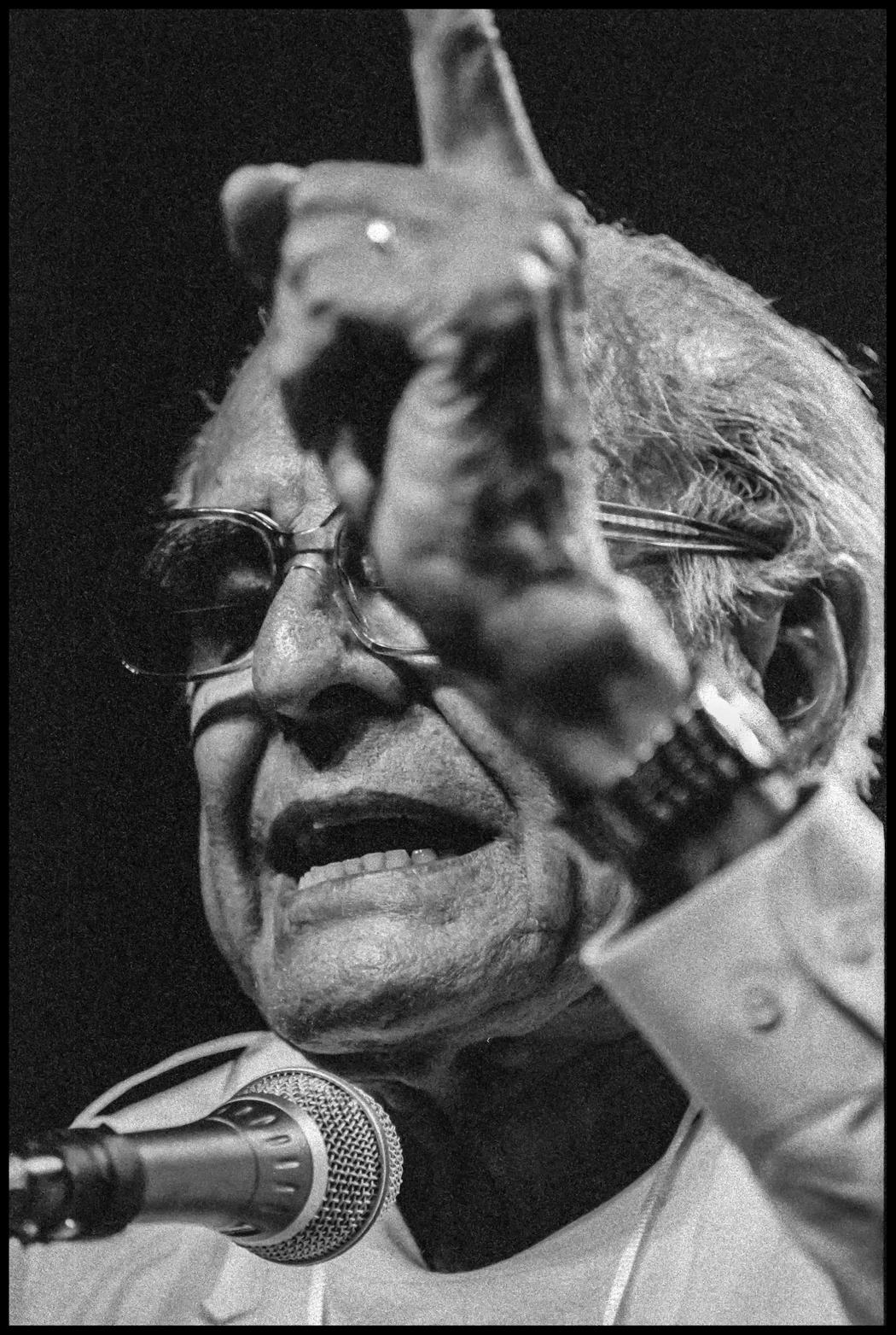
Black-and-white photo of Bert Corona speaking at a microphone, his hand raisedDAVID BACON We may remember names like Cesar Chavez, Ernesto Galarza, and Bert Corona (pictured above), but we don’t quite remember what it was they fought for, or why.
   
David Bacon.  The American Prospect.

On June 24, new COVID-19 cases passed 200 (opens in a new tab) in one day in rural Yakima County in central Washington state for the third time this June. That brought the total number of people infected to 6,940, and the number of the dead to 132. The infection toll for Seattle’s King County, with a population ten times larger than Yakima’s, was 9,453.
   COVID numbers are spiking in farmworker communities all over the United States. On June 26, the Imperial Valley (opens in a new tab), on the California-Mexican border, the source of winter vegetables worth over $1.8 billion per year, registered 5,549 cases and 70 deaths. In California’s huge San Joaquin Valley, Fresno County (opens in a new tab) had 3,892 infections and 71 deaths, and Kern County (opens in a new tab) had 4,108 cases and 63 deaths. Collier County (opens in a new tab) in Florida, center of the U.S. tomato crop and headquarters of the Coalition of Immokalee Workers, had 3,778 cases and 70 deaths. Cumberland County (opens in a new tab), New Jersey’s agricultural heartland, had 2,876 cases and 124 deaths, and nearby Chester County (opens in a new tab), Pennsylvania, where workers labor in Kennett Square’s mushroom sheds, had 3,437 cases and 313 deaths. In Arizona’s Yuma County (opens in a new tab), an irrigated desert along the Colorado River, there were 5,323 cases and 76 deaths.
   This raging rural infection rate, which tracks those of urban counties many times their size, is not due to a refusal by farmworkers to wear facemasks. It is a function of structural racism—the way immigrants in general, and farmworkers in particular, are treated as disposable labor. People in the fields are viewed as machines, whose ability to work is the only aspect of their human value worth considering.
   There is no clearer demonstration of this fact than the immigration order (opens in a new tab) issued by the Trump administration on June 23. President Trump boasted that he would “preserve jobs for American citizens” (opens in a new tab) by stopping the recruitment of guest workers in four visa categories. He failed to mention, however, that he was leaving untouched the country’s main guest worker program, under which growers bring farm laborers to the U.S.—the H-2A visa program (opens in a new tab).
   Faced with the need to please agribusiness, Trump made clear that no rhetoric about family values applies to farmworkers. H-2A migrants cannot bring a wife or a child with them (the program notoriously discriminates against hiring women), so they live the lives of lonely men in barracks. And in its most significant impact on families, Trump’s order would close down the country’s historic path for keeping families together—the family preference system for granting residence visas, or “green cards.”
   There’s nothing new about streamlining the labor supply for growers, making it cheaper and more vulnerable, under the cover of anti-immigrant rhetoric.
   Trump’s order ostensibly stops the issuance of visas for four much smaller guest worker programs, including H-1B for workers in health care and high tech; H-2B for non-agricultural workers, mostly in landscaping, forestry, and food processing; L-1 for corporate executives; and J-1, the visa for students in cultural exchange programs, au pairs, and university researchers.
   Nativist anti-immigrant organizations duly praised the order, which a senior administration official claimed to Vox “would open up 525,000 jobs.” (opens in a new tab) The anti-immigrant Center for Immigration Studies (opens in a new tab) declared, “Now there is a new sheriff in town. For the first time, a president has stood up for the American people.” According to Tom Homan (opens in a new tab), former acting director of Immigration and Customs Enforcement under Trump, “With record unemployment crushing millions of Americans ... importing more foreign labor ... is simply unacceptable.”
    Almost all media coverage took Trump’s claim at face value. Yet the announcement was clearly a case of smoke and mirrors. According to Mary Bauer, counsel for the Centro de los Derechos de Migrantes (opens in a new tab) (the Center for Migrant Rights), “We can’t figure out where these numbers are coming from. This administration just makes things up.”
In March, Trump shut down the international division of Citizenship and Immigration Services (opens in a new tab), the office that processes all visa applications abroad, and effectively closed visa operations at U.S. consulates (opens in a new tab). Most H-1B and H-2B work visa applications for this year had already been made and approved, however, and will be unaffected by the new order. The impact on employers, therefore, will be small, despite their loud, pro-forma protests.  (opens in a new tab) 
   In any case, those two visa categories have caps of 65,000 each, making them much smaller than the untouched guest worker program for agribusiness, which has no cap. Last year the administration certified grower applications to fill over a quarter of a million jobs with H-2A workers. And when Trump in March shut down the processing of all other visa applications, growers got the administration (opens in a new tab) to keep their flow of guest workers going.
   Adding one more wrinkle, the order allows employers to apply for exceptions to the work visa bans. A blanket exemption has already been made for the food supply and health care industries. Meatpacking companies that use H-2B visas to send workers into COVID-saturated plants will undoubtedly win exemptions, as will hospital corporations that want H-1B nurses to risk their lives in the pandemic’s emergency rooms. “But where’s the protection from OSHA, or for wages and sick pay, or any reform of the abuses of these guest worker programs?” Bauer asks. “There’s nothing here to protect workers, regardless of whether they’re guest worker visa holders or citizens.”
   That lack of protection is especially serious for the huge wave of workers recruited by agribusiness. Bringing H-2A workers into the country in the middle of a pandemic is dangerous. Mexico, the country from which over 250,000 were recruited last year (opens in a new tab), is struggling to contain its own outbreak. There is no testing for these contract workers as they cross the border. Meanwhile, in the U.S. towns where they’re put to work, COVID cases are spiking.
    COVID infections go back and forth between workers themselves and their surrounding communities. In March and April, the biggest apple grower in Washington, Stemilt Fruit, admitted that over 50 workers (opens in a new tab) it had recruited in Mexico had the virus. Because these workers showed symptoms more than one month after their arrival, it was likely they hadn’t brought the illness with them—they were infected here.
In many places, non-H-2A farmworkers and their families have gone on strike to enforce working conditions that would keep the virus from spreading.
   On the same day that virus cases reached 3,533 in California’s Tulare County (opens in a new tab), with 118 deaths, sorters went on strike (opens in a new tab) in the sheds of Primex Corporation’s 5,000 acres of pistachio groves. Although workers say 61 have tested positive, one worker, Veronica Perez, says the company was selling them facemasks for $8 apiece. Another worker, Ernestina Mejia, charged, “The company told us nothing. We found out workers were getting sick by talking with each other in the bathroom. Now my whole family is infected.”
   Workers in Yakima Valley apple packinghouses went on strike (opens in a new tab) earlier this month for the same demand—safety from the virus. Knowing the disease was peaking in their county, they wanted hazard pay to compensate for the terrible risk involved in just going to work.
Raising wages, however, is not part of the administration’s plan. Instead, Trump has promised to help growers lower the required pay for H-2A workers (opens in a new tab), who now make up 10 percent of the U.S. farm workforce. Currently, each state has to calculate an Adverse Effect Wage Rate that won’t undermine the wages of farmworkers already living here, who are mostly immigrants themselves. The new rule that the administration is proposing would cost workers up to $6 an hour, while saving growers millions.
   Lowering wages for H-2A workers would pull the floor from under farmworker wages in general. In Georgia (opens in a new tab), growers already fill a quarter of all farm labor jobs with H-2A visa holders. Local farmworkers are not in a strong position to insist on higher wages in the face of this forced competition. The income of farmworkers nationally is already below the poverty line, with an average annual family income between $17,500 and $20,000 (opens in a new tab).
   Grower pressure to lower costs, even at the risk of the spread of the virus, descends on states as well. In Washington, a state with a Democratic governor and legislature, the department of health was pressured to issue a toothless “guideline” (opens in a new tab) for grower housing that puts workers’ lives at risk. In the barracks for H-2A migrants, workers sleep in bunk beds closer to each other than the six-foot distance recommended by the state’s own epidemiologists. (opens in a new tab) Prohibiting bunk beds, however, would have required growers to build additional housing or hire local workers instead. Either alternative would increase costs. The “guidelines” (opens in a new tab) therefore gave bunk beds the stamp of approval, and farmworker unions and advocates are now suing the state’s Democratic administration.
   Agriculture Secretary Sonny Perdue has explained that the administration wants “to separate immigration (opens in a new tab), which is people wanting to become citizens, [from] a temporary, legal guest-worker program. That’s what agriculture needs, and that’s what we want.”
There’s nothing new about streamlining the labor supply for growers, making it cheaper and more vulnerable, under the cover of anti-immigrant rhetoric. Growers’ desire for low-wage labor was the justification for the bracero program (opens in a new tab), which brought up to half a million people per year from Mexico, to harvest U.S. crops between 1942 and 1964. The program was notorious. Braceros were held in labor camps, often behind barbed wire. If they went on strike, they were deported. If local workers went on strike, growers brought in braceros to replace them.


   Deportations and anti-immigrant racism were part of the scheme. In one year, 1954, the U.S. deported 1.1 million migrants in “Operation Wetback.” (opens in a new tab) Two years later 445,197 braceros (opens in a new tab) were brought to work on U.S. farms, 153,000 in California alone.
Thanks to the efforts of activists like Ernesto Garza, Bert Corona, and Cesar Chavez, who’d awakened Congress to the injustices of the bracero system, the program was ended in 1964. The following year, the Immigration and Nationality Act of 1965 (opens in a new tab) set up a system in which people from all nations—not just Western Europe—could come to the U.S., and in which those already in the U.S. could petition for visas for mothers, fathers, daughters, sons, brothers, and sisters. Community demographics changed in the wave of immigration that followed. Migrant workers still followed jobs and crops, and slept in labor camps.        But at the same time immigrant families—mostly people of color—sought to reunite themselves and set down roots. Their communities grew, and together with the civil rights and labor movements, began to challenge local rightwing regimes. In time, Los Angeles was no longer governed by the racist Sam Yorty (opens in a new tab), and slowly, California—once the political home of Richard Nixon and Ronald Reagan—became a liberal and “sanctuary” state.
   At the federal level, however, many “immigration reform” proposals, including laws passed in the 1980s and 1990s, have sought to reverse this course by establishing new bracero-type programs, criminalizing immigration and militarizing the border. The family preference system has been sabotaged by limits on the available visas. The waiting time for a visa to bring a married son or daughter from Manila or Mexico City is now over 22 years (opens in a new tab).
   Trump’s new order makes this course reversal official, at least until it expires in December, by placing no limits on guest workers for growers, and completely ending the issuance of visas for family reunification. That is basically the return of the U.S. immigration policy of the 1950s.
That prospect should make the order an election issue. To be sure, ending the family preference system permanently, in the view of the CDM’s Mary Bauer, cannot be accomplished without an act of Congress, rewriting the 1965 law. “Trump has been able to use the pandemic to impose temporary measures, but permanent changes can’t be done by executive order,” she says.
   Nevertheless, should Trump win reelection, it is clear that he would try to extend his order and make it permanent. A Supreme Court majority that upheld the DACA program (opens in a new tab) only a week after giving its blessing to the administration’s restrictions on asylum applicants (opens in a new tab) cannot be depended on to save family preferences.
   Why, then, is this not a big issue for Democrats? Some Democratic office holders buy the neoliberal idea that immigration policy should be “market based” and serve labor needs. There was significant support in the party for those parts of past comprehensive immigration bills that sought to end some family preferences, using the argument that they weren’t serving the needs of the economy. Some Democrats, like California’s Sen. Diane Feinstein (opens in a new tab), support H-2A and guest worker programs and see no problem making alliances with growers to preserve them.
    But what about the Democratic left? A class perspective no longer gets a candidate redbaited when it’s applied to issues like health care, gentrification, or fighting the banks. But that perspective is strangely absent when it comes to much of U.S. immigration policy.
Part of the problem is historical amnesia. We don’t remember the fights it took to get what we have now. We may remember names like Cesar Chavez, Ernesto Galarza, and Bert Corona, but we don’t quite remember what it was they fought for, or why.
   Amnesia can be costly, though. At a minimum it will keep the Democratic Party from campaigning on an issue the Trump administration has handed to it. And should the election go awry, it would mean a fast track backwards to one of the most abusive periods for immigrants in U.S. history. If the Democrats win, defending family preferences and ending the H-2A program isn’t a given either, but fighting for those goals now will build a more powerful movement for them if a new administration takes office.
   As COVID-19 sweeps through rural counties and farmworker towns, Trump’s immigration order may seem a distant issue. But the administration is using the pandemic to accomplish a goal it might not be able to otherwise, moving while attention is focused on immediate illness and death. To fight the virus’s spread, workers and immigrants have to challenge not just the dangerous working and housing conditions but also the entire system of immigration and guest worker policies from which those dangers arise. They have to fight for the same goals that Galarza and Corona fought for more than half a century ago.
   “Trump is dismantling all protections for immigrant communities, especially for families and workers,” says Alma Maquitico, co-director of the National Network for Immigrant and Refugee Rights. “Our families are the ones risking COVID to harvest crops and care for others. We need real legalization for those without papers, and a working preference system for keeping our families together. Guest worker programs don’t do either of these things. They just exploit us.”
IMMIGRATION THE TRUMP ADMINISTRATION LABOR CORONAVIRUS WASHINGTON STATE CALIFORNIAAGRICULTURE
 
 
https://prospect.org/labor/trump-immigration-order-farmworkers-no-rights/ (opens in a new tab)


0 Comments on Labor Day - Trump’s Immigration Plans- A Fast Track to an Abusive Past.

Sanders - Democracy Is at Stake

9/4/2020

0 Comments on Sanders - Democracy Is at Stake

A Mass Movement Labor Strategy

9/3/2020

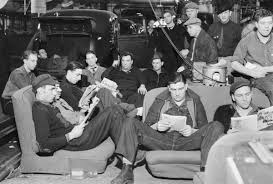
Black-and-white photo of sit-down strikers reading newspapers on car seats inside an auto plantSit Down. 1936


An excerpt from Mass Movement Labor Strategy for DSA.  A position paper of the Collective Power Network of DSA. Aug. 26, 2020.   A viewpoint. 
Edited for length.


Intro: To drive the socialist movement deep into workplaces across the country, DSA needs an ambitious approach to labor organizing that taps the potential of our 70k-strong membership. In this strategy guide, Collective Power Network presents our mass movement labor strategy for DSA…
 
An excerpt from Mass Movement Labor Strategy for DSA. 
 
For Unionism, 
For Organizing Where We’re At,
Against Substituting Agitation for Struggle
We will never gain credibility by leading our coworkers into losing battles, no matter how righteous they are. It’s often alleged that the primary barrier standing in the way of victory for the US left is an uneven development of working-class consciousness. Based on this assumption, agitation becomes prioritized over any other organizing goals. Organizing campaigns are chosen based on their agitational potential, but not their potential for material gain. But leading our coworkers into unpopular or infeasible campaigns for the sake of consciousness-raising, rebellion, or theoretical purity objectifies workers by treating their lives like political experiments. While it’s true that unionization is not always immediately feasible as an organizing goal, worker agitation is not an end unto itself. If anything, agitation with no plan for success is even more alienating. 
For Fighting to Win
We support a labor strategy that empowers our members to engage in long-term organizing efforts at their workplaces with the primary intent to win material victories by leveraging majoritarian political power. If we intend on making DSA an organization of the working class, we have to build organizational credibility. The best way to do this is to win. To gain credibility for DSA as a vector for working class politics, we have to rebuild the labor movement from the ground up with sustainable, democratic structures that masses of workers can participate in and materially benefit from.
Functionally, this means running quality DSA campaigns in our workplaces. Quality campaigns are properly planned, resourced, and executed. This doesn’t mean that DSA should try to be a union. But DSA must aim to be a mass working class weapon against capital, and at times revolutionary work looks like bread-and-butter workplace organizing. DSA-supported unionization drives are impressive examples of our ability to enact working class politics. Other campaigns like the Restaurant Organizing Project are not premised on winning union recognition or collective bargaining agreements, but they still set out to win life-altering concessions from bosses through collective worker action.
 
For Organizing the South 
Read the entire piece.
https://dsaorganizer.org/2020/08/26/mass-movement-labor-strategy/

For a  detailed view of labor history see

https://medium.com/@kurtstand/labor-history-35-books-for-socialists-a-selective-annotated-bibliography-34aa047a6661


0 Comments on A Mass Movement Labor Strategy

The Future of Progressives in the Democratic Party

8/31/2020

0 Comments on The Future of Progressives in the Democratic Party

The Democratic Party Does not support Open Borders. That is another Trump Lie !

8/28/2020

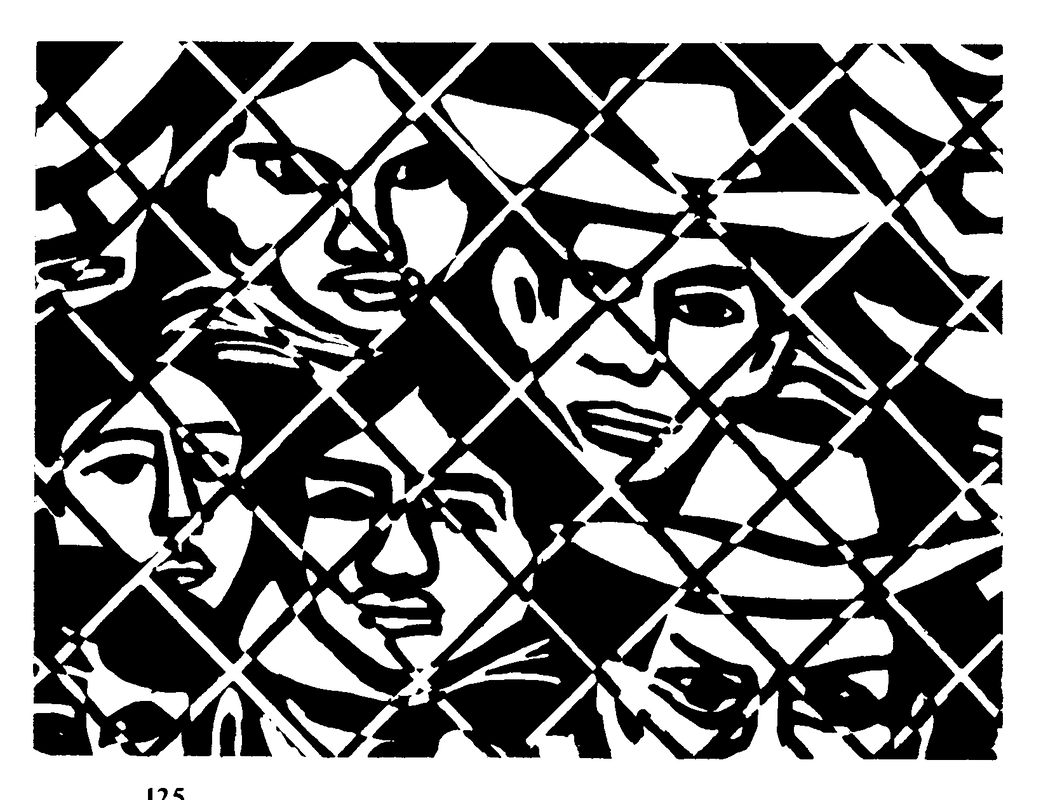
Rini Templeton drawing of migrants’ faces behind a chain-link fenceRini Templeton
Donald Trump and his allies at the RNC repeatedly make the argument that the Democrats and Biden support Open Borders.  This is false.  The following essay reposted from last year describes many of the conflicting positions on immigration- NONE argue for Open Borders.  ( although a  poorly informed resolution at DSA’s 2019 convention does endorse open borders.) 
 
 
Steps Toward a Labor Informed Position on Immigration
Duane E. Campbell 
 
( a prior version of this paper appeared on Portside with the title: The Left Case Against Open Borders-by Angela Nagel:  a Review) 
 
Tens of thousands of Hondurans, El Salvadorans and Guatemalans are fleeing  hunger and death.  Usually they do not flee in caravans but alone or with their immediate families. Caravans are formed for protection from crimes, assault, rape and extortion. As the Exodus Caravan from Honduras has reached our borders, there is a heightened sense of fear in the nation promoted by Donald Trump and his administration.
 
To  begin with, the caravan of poor people at our border should not be stopped.  Instead, those eligible for refugee status should be admitted required by the 1951 UN Convention on the Status of Refugees, the Universal Declaration of Human Rights (1946) and current U.S. law.  DSA’s Immigrants’ Rights Committee is actively involved with several local chapters in support of the migrants in the caravan in Tijuana, Mexico. 
 
When writers  propose an immigration policy and a critique of a movement, it is important to get the story right. People’s lives depend upon it.

It Is Not About Open Borders

In the article, “The Left Case against Open Borders”, writer Angela Nagel  gets some  of the economic conditions correct, but like Trump, she argues without evidence that the problem is that  unions, the Left  and immigrants’ rights activists support  “open borders”.   Her  writing  follows from the position in Melting Pot or Civil War? A Son of Immigrants Makes the Case Against Open Borders – (2018) by Reihan Salam
 Developing a policy on migration for labor and  the left  is far more complex than presented by  these writers.  
 
First we must  deal with some of  the false accusations about the role of unions  in the immigration policy  debates.  
 
Writer Nagel is wrong  in asserting that the left and labor favor open borders. This is accepting the false narrative of Trump and the anti- immigrant forces. 
 
There has been a long and well developed movement for immigration reform, along with connected policy proposals – few of which argue for open borders. Progressive policies and practices have emerged from within U.S. communities and the labor movement.  The writer seems to not be aware of this history. Instead she describes critics of the current attacks on immigrants as “Useful Idiots.”
 
She notes the Reagan Administration policy  known by Republicans  as amnesty without noting that the  Simpson- Mazolli Act was the consequence of a multi- year struggle for immigration reform by both corporate forces and community groups. 
This  Immigration Reform and Control Act of 1986 bill permitted the legalization of some 2 million farmworkers and over 4 million others already living in the U.S.  This program was a hard fought product of years of struggle by immigrants’ rights activists and their allies.
 
In addition to providing a path to legalization for many already here, the act required employers to attest to their employees immigration status  and made it illegal for hire or recruit undocumented workers.  These provisions were known as employer sanctions.  The act also contained the program known as H2A which provides a system of temporary, controlled farm labor “guest workers” with very limited ability to organize, to have a union,  and to demand improved wages or working conditions. The law further  includes  H1B temporary workers in high skilled technical fields.  By 2017, some 40,000  agricultural “guest workers” were employed in the fields  and some 419,000 mostly high tech H2B workers were employed in the U.S. 
 
Immigrant rights groups opposed employer sanctions arguing that they would provide the employer with yet another way to exploit and intimidate immigrant workers.  Now, the Nagel article argues for E verify system, which is the current digital  process of employer sanctions, without noting that employer sanctions were  opposed by the AFL-CIO in their  landmark 1999 resolution on organizing immigrant workers.   

In 1994, a Republican led Congress, with the support of 102  Democrats, passed the North American Free Trade Act, the economic construction that provides for free trade of goods and services but did not change immigration law. The promise made by NAFTA supporters was that the new trade regime would significantly reduce immigration.  Instead, NAFTA impoverished millions of small farmers in Mexico and drove  many of these workers to migrate to the U.S.
In 1996 the Republicans passed and Bill Clinton signed the Illegal Immigration Reform and Immigrant Responsibility Act of 1996, a repressive bill that  provided for the construction of fencing along the border and criminalized many factors of immigrant life. Over the decade there were numerous appropriation bills to provide increased funding for the Border Patrol,  militarization and fencing of the border.
It Is Not About Mass Migration
In 2005 when Republicans pushed the Sensenbrenner bill , the Border Protection, Antiterrorism and Illegal Immigration Control Act of 2005 , unions with significant immigrant membership worked with immigrants rights groups to muster over 1 million into the streets in protest around the country on May 1, 2006,  to kill the bill. They did demand a new amnesty for workers already here, this is what the Republican nationalists call a demand for open borders and mass migration. 
 
Nagel argues: “There is no getting around the fact that the power of unions relies by definition on their ability to restrict and withdraw the supply of labor, which becomes impossible if an entire workforce can be easily and cheaply replaced. Open borders and mass immigration are a victory for the bosses.”
 
While this is  partially true, neither unions nor the left have been arguing for open borders nor mass immigration.  They have been arguing for revised policies that protect the rights of migrant workers including their right to form unions. 
Nagel argues that support for restriction of immigration  can be found in labor history.   Yes, organized labor has long had two traditions on immigration; one urged restriction of immigration, the second urged recognizing that immigrants were here and sought to organize  them into unions.    Certainly there are instances of  organized labor being anti immigrant, such as in the Chinese Exclusion Act.   However she uses her history very selectively for example ignoring the unionization of the Industrial Workers of the World , the CIO  and  Packinghouse Workers among many.   BTW. the socialists in labor were almost always on the side of supporting unionizing immigrant workers- not of building walls. 
 Seeking to support her claim, Nagel cites as evidence references to the UFW strike in 1969 ( I think she means 1973).  In the strike mass Immigration was not the issue confronted by the UFW, it was strike breaking. The author, an Irish writer, may not know that the UFW has organized undocumented labor, has helped tens of thousands to  achieve their  legalization papers and has proposed more immigration and the protection of farm worker rights. The actual history of the UFW contradicts her thesis and the photo of Cesar Chavez used to promote the essay is -at best- a deception. 
 
 It would help for the writer  to be better informed on the immigrants’ rights movement and the labor movement.  If you are going to describe union’s approaches to immigration, you should deal with union sources, not the Koch Foundation funded think tanks she currently relies upon.  

It Is About Workers’ Rights

In 1999 and 2000 The AFL-CIO changed its policy and no longer supported efforts prior efforts that blamed workers for migration.   Since the 2000  change  of federation policy several unions have changed their stance and work to  organize immigrant workers rather than trying  to keep them out of the country, but these unions  have not argued for open borders.
See, Illegal People: How Globalization Creates Migration and Criminalizes Immigrants,  Bacon (2008)
 
Nagel describes  the neoliberal  corporate opinion campaign in support of more immigration. These are corporate campaigns, not union campaigns. 
The left and unions are not promoting open borders, they are defending workers- some of who are undocumented.  Workers without  legal status are a product of the biases in current immigration law including per country caps on granting visas.  
Angela Nagel is the author of a prior book Kill All Normies.  Her criticism of immigration politics  seems , like her book, to be informed by  a class of pundits and hash tag politics  rather than a  working knowledge of U.S.  labor unions and their history in dealing with immigration. 
 In her essay Nagel  describes well several  aspects of global finance and NAFTA.  Yes, there are real problems with NAFTA.  But, NAFTA was and is a neoliberal project, not a left project nor a union project.   Rather than accepting the  neoliberal argument that the U.S. has benefitted from migration, it would be more accurate to argue that certain corporations and industries and their owners  have benefitted in the U.S., Canada and Mexico. The lobbyists from these industries dominate finance and  the foreign policy establishment and they  promote the  reconsideration of NAFTA.  Other corporations and most workers are harmed by the  current exploitation of illegal migration- such as in farm labor and construction.  The winning corporations externalize their own costs to the entire society and take little responsibility for their actions including the destructions of entire communities.  Under CAFTA, (Central America Free Trade Agreement) for example, the U.S. military is active in Honduras and other parts of Central America paid for by us all for the benefit of specific corporations not to the benefit of the people of the U.S.

Addressing Root Causes of Migration- The Economy

Angela Nagel makes her most useful point when she argues in her conclusion,   “The proper response, therefore, is not abstract moralism about welcoming all migrants as an imagined act of charity, but rather addressing the root causes of migration in the relationship between large and powerful economies and the smaller or developing economies from which people migrate. “
 
Most labor and left advocates of immigration reform would agree with her assessment of the need to address the root causes of migration.   See for example,  Bacon,  The Right to Stay Home: How U.S. Policy Drives Mexican Migration (2013) 
There were 27.4 million foreign born persons working in the U.S. labor force in 2017- 17.1 percent of the total labor force.  Latinos accounted for 47.9 percent of the total and Asians 25.2 percent,  As of 2016, roughly 10.6 million of  all the 16.3 million workers covered by a union contract were women and/or people of color.  More than a third (35.8 percent) are black, Latino or Asian.  
 These are the workers discussing the future of immigration and how it will affect their work lives, their unions, and their families.  
 
The growth of neoliberal corporate capitalism and the global markets produce a few winners and millions of losers including millions of migrants.
The actual alternative to the current existing  immigration policy is  not “ open borders”- it  is enforcement of existing employment laws as a first step, followed by the development of new employment and immigration laws, leading to a fair, pro worker  system of immigration. 
 
The U.S. does need to develop a new immigration policy. Note- asylum policy is different than immigration policy.  
In the last 50 years immigration policy was shaped by what could be passed through Congress, not what ought to be policy.  A policy that the left might favor such as the control of capital is not likely to pass the Congress.
We should try something different.  We should try consulting working people.  An enlightened policy on immigration is more likely to emerge from  including leaders and activists from the multi-racial (and significantly immigrant) working class in conversations and  cooperation with labor and  left forces in other countries.  
One  example, in July 2018  Mexico elected a new left president, Manuel Lopez Obrador.  After the vote, and prior to his inauguration on Dec.1, progressive independent labor unions have emerged after decades of repression.  These unions will represent Mexican workers. 
 
Trump, in his arrogance, has told Mexico to enforce U.S. immigration and asylum policy at the border in Tijuana and  on November 24, he claimed that he had an agreement with the new Obrador government.  He did not. Readers should understand that current U.S. immigration policy and drug policy  is  significantly dependent upon the continuing  cooperation of the Mexican Army.  The Obrador government  responded  to Trump’s demand by offering to cooperate if the U.S. provided $20 billion in development  aid to Honduras, El Salvador and Guatemala. We have not heard of a response. 
 
We on the left  should engage with the newly insurgent labor movement and the new government of Mexico and the peoples of Central America in designing  an immigration policy that serves working people on both sides of the border.  
 
 
David Bacon describes  the issues  well, 
Without changing U.S. trade policy and ending structural adjustment programs and neoliberal economic reforms, millions of displaced people will continue to migrate, no matter how many walls are built on the border.

Changing corporate trade policy and stopping neoliberal reforms is as central to immigration reform as gaining legal status for undocumented immigrants.  There is a fundamental contradiction in the bipartisan policies in Congress that promote more free trade agreements, and then criminalize the migration of the people they displace.  Instead, Congress could end the use of the free trade system as a mechanism for producing displaced workers.  That would mean delinking immigration status and employment.  If employers are allowed to recruit contract labor abroad, and those workers can only stay if they are continuously employed (the two essential characteristics of guest worker programs), then they will never have enforceable rights.

 
THE RIGHT TO MIGRATE, THE RIGHT TO STAY HOME
By David Bacon  NACLA Report on the Americas
Volume 50, 2018 - Issue 3: NACLA at 50: 
https://www.tandfonline.com/doi/abs/10.1080/10714839.2018.1525078
 
The DSA Immigrants’ Rights Committee has worked toward defining a socialist approach to immigration that respects working people. Working with the national office we are actively engaged in supporting efforts by several DSA chapters and individuals to provide support for the migrants in Tijuana, Mexico.
 
We oppose the efforts of both Trump nationalists and neoliberal advocates to  avoid discussion of  the  neoliberal economic system we currently have that produces migration.  


Duane Campbell has over thirty years of experience working with unions and immigrants’ rights organizations.  He is currently a co-chair of DSA’s Immigrants” Rights Committee. The committee can be contacted at  (new e mail) 
immigrantrights@dsacommittees.org 


0 Comments on The Democratic Party Does not support Open Borders. That is another Trump Lie !

Today's Statement from  The Civil Rights Movement Veterans -August 28, 2020

8/28/2020


August 28, 2020
Washington Post (opens in a new tab)

Fulfilling our Obligations, and 

Passing the Torch

"When I was the rabbi of the Jewish community in Berlin under the Hitler regime, I learned many things. The most important thing that I learned under those tragic circumstances was that bigotry and hatred are not the most urgent problem. The most urgent, the most disgraceful, the most shameful and the most tragic problem is silence.

Rabbi Jacob Prinz, Speech at the March on Washington, August 28, 1963

"I appeal to all of you to get into this great revolution that is sweeping this nation. Get in and stay in the streets of every city, every village and hamlet of this nation until true freedom comes, until the revolution of 1776 is complete. We must get in this revolution and complete the revolution...."

John Lewis, Speech at the March on Washington, August 28, 1963

We in the Black Freedom Movement of the 1950s and 1960s held countless mass meetings in churches and community halls in Black communities throughout the Jim Crow South. On August 28, 1963, for the first and only time, we gathered before the Lincoln Memorial for a mass meeting on a national scale, joined and witnessed by the entire country. We called this mass meeting "The March on Washington for Jobs and Freedom".

No one who was there can ever forget it.

We were there.

With approximately 250,000 in attendance, and tens of millions watching on network TV, the March on Washington was the largest gathering for racial justice, economic equality and human rights ever assembled to date. Martin Luther King, Jr. called it "the greatest demonstration for freedom in the history of our nation."

We are surviving members of Dr. King's inner circle, student activist leaders from the Nashville sit-in movement and Mississippi voting rights campaign and singers who performed from the stage at that historic gathering in Washington. Some of us 2 worked primarily with the Southern Christian Leadership Conference (SCLC); others were among the leadership of the Student Nonviolent Coordinating Committee (SNCC). Dr. Clarence B. Jones, as lawyer for Dr. King, and Courtland Cox, representing SNCC, served on the planning committee for the March with lead organizers Bayard Rustin and A. Philip Randolph.

The March on Washington took place fifty-seven years ago today.

We remember it like yesterday. We remember Dr. King's iconic speech, as we remember each of those who addressed the crowd: fourteen of the nation's most important religious and moral leaders including eminent Protestant, Catholic, and Jewish clergy; presidents of national civil rights, labor and student organizations.

With the death of our dear friend John Lewis, none of March on Washington speakers are still alive.

We mourn Congressman Lewis and Rev. C.T. Vivian, who died just six weeks ago; we mourn dear friends and mentors who died in the last few years, including Julian Bond, Amelia Boynton, Dorothy Cotton, Vincent Harding, Joseph Lowery, Jack O'Dell and Harris Wofford; we mourn our beloved Martin King, taken from us at the age of 39; and we mourn Ella Baker, Fannie Lou Hamer, James Orange, Rosa Parks, Bayard Rustin, A. Philip Randolph, Fred Shuttlesworth, Hosea Williams and so many others beloved sisters and brothers in the movement we lost over the intervening decades.

Our numbers are diminishing. Those of us who remain feel a heavy burden of moral responsibility. We remember the old African saying: if the surviving lions don't tell their story, the hunters will be remembered as "heroes".

We feel obligated to accurately recall the true story of our nonviolent movement to transform our country. We affirm the direct lineage from the Black Freedom Movement of the 20th century, in which we were immersed, and the Black Lives Matter Movement and renewed Poor People's Campaign of the 21st century which we profoundly admire, and wholeheartedly endorse and support.

For decades America portrayed the 1963 March on Washington as a symbolic apotheosis of peaceful social change, racial harmony and reconciliation. Yes, the 3 March was a uniquely powerful demonstration of the struggle for racial justice. But this struggle continues, as systemic racial injustice persists.

We feel a heavy burden of responsibility as together we face this moment of moral reckoning throughout America.

On May 25, we witnessed George Floyd's 8 minute, 46 second suffocation under the knee of a white police officer in Minneapolis, Minnesota.

Just a few days ago, we witnessed police in Kenosha, Wisconsin fire seven shots at close range into the back of Jacob Blake.

At this inflection point in U.S. history, we are duty-bound to honestly recognize our failures as well as our achievements as a nation since Dr. King shared his dream.

"Power concedes nothing without a demand," Frederick Douglass insisted. "It never has, and it never will."

In August 1963, we came to Washington in the spirit of what Dr. King called "the marvelous new militancy" of the young Black activists in sit-ins, freedom rides, boycotts and marches throughout the South.

In the spirit of Frederick Douglass, we came in force to make demands.

Economic justice and a living wage

On August 28, 1963, we marched to demand an end to legally sanctioned segregation. We achieved this demand the following summer with the enactment of the landmark 1964 Civil Rights Act. Tragically, however, Dr. King's dream of a racially integrated society has been abandoned. Today in 2020 de facto segregation in housing and education persists, and there has been no progress in reducing the corruption of white supremacy on the allocation of resources to schools, or the distribution of income and wealth in our society.

Nearly sixty years after the March on Washington, the net worth of a median white family in America remains ten times greater than that of a median Black family in our country. A wealth gap of this magnitude violates the fundamental principle that 4 everyone is created equal; it can and will be eliminated when an electoral majority deems it morally unacceptable.

We cannot forget that the March on Washington was for jobs as well as freedom.

Fifty-seven years ago, we marched to demand a national program of public works, including job training, for the unemployed. Today, when our society suffers from the most severe economic insecurity and mass unemployment since the Great Depression, we renew our demand.

On August 28, 1963, we marched to demand a $2-per-hour minimum wage across the country, a wage equivalent to $17-per-hour today.

Today, in 2020, the federal minimum wage is a woefully inadequate $7.25 per hour. This is unacceptable, a return to the "starvation wages" John Lewis rightfully deplored in his speech to the March.

In a time of pandemic, our essential service workers are front-line soldiers, risking their health and lives for the health and lives of others. We call them "heroes," but this is hypocrisy, because we do not treat them as such. At minimum wage, they are forced to take multiple jobs, to push their family well-being to the brink. This is unacceptably dangerous for workers, and their children, and it is unacceptably dangerous for our society as a whole. We must learn from our failure to contain Covid-19 and from the unnecessary deaths of so many people.

We must treat our essential workers with respect and care. The least we can do is make sure that we pay them a decent wage that will bring them out of poverty.

We renew our demand for a national program of public works, and a living wage for all American workers.

Securing and exercising the right to vote

On March 28, 1963, we marched to secure the vote for all Americans. We achieved this demand two years later, with the enactment of the 1965 Voting Rights Act. Tragically, however, we have experienced a terrible, relentless backlash.

Seven years ago, the Supreme Court's 5-4 decision in Shelby County v. Holder eviscerated the most important federal protection Congress had established to protect voting rights in states with a deep history of voter suppression. Immediately, many of states enacted legislation to curtail access to voting and suppress the vote, especially among Black citizens.

We urgently appeal to Congress to restore the full protections of the 1965 Voting Rights Act. We demand that access to the ballot for all citizens be guaranteed and expanded for all citizens in every state.

On August 28, 1963, we marched to demand enforcement of the 14th Amendment to the Constitution by reducing congressional representation from States that disenfranchise citizens. We renew the demand that our Constitution be enforced in the face of widespread voter suppression today.

In his electrifying speech fifty-seven years ago, John Lewis deplored racist systems that deprived Black people of their Constitutionally guaranteed right to vote.

"'One man, one vote' is the African cry," he said. "It is ours too. It must be ours!"

He urged all citizens able to exercise their right to vote to remove from office all morally corrupt politicians who "ally themselves with open forms of political, economic, and social exploitation."

Before Dr. King shared his dream of the future, John Lewis demanded that we wake up to the national nightmare of the present. "We must say: 'Wake up America! Wake up!'"

Every American has a sacred obligation to honor the memory of countless martyrs who died to protect our voting rights. Citizenship means nothing if we abandon our collective power of the ballot. Voting is our moral and political responsibility as citizens, and it represents the collective power we must exercise to save our country.

In this moment of national emergency, when our democracy is threatened as never before since the end of Reconstruction and the entrenchment of Jim Crow terror throughout the 6 South, we call on all qualified Americans to exercise your power as citizens to register and vote.

We applaud and support the urgent work of next generation voting rights defenders and organizers including the M4BL Electoral Justice Project, the Black Voters Matter Fund, and the student activists of the Andrew Goodman Foundation. Together these young leaders are fighting to secure our Constitutional rights and mobilize the vote in Black and other communities of color throughout the United States. We honor them, support them, and follow them.

"The marvelous new militancy"

We as a nation remember Martin Luther King Jr.'s dream, as we should. But we must not forget Dr. King's urgent call to action on that day.

"In a sense we've come to our nation's capital to cash a check. When the architects of our republic wrote the magnificent words of the Constitution and the Declaration of Independence (Yeah), they were signing a promissory note to which every American was to fall heir. This note was a promise that all men, yes, black men as well as white men (My Lord), would be guaranteed the unalienable rights of life, liberty, and the pursuit of happiness. It is obvious today that America has defaulted on this promissory note insofar as her citizens of color are concerned. (My Lord) Instead of honoring this sacred obligation, America has given the Negro people a bad check, a check which has come back marked insufficient funds."

In his speech to the March, Dr. King asked us to imagine redemption in the most concrete terms.

He emphasized that redemption can only come from organized nonviolent protest attentive to "the fierce urgency of now." Indeed, he warned us that "[I]t would be fatal for the nation to overlook the urgency of the moment." He meant it literally. "There will be neither rest nor tranquility in America until the Negro is granted his citizenship rights," he said. "The whirlwinds of revolt will continue to shake the foundations of our nation until the bright day of justice emerges."

Dr. King made it clear that our movement depended on the "marvelous new militancy" of the nonviolent student activists in the Black community: tens of thousands of young people engaged in lunch counter sit-ins in Greensboro, Nashville and cities throughout the South; the young people risking their lives on the Freedom Rides in South Carolina, Alabama and Mississippi; the young people who came together to form the Student Nonviolent Coordinating Committee (SNCC), and the youth of Birmingham who filled Bull Connor's jails and desegregated the most racist city in the Jim Crow south.

Above all, Dr. King praised the young activists for their steadfast courage and unwavering commitment to disciplined nonviolence on the front lines of the struggle against racist violence directed against them, and he lauded the increasingly multiracial nature of their nonviolent direct-action campaigns.

"We must not allow our creative protest to degenerate into physical violence. (My Lord) Again and again (No, no), we must rise to the majestic heights of meeting physical force with soul force. (My Lord) The marvelous new militancy which has engulfed the Negro community must not lead us to a distrust of all white people (Hmm), for many of our white brothers, as evidenced by their presence here today, have come to realize that their destiny is tied up with our destiny [sustained applause], and they have come to realize that their freedom is inextricably bound to our freedom. We cannot walk alone.
 

And fifty-seven years ago, Dr. King called us to protest racist violence perpetrated by officers of the state, and to keep protesting until Black people no longer experience extrajudicial beatings and killings by the police.

There are those who are asking the devotees of civil rights, 'When will you be satisfied?' We can never be satisfied as long as the Negro is the victim of the unspeakable horrors of police brutality..."

Black Lives Matter

Today, in 2020, the killings of Tanisha Anderson, Ahmaud Arbery, Philando Castile, Dominique Clayton, George Floyd, Eric Garner, Botham Jean, Atatiana Jefferson, Eric Reason, Breonna Taylor and countless others demonstrate the tragic reality that Black Americans remain the victim of unspeakable horrors of police brutality.

When will it stop?

Today, Jacob Blake lies in a hospital room in Kenosha, Wisconsin, paralyzed from a severed spinal cord.

Why does such wanton police brutality continue to happen, over and over, against Black people?

What kind of country are we?

We remember Rabbi Jacob Prinz's haunting words, by the Lincoln Memorial on August 28, 1963. "A great people which had created a great civilization had become a nation of silent onlookers. They remained silent in the face of hate, in the face of brutality and in the face of mass murder." And Rabbi Prinz issued a moral plea: "America must not become a nation of onlookers. America must not remain silent. Not merely black America, but all of America."

Enough is enough.

No, we cannot be satisfied today. And we must turn to our young activists for leadership to steer us to the Beloved Community Dr. King envisioned.

Even at the height of the coronavirus pandemic, young BLM leaders achieved results far beyond what Dr. King and the civil rights movement of the 1960s were able to accomplish: bringing somewhere between 15 million to 26 million Americans of all races and generations into the streets for the largest nonviolent protest movement in the history of the United States.

Systemic racism is brutal violence. We cannot be satisfied until all forms of systemic racism are finally eliminated in our country. We turn to the young activists of the Black Lives Matter movement to lead us there, through the greatest power the world has ever seen: the power of organized, transformative nonviolence.

March for our Lives - to end the national epidemic of gun violence

We must nonviolently put an end to the institutionalization of killing. This requires us to purge our society from our unholy and deadly addiction to guns.  

The greatest public health emergency in our nation is the catastrophic rate of homicide caused by the proliferation, accessibility and routine use of firearms.

With four percent of the world's population, Americans own approximately 46% of the entire global stock of 857 million civilian firearms. There are more than 393 million civilian-owned firearms in the United States -- enough for every man, woman and child to own one and still have 67 million guns left over.

These numbers are obscene.

We stand with the American College of Surgeons, the American Association for the Surgery of Trauma, and more than forty other medical and injury prevention organizations that have urged our government to adopt a comprehensive public health and medical approach to address the gun violence epidemic in our country.

Like the Covid-19 pandemic, the gun violence epidemic has disproportionately ravaged low-income Black and other communities of color.

We cannot be satisfied until the grave public health crisis of gun violence ceases to decimate families, neighborhoods and communities throughout the United States.

Again, we honor the marvelous new militancy of nonviolent activism, young people who have been courageously fighting the gun lobby to secure a world where they no longer must live in fear of being killed by guns. Survivors of the 2018 mass shooting at Marjory Stoneman Douglas High School in Parkland, Florida launched the extraordinary March for Our Lives movement, which continues to mobilize millions of students throughout the United States. Thousands of engaged churches, community and health organizations, and gun control advocacy groups hold prayer vigils and peaceful protest marches to awaken the moral conscience of America, neighborhood by neighborhood, until we take comprehensive action to stop gun proliferation at the national level. We praise and defer to their leadership as we move forward together to build a future without the scourge of gun violence.

Nonviolent direct action to stop climate and environmental catastrophe

In 1967, when Dr. King wrote his final book (Where Do We Go From Here: Chaos or Community?), no one understood how unchecked global warming would generate 10 climate chaos and threaten the survival of our species. We had no idea how the devastating consequences of greenhouse gas accumulation, and the toxic harms of chemical poisoning and industrial pollution, would disproportionately harm Black and other communities of color in the United States and the global South.

We cannot be satisfied until we have transformed our society from an economic system dependent upon the relentless extraction and burning of fossil fuels to a post-carbon system based upon the generation of clean energy, available to everyone, and the restoration of societies that have been ravaged by global warming and toxic harm.

Once again, we turn for leadership to the marvelous new militancy of nonviolent activism.

Young activists including Greta Thunberg speak truth to power all over the world. In the United States, youth have been at the front lines of peaceful mass protests involving millions of Americans of all ages and races across the economic spectrum of our society.

We strongly support the Sunrise Movement, Global Climate Strike, 350.org, the Climate Action Network, the Climate Reality Project, Interfaith Power and Light, and all of the organized efforts to mobilize nonviolent direct action to prevent climate catastrophe and restore the health of our communities and our planet.

We praise and defer to their leadership as we move forward to build a future in which human civilization can survive and all dimensions of our humanity sustained.

Our obligation on this day

To honor the memory of our beloved Martin King, we can never be satisfied until we have overcome racism, poverty and racism. We can never be satisfied until we achieve the Beloved Community in our country and throughout the world. We will not be satisfied until justice rolls down like waters and righteousness like a mighty stream.

Honoring Dr. King, we are humbled on this day.

With admiration and gratitude, we pass his torch to the activist youth in the Black Lives Matter, March for our Lives, and climate justice movements.

We know that their marvelous new nonviolent militancy will lead us to the Promised Land.

Our obligation on this day is to follow their leadership. 

We urge all Americans to join our courageous nonviolent young activists in the hard work of building a just and free society in which we shall overcome.

Wake up, America! Wake up!

Signatories

Joan Baez, activist and singer
Ms. Baez performed at the March, including leading the crowd in "We Shall Overcome." In the following years, she joined Dr. King in protests against racial injustice and the War in Vietnam.

Harry Belafonte, activist and singer
Mr. Belafonte organized the celebrity delegation to attract the largest possible national TV audience to the March. He worked closely with Dr. King and Dr. Clarence Jones in support of the Black Freedom Movement throughout the 1960s.

Xernona Clayton, Founder, President and CEO of the Trumpet Awards Foundation
Civil rights leader and close friend and confidant to Dr. Martin Luther King, Jr., Ms. Clayton received the SCLC's inaugural Coretta Scott King Award.

Courtland Cox, Director, Student Nonviolent Coordinating Committee Legacy Project
With John Lewis, Mr. Cox represented SNCC on the March planning committee. He later joined Stokely Carmichael registering Black voters in Lowndes County, Alabama, and he became SNCC Program Director.

Dr. Clarence B. Jones, Director, USF Institute for Nonviolence and Social Justice
As legal counsel and strategic advisor to Martin Luther King, Jr., Dr. Jones represented Martin Luther King, Jr. on the March planning committee. Dr. Jones frequently assisted Dr. King as draft speechwriter, and he wrote the first seven paragraphs of Dr. King's iconic "I Have a Dream" speech at the March.

Dr. Bernard Lafayette, Jr., Founding Director, URI Center for Nonviolence and Peace Studies From his early days as a Freedom Rider and sit-in leader in Nashville, Dr. Lafayette was a leading student activist with SNCC and organizer with Dr. King's SCLC.

Reverend Dr. James M. Lawson, Jr., Founder, The James Lawson Institute
More than any other individual, Rev. Lawson brought the theory and practice of Gandhian nonviolence to the Black Freedom Movement of the 1950s and 1960s. He was the Movement's leading teacher and trainer of disciplined, transformational nonviolence for Dr. King's SCLC as well as for hundreds of student activists, including SNCC leaders.

Janet Moses, M.D.
As SNCC field secretary in Alabama and Mississippi, Dr. Moses was a leading activist in voter registration drives in some of the most racist and violent counties in Alabama and Mississippi.

Robert (Bob) Moses, President, The Algebra Project
Immediately before the March, Mr. Moses led young SNCC demonstrators in protest against the Justice Department's tacit alliance with Dixiecrat segregationists. Following the March, he led the 1964 Mississippi Freedom Summer Project; with Fannie Lou Hamer, he helped to create the Mississippi Freedom Democratic Party.

Ambassador Andrew Young
Early in the Movement, with Dorothy Cotton, Amb. Young directed the SCLC's Citizenship Education Program. As a close confidant to Dr. King, Amb.Young helped lead the SCLC campaigns in Birmingham (1963), St. Augustine (1964), Selma (1965), Chicago and Atlanta (1966), and he served as SCLC Executive Director.

0 Comments on Today's Statement from  The Civil Rights Movement Veterans -August 28, 2020

Thoughts on the Issues of Staff, Political Expression, and Organizational Structure of DSA

8/26/2020

By Bill Barclay and Peg Strobel
DSA Ventura County
 
 
Background
 
Recently there have been discussions of the way in which DSA staff members should or should not express political opinions, either in personal contact with other DSA members, on DSA media, print and digital and to a larger public.
 
By way of introduction we should acknowledge our previous experience with these questions. Both of us were in one of the two predecessor organizations to DSA, the New American Movement (NAM).  Bill served in the national office of NAM as one of the three elected leaders of the organization.  NAM was, of course, much smaller than DSA is today. There were only three (very under-) paid staff and these were all elected at NAM’s national conventions.  These elected leaders were expected, and did, both run the organization and also articulate political positions and perspectives between and at the national conventions.  While we think this worked reasonably well for NAM, it is not a model that we think should be adapted by DSA. A second relevant background experience is that Peg served on DSA’s NPC for six years and acquired a close-up knowledge of how the national office functioned.  The organization was much smaller then, although beginning to grow during her third term on the NPC.
 
DSA Staff and Expression of Political Positions
 
In thinking about the issue of staff and the expression of political positions, we have conceptually divided the DSA staff between political and technical functions.  We recognize that there are times when this distinction may be a little fuzzy around the edges but we believe this distinction is useful in terms of thinking about the question of staff roles and political expression.
 
We believe that the staff we are labeling “political” include the National Director, the Assistant to the National Director, the Field Organizers and the Organizing Director, who oversees the work of the Field Organizers.  As reported on the website today, these total eight individuals. 

  1. Political Staff
 
What should be the guidelines for the work of these people in terms of political expression?
 
First, we think that none of these individuals should be a member of any caucus within the organization.  All of them are, to a greater of lesser extent, representing DSA as a whole.  They are the full-time national leaders of the organization (NPC members are neither paid nor full-time).  They should represent the whole organization in their internal organizational work and in their public appearances, etc.  In an organization such as DSA, where the decision has been to allow caucuses but also seeking to be a pluralistic organization, the national leadership should not be seen as or act as the representatives of one or another faction of the organization.
 
Second, these individuals should be required to have or acquire the ability to describe the different positions and significant internal lines of difference in DSA in a manner that is clear, concise and fair to all positions. We think this requires developing an agreed-upon description of caucuses and what these major differences are.
 
Third, we think that it is impossible for people in these political positions to be neutral or without passions and beliefs that impact how they prioritize work and how they interact with other members of DSA and the public.  To expect this is to seek the mythical value neutrality that some academic disciplines claim but which experience has taught us is not possible for living and breathing human beings.  Thus, these political staff should be free to express their own positions on the major issues being discussed within the organization as well as the larger political environment in which they live and work. This includes the possibility of presenting these positions in DSA but not to external media, where their advocacy may easily be construed as presenting DSA’s position.  Most importantly, these individuals should not advocate specific positions in their organizational work with chapters or potential chapters.
 
Finally, as is true for all DSA members, political staff must always make clear when a position they are advocating differs from the position adopted by the organization as whole.

  1. Technical Staff
 
There are members of what we are labeling technical staff in DSA. On the website, as of today these include: Operations Director, Financial Manager, Internal Communications and Digital Organizing Coordinator, Development Director, Conventions and Conferences Coordinator, Finance Coordinator, Database Coordinator, Data and Technology Manager, Full Stack Developer, Program Associate, Compliance Manager, Membership Services Coordinator, Office Coordinator, and National Grievance and Harassment Officer.
 
From our experience, some technical staff are relatively uninterested in the differing politics within the organization while others are more closely attuned to these differences and may identify with one or another caucus.
 
We think technical staff should be free to state their political position, in person or via media. 
 
We do not think these staff members should be prohibited from caucus membership so long as, like the political staff, they do not advocate for or advance the agenda of a caucus in the course of their DSA work.
 
Because technical staff are not part of the political function of DSA, we do not think that they must also be able to articulate the difference positions in the same manner as political staff.  It would, of course, be good if these staff members are aware of the differences.
 
Organizational Issues
 
Partly as a result of thinking about the issue of staff and the expression of political positions, we want to raise some organizational questions about how DSA functions.
 
For many years of its existence, DSA struggled to find any member willing and able to take on the role of National Director (ND).  Times are different now (full disclosure, the two of us worked hard to recruit the current ND into that position).  We believe it is time to consider some questions of tenure and selection.

  1. National Director
 
First, we believe there should be an initial term of office for a ND.  Our suggestion is five years, with the first year a probationary period in case the person and the position are a bad fit. We also believe -- and this is one of the reasons we suggest five years for the initial terms of office -- the term of office for the ND should not, in general, align with the national conventions.
 
We also suggest that the ND can be offered a second term of office, perhaps shorter, during which a search would be conducted for a new ND.
 
Annually a personnel committee should review the work of the |ND with an eye to improving performance and identifying potential problem areas.
 
We think it may also be advisable to have ND and Assistant ND terms of office that do not coincide. Obviously the ND reviews the work of the Assistant to the Director.

  1. Field Organizers and Field Organizer Supervisor
 
Currently Field Organizers are chosen at the level of the national office.  There has been some interest in having the regions select their Field Organizers.  We are not sure which is the best process. But we do think that the accountability of these positions would be enhanced by the following:
  • In addition to reporting to the Field Organizing Director, Field Organizers should report to regional committees composed of representatives from all chapters in their region.
  • Written reports from Field Organizers should also be shared with the regional committee with the exception of any material that must remain confidential because of its potential to harm one or more members.
 
  1. Editorial Boards
 
We don’t know the process by which editorial boards – DL and Socialist Forum – are selected.  Thus we don’t have specific recommendations to make with regard to these bodies.  We do believe that, like our proposed strictures on Field Organizers, members of the editorial boards should not use their position to advocate or organize for a specific caucus. 


0 Comments on Thoughts on the Issues of Staff, Political Expression, and Organizational Structure of DSA

the usps has three enemies: Trump, the republicn party, and neoliberalism

8/24/2020

DSA Member and co-editor of this blog Max B. Sawicky on the beleaguered U.S. Postal Service (opens in a new tab).

0 Comments on the usps has three enemies: Trump, the republicn party, and neoliberalism

alexandria Ocasio-Cortez Speaks for Us at the Convention

8/22/2020

0 Comments on alexandria Ocasio-Cortez Speaks for Us at the Convention

Kamala Harris -Women of Color and the 2020 Vote

8/21/2020

0 Comments on Kamala Harris -Women of Color and the 2020 Vote

Sanders On the Road Ahead

8/20/2020

0 Comments on Sanders On the Road Ahead

Michelle Obama on the Need To elect a New President

8/19/2020

0 Comments on Michelle Obama on the Need To elect a New President

For a revived civilian conservation corps

8/15/2020

New Deal poster: The CCC, a young man’s opportunity to work, to live, to learn, to build, and to conserve our national resources. A young man with a pickaxe stands among scenes of Civilian Conservation Corps work.
North Star caucus member Paul J. Baicich has a new article (opens in a new tab) in Jacobin on reviving one of the most important and successful parts of the New Deal.

0 Comments on For a revived civilian conservation corps

Vote TRump Out

8/14/2020

0 Comments on Vote TRump Out

To Defeat Trump, Discredit His Movement, and Elect Progressives

8/3/2020

Donald Trump walking on the White House groundsGetty Images

We, the undersigned democratic socialists, want to make clear that the priority for the left in 2020 should be the electoral defeat of Donald Trump and the Trumpist Republican Party in November. At present, the only way to accomplish that will be to vote for his Democratic opponent.

The racist, xenophobic, misogynist authoritarianism of Trumpism poses an immediate existential danger to people of color, to immigrants, to reproductive rights, to trade unions, to LGBTQIA people, to Muslims, to Jews, to members of other religions, and to democracy itself. A Trump victory would fortify our authoritarian State, expand imperial aggression, and collapse the political space for democratic and left forces at home. Reversing the creeping neo-fascism at play in our country is a strategic imperative, the most urgent political task before us.

Trump’s regime is literally imposing massive casualties on people of color, immigrants, and women, by means of its work-or-starve campaign to restart the economy in the face of a raging pandemic, through indulgence of random, murderous assaults epitomized by the cases of George Floyd, Breonna Taylor and Ahmaud Arbery, by the shutdown of abortion clinics, and by virtual death sentences imposed on incarcerated persons, including those detained by the vicious Immigration and Customs Enforcement agency. The mob attacks on Democratic state governments encouraged by the president call to mind the reversal of Reconstruction by terrorist partisans of the old Confederacy, after the Civil War.

Thousands are dying of the coronavirus each week, disproportionately POC, particularly elderly nursing home residents, the incarcerated, and detained immigrants. How many more must be sacrificed?

As democratic socialists, we believe that the best way to defeat Trumpism as well as Trump himself is with a platform that  breaks decisively with neo-liberal policies, especially austerity, privatization, deregulation, and anti-worker trade deals. But in the near term, as a practical matter, alliances are also necessary with other anti-Trump forces, for the sake of a Democratic victory in November.

We should continue to promote the interests of working people above the 1%, to take on institutional racism and sexism in law enforcement, employment, and social services, to address catastrophic climate change, and to promote public health. But our core mission need not preclude us from urging a vote against Trump. Nor should it discourage us from enthusiastically backing progressive elected officials and candidates for office, such as “the squad” in the House of Representatives.

Particularly important is vigorous support for avowed democratic socialists, such as Senator Bernie Sanders and Representatives Alexandria Ocasio-Cortez and Rashida Tliab. They must be defended from efforts to pillory and defeat them, not least so that the ranks of progressives in office can grow.

Our electoral work will have the greatest impact when done cooperatively among all progressive constituencies, including trade unions, civil rights organizations, and community groups, as well as progressive political organizations. This collaborative approach powered the presidential campaign of Bernie Sanders and helped to elect Ocasio-Cortez and Tlaib, among others.

Trump’s commitment to the destruction of basic democratic institutions – the right to vote, an independent judiciary, a free press, Congress as a co-equal branch of government, the sovereign character of state governments – would make further pursuit of a progressive agenda impossible. Nothing is more important than ensuring his removal from the White House in 2021.

Max Berger
Dan Cantor
Leo Casey
Carl Davidson
John D’Emilio
Barbara Ehrenreich
Susan Feiner
Bill Fletcher, Jr.
Frances Fox Piven
Kathleen Geier
Jose Gutierrez
Richard Healey
Barbara E. Hopkins
Gerry Hudson
Barbara Joye
Michael Kazin
Randall Kennedy
Jeanne Kracher
Charles Lencher
Jose La Luz
Daraka Larimore-Hall
Stephen Lerner
Penny Lewis
Nelson Lichtenstein
Eric Mar
Bob Master
Deborah Meier
Gus Newport
Ed Ott
Katha Pollitt
Chris Riddiough
Michele Rossi
Max Sawicky
Jay Schaffner
Marilyn Sneiderman
Cornel West
Ethan Young


PLEASE ADD YOUR NAME 

To Defeat Trump (opens in a new tab)
 
Read the statement at The Nation
https://www.thenation.com/article/politics/defeat-trump-open-letter/


0 Comments on To Defeat Trump, Discredit His Movement, and Elect Progressives

What happened in Georgia, Bernie?

8/3/2020

What happened in Georgia, Bernie?

By Alexander Hernandez
 
The primary vehicle on the ground  in Georgia was not the Bernie for President campaign proper, but the Metro Atlanta DSA for Bernie IE. Over the course of the campaign this effort hosted debate watch parties, pub crawls for Bernie, canvasses knocking over 10,000 doors, and reaching more voters via phone/text bank, but as we know politics begins with the millions - or at the very least the hundreds of thousands; and this effort alone was clearly not enough. 
 
In a state fending off the worst kind of racist voter suppression, the amount of organizational work required to build a viable statewide operation needs time; and the Sanders campaign either ignored this reality or was unaware, either way, this failure was of the campaign’s own doing. Stacy Abrams’ efforts in both voter registration through The New Georgia Project and more recently taking on voter suppression explicitly with Fair Fight, show us what building a viable grassroots operation to contest power in Georgia looks like - it requires investing time and money, both of which the Bernie campaign never committed to the state.
 
During Bernie’s first campaign stop in Atlanta in May 2019, in a room of 100 organizers and activists, the Senator was doing his best to speak to voter disenfranchisement and local efforts, but was laughed at when he talked down racism in the South towards the end of his comments. This missed the reality of systematic racist disenfranchsment and Bernie’s own inability to connect to the issue, leaving some folks less excited than when they had arrived. 
 
The narrative, “Bernie’s out of touch on race,” reinforced by years of media repetition, bad faith attacks, and self inflicted wounds, itself may have been insurmountable. A giant tell of how difficult this narrative was going to be to counter occurred during an initial canvass in September 2019. On a turf training 2 Black women, we arrived at a 2016 Bernie supporting household turned Warren 2020. The white couple could not get past “how he treated Hillary” and “not drawing in POC.” We did not have an effective counter to the false baked in narrative, even as 2 Black women and a Latino stood at their door, our very presence their debunking the claims. 
 
Another significant miss of the campaign’s own doing came during the primary debate hosted in Atlanta. One of the preeminent Atlanta events was hosted by Stacey Abrams’ Fair Fight organization.  In the days before and after the debate, candidates dropped by Fair Fight events that included phone banking and voter outreach. Notably absent from making an appearance was Bernie. The man himself has said he is “not very good at bull shit,” but passing up an opportunity to drop in and phone bank was a self inflicted wound that did not help the narrative. 
 
The pandemic caused all in person outreach efforts to cease, the primary was delayed 11 weeks, and Bernie suspending his campaign was the final nail in the coffin - it’s hard to motivate anyone to make calls for a suspended campaign. Leading up to the June 9th primary, in an effort to garner more delegates, the only visible GOTV effort came from Nina Turner’s Once Again PAC, hosting a web panel days before the election. Without a commitment of investing time and money, it will be difficult for any insurgent candidate to overcome the obstacles to winning in Georgia and the South. 
 

3 Comments on What happened in Georgia, Bernie?

What John Lewis Teachers Us - Barack Obama

7/30/2020

1 Comment on What John Lewis Teachers Us - Barack Obama

Alexandria Ocasio-Cortez REsponds to Republican Attack

7/24/2020

0 Comments on Alexandria Ocasio-Cortez REsponds to Republican Attack

Sanders on the Situation in Portland

7/22/2020

We are in a very dangerous moment in American history.

Last month, as you'll recall, Trump had peaceful protestors outside of the White House in Washington, D.C. viciously attacked by federal agents who wore no identification.

As we speak, in Portland, Oregon, federal agents in combat gear and unmarked vehicles are pulling protesters off the streets and jailing them without charges, despite opposition from local and state officials.

What Trump and his allies are now doing is "normalizing" the use of federal troops to patrol and make arrests of American citizens in communities throughout the country. Today it is Portland, Oregon. Tomorrow, Trump is suggesting it could be New York City, Chicago or Philadelphia. Next, your hometown.

This is what a police state is all about.

Make no mistake about it: Donald Trump does not believe in democracy, our Constitution or the rule of law.

He is working aggressively to suppress the vote and, in the midst of this terrible pandemic, is vigorously opposing the right of citizens to vote by mail. He has ignored decisions of Congress, which is why he was impeached. He has contempt for a free press and has called the media "an enemy of the people." He has used his office for blatant personal and political gain, running the most corrupt administration in modern American history. He has ruptured our relationships with long-time democratic allies around the world while he embraces right-wing authoritarian leaders in Russia, Hungary, Saudi Arabia, Brazil, the Philippines and elsewhere.

Yes. We must all come together to defeat Trump in November, but we must also act right NOW to stop the movement toward authoritarianism and a police state.

That is why I am introducing legislation with Senator Jeff Merkley of Oregon which would greatly curtail the activities of federal military forces in our communities. This bill would limit their ability to conduct crowd control to properties immediately surrounding federal buildings without the invitation of the Governor and Mayor, require federal agents to wear visible IDs, and ban them from making arrests or detentions in unmarked vehicles.

Now we need you to make your voice heard — to send a message to Congress that you are paying attention to this issue and will do everything possible to defend our Constitution, the separation of powers and the right of Americans to peacefully demonstrate.

Please add your name as a citizen co-sponsor of legislation that would force federal agents to wear visible IDs, ban them from making arrests and detentions from unmarked vehicles, and limit their ability to conduct crowd control without invitation from the Governor or Mayor.

Too many Americans fought and died to defend American democracy to let President Trump move us even further in an authoritarian direction.

And that is why I am asking you to join Senator Jeff Merkley and me in making your voice heard.

Trump's strategy of hateful rhetoric and using a crisis to seize more power is nothing new. It has been used by authoritarian leaders throughout history.

Our job NOW is to stand together, fight back, and stop the movement toward authoritarianism and a police state.

In solidarity,
Bernie Sanders

2 Comments on Sanders on the Situation in Portland

Trump’s Immigration Order: A Fast Track to an Abusive Past for Agricultural Workers

7/2/2020

A masked farmworker thinning apples in a Washington orchard
David Bacon,
July 2, 2020. 

On June 24, new COVID-19 cases passed 200 (opens in a new tab) in one day in rural Yakima County in central Washington state for the third time this June. That brought the total number of people infected to 6,940, and the number of the dead to 132. The infection toll for Seattle’s King County, with a population ten times larger than Yakima’s, was 9,453.

COVID numbers are spiking in farmworker communities all over the United States. On June 26, the Imperial Valley (opens in a new tab), on the California-Mexican border, the source of winter vegetables worth over $1.8 billion per year, registered 5,549 cases and 70 deaths. In California’s huge San Joaquin Valley, Fresno County (opens in a new tab) had 3,892 infections and 71 deaths, and Kern County (opens in a new tab) had 4,108 cases and 63 deaths. Collier County (opens in a new tab) in Florida, center of the U.S. tomato crop and headquarters of the Coalition of Immokalee Workers, had 3,778 cases and 70 deaths. Cumberland County (opens in a new tab), New Jersey’s agricultural heartland, had 2,876 cases and 124 deaths, and nearby Chester County (opens in a new tab), Pennsylvania, where workers labor in Kennett Square’s mushroom sheds, had 3,437 cases and 313 deaths. In Arizona’s Yuma County (opens in a new tab), an irrigated desert along the Colorado River, there were 5,323 cases and 76 deaths.

This raging rural infection rate, which tracks those of urban counties many times their size, is not due to a refusal by farmworkers to wear facemasks. It is a function of structural racism—the way immigrants in general, and farmworkers in particular, are treated as disposable labor. People in the fields are viewed as machines, whose ability to work is the only aspect of their human value worth considering.

There is no clearer demonstration of this fact than the immigration order (opens in a new tab) issued by the Trump administration on June 23. President Trump boasted that he would “preserve jobs for American citizens” (opens in a new tab) by stopping the recruitment of guest workers in four visa categories. He failed to mention, however, that he was leaving untouched the country’s main guest worker program, under which growers bring farm laborers to the U.S.—the H-2A visa program (opens in a new tab).

Faced with the need to please agribusiness, Trump made clear that no rhetoric about family values applies to farmworkers. H-2A migrants cannot bring a wife or a child with them (the program notoriously discriminates against hiring women), so they live the lives of lonely men in barracks. And in its most significant impact on families, Trump’s order would close down the country’s historic path for keeping families together—the family preference system for granting residence visas, or “green cards.”

There’s nothing new about streamlining the labor supply for growers, making it cheaper and more vulnerable, under the cover of anti-immigrant rhetoric.

Trump’s order ostensibly stops the issuance of visas for four much smaller guest worker programs, including H-1B for workers in health care and high tech; H-2B for non-agricultural workers, mostly in landscaping, forestry, and food processing; L-1 for corporate executives; and J-1, the visa for students in cultural exchange programs, au pairs, and university researchers.

Nativist anti-immigrant organizations duly praised the order, which a senior administration official claimed to Vox “would open up 525,000 jobs.” (opens in a new tab) The anti-immigrant Center for Immigration Studies (opens in a new tab) declared, “Now there is a new sheriff in town. For the first time, a president has stood up for the American people.” According to Tom Homan (opens in a new tab), former acting director of Immigration and Customs Enforcement under Trump, “With record unemployment crushing millions of Americans ... importing more foreign labor ... is simply unacceptable.”
 
(Ed.: Read the entire piece (opens in a new tab).)


1 Comment on Trump’s Immigration Order: A Fast Track to an Abusive Past for Agricultural Workers

Eugene Debs Today

7/1/2020

1 Comment on Eugene Debs Today

On the Police and Politics

6/29/2020

By Bill Barclay
VCDSA
 
Perhaps this document should come with a trigger warning: many people are going to be upset with the gist of my argument: I don’t think “Defund the Police” is either good politics or policy.  As an alternative I believe we should argue for and adopt the slogan “Demilitarize the Police” as politics and policy. 
 
There is both a semantic problem with the slogan “Defund the Police” and two major substantive problems.  The semantic problem in turn creates a political problem.  The substantive problems raise more serious concerns about how policing functions in the overall the U.S. polity and economy.  The first of the substantive problems is rooted in “American Exceptionalism;” the second flows from the dynamics of class and power. 

A. The Semantic Problem: What Does the Slogan Actually Mean?
 
“Defund the police” clearly means different things to different people.  And that is a major problem with this as a slogan.  If you say “I’m in favor of defunding the police,” you almost immediately find yourself having to say, “well, what I really mean is X,” whether X is complete abolition, redirecting some funding into other means of dealing with the problems for which police are too often called, changing who gets recruited to the police, etc.  In contrast, when the 1960s ant-war movement adopted the slogan, “U.S. out of Vietnam,” or SNCC (and others) said “Black Power,” or Occupy and many more wanted to “Tax the 1%,” the meaning was clear – it was exactly what was said and it was also clear to others.  A slogan that leaves you having to explain what you mean and that is subject to too many variations is not one that will be effective politically.  In addition, this slogan has given the those don’t want to fundamentally change policing in the U.S. a political opening. They are already casting themselves as defenders of civility and social order against a rising tide of chaos and civil conflict.  
 
In short, if your goal is abolition of police forces, just say so; don’t try to obfuscate your politics.  If, on the other hand, you don’t want to abolish the police but have a range of changes to pursue, say that. 

B. American Exceptionalism and the Defund the Police
 
The problem of American exceptionalism is one for police abolitionists such as #8toAbolition (and others).  But it should also be of concern to those who want fundamental changes in policing that fall short of abolition.  Both argue that many, perhaps most, calls to the police are for situations that could be better handled through unarmed public safety personnel or community members at large (Calls for Service, or CFS, data show that most calls to the police are for non-violent incidents.)  
 
There is certainly merit in this argument. But, whether advanced by abolitionists or those who want to shift funding away from but not eliminate all police funding, it fails to address an important category of law enforcement.  How will we handle violent criminal activities such as robbery, rape or murder.  
 
The problem of relying on unarmed public safety personnel or community members at large is a  problem of American Exceptionalism: too many guns in the hands of too many people. The United States is the only country in the world in which there are more guns than people.  We are outliers by a very large margin when compared to other wealthy, industrial nations.  We have about 120 guns/100 people.  In contrast, our next door neighbor, Canada, has about 35; Germany and France 20, Australia 15, India and the UK less than 5, etc.  The 19 countries where police do not routinely carry firearms are ones where the ratio of guns to population is much lower than in the U.S. I, for one, would not be willing to serve as an unarmed public safety officer charged with stopping the crimes that inflict bodily harm on others.  Nor do I think that many others would be willing to serve in such roles.
 
But beyond this problem with guns is another that should be of particular concern to progressives/socialists/the left: who has most of the guns in civilian hands in the U.S.  Despite the claims that some make about Antifa, it is the case that gun owners are more white, male and self-described conservative than the population as a whole; this is particularly true for the 2/3rds of gun owners that own more than 1 gun.  We have seen this pattern of gun ownership again and again in the actions of right-wing militia, most recently in efforts to intimidate elected officials over shelter-in-place policies (as I write this even the current Justice Department has become concerned about the arms and aims of armed to-the-teeth right-wing organizations.)  As bad as the police may be at solving serious crimes (homicide clearance rate in the U.S. is barely over 60%) or providing protection for left organizations and actions, we would be foolish in the extreme to entrust “the community” with these tasks.    

C. Who Would and Would Not Have Police 
 
This second substantive problem with the “Defund the Police” slogan applies primarily to the abolitionist position.
 
The origins of the modern urban police in northern U.S. cities came from the interests of merchants and other well-off segments of the population concerned about “social disorder.”  This occurred in the 1830s and 1840s when the immigrant population first became significant in places like New York, Boston, Chicago and elsewhere.  “Commercial interests,” aka the economic elite of the day, wanted to protect their lives and property and also wanted to be sure that the new urban working class would be available for employment.  The previous system of private and for-profit “policing“ was both expensive (and had to be paid for by this elite) and inefficient. So, the answer was to shift the costs to the public as a whole but also to rationalize the activity of policing.  The class nature of origins of policing in the U. S. is even more starkly illustrated in developments in the southern states.  There the roots of police forces were the “slave patrol” of the ant-bellum South that morphed into police forces in the post-bellum states of the Confederacy. 
 
So, you may say, it would be good to rid ourselves of an institution that is rooted in class power and the desire of our rulers for social control. But, that is not what would happen; instead the institution of the police would in all likelihood simply change form.  And the change in form would also be a change in accountability.

While it was true that the economic elites of early to mid-nineteenth century U.S. waned to shift the costs of policing to the public purse, they most definitely wanted policing that protected their power and privilege.  Is there any doubt that, should the public institution of the police actually be abolished, our current, extremely wealthy rulers would quickly establish their own private, for-profit, police? The U.S. already has a higher percentage of its labor force engaged in mostly private “guard labor” than other countries.  This percentage would multiply in a post-public police world.  And, as weak as the oversight for today’s police forces often is, this new private, for-profit police would not be accountable to anyone except their billionaire-class employers. If they harassed, attacked, or injured a citizen not protected by this private police force, there would be little or no recourse.  

D. Demilitarize the Police 
 
I think the “demilitarize the police” is a better slogan and better politics.  Demilitarization has two primary thrusts.  
 
First, end the flow of military hardware into police departments (and return the grenade launchers, the armored vehicles, etc.) In and of itself this would be a significant change in the police presence in our cities.  The ready availability of this military hardware—much of it actually brand new—naturally leads to its use.  It reminds me of the Arlo Guthrie song “Alice’s Restaurant” where, in the very small town of Stockbridge MA, the pursuit of Guthrie’s littering “crime” brings out helicopters, multiple police cars, etc.  It was funny in the song; it’s serious in our cities.   Here’s how to start this aspect of demilitarization.
 
Second, change the internal culture of the police. Accomplishing this will not be easy, but one very important place to start is with the often overlooked question of who becomes a police officer.  Over the past two decades we have encouraged veterans to become police officers.  Veterans receive bonus points in their application for police work.   It's a relatively good job in terms of pay, benefits, and stability, especially for working class people who have joined the military in the economic draft. Today, although only 7% of the U.S. population are veterans, more than 25% of police officers are veterans.  
 
This recruitment demographic brings a problem with it.  These veterans have learned the military approach to new and unpredictable situations, which seeks to immediately establish control, by whatever means you can. Perhaps a good tactic for the battlefield but a very bad one for policing communities. Coupling this with the increased access to military hardware simply compounds the police culture problem.

Of course changing the culture of the police will require more than reducing—maybe even eliminating—the flow of veterans into U.S. police departments.  There are many other ideas out there that need to be explored and applied. The example of Camden NJ is intriguing—disband the existing police department and build a new one along very different lines.
  
Demilitarizing the police opens the path to these changes.
            

4 Comments on On the Police and Politics

Electoral Politics Work : The Revolt of the Cities

6/25/2020

Jamaal Bowman, wearing a mask, talking with supporters outdoors at night


Jamaal Bowman, right, upset Rep. Eliot Engel, a longtime hawk, in a congressional district spanning Westchester and the Bronx.

Electoral Politics Work : The Revolt of the Cities

By Harold Meyerson
The American Prospect 


In 1951, the political journalist Samuel Lubell published a book with the modest title The Future of American Politics. Its most interesting chapter dealt with the shift of the nation’s cities from the Republican to the Democratic column, which began when they voted for the Democrats’ 1928 presidential nominee, New York Gov. Al Smith, and was consolidated four years later with their overwhelming support for Franklin Roosevelt. The “Revolt of the Cities,” Lubell called it.

Part of this shift was a function of demographics. Many Eastern and Southern European immigrants who came to America from the 1880s until Congress slammed the door on all but “Nordic” immigrants in 1924 didn’t really enter the electorate until 1928, when the Democrats nominated Smith, the nation’s first Catholic presidential nominee, and the first to grow up in an immigrant slum (New York’s Lower East Side). Those immigrants—Jews, Italians, Slavs—clustered in the nation’s cities, and Smith’s candidacy brought them to the polls in sufficient numbers to turn those cities, most of which had been longtime Republican bastions, into a reliable Democratic base. What Smith began, Roosevelt continued, as the Depression not only increased the Democratic surge of immigrants and their children, but also brought the urban young of all ethnicities under the Democrats’ banner, too.

Six years ago in the pages of the Prospect, I noted that another such revolt was taking shape. The great wave of Latin American, Asian, African, and Caribbean immigrants was finally beginning to shape the politics of cities. In 2013, a host of progressive mayors (at least by 2013 standards) were elected in New York, Minneapolis, Pittsburgh, Phoenix, Seattle, and other major cities, all brought to power in part by coalitions of left-leaning unions and community groups rooted chiefly in minority and immigrant communities. I noted that while Barack Obama in his 2012 race for re-election outpolled the 1984 Democratic presidential nominee, Walter Mondale, by 10.5 percent nationally, he outpolled Mondale by well over 20 percentage points in large cities.

More from Harold Meyerson

But just as the immigrant surge of 1928 became both a broader and more radical force in cities once the Depression took hold, the movements for change in today’s cities have become broader and more radical in the wake of the Great Recession, the current pandemic and its accompanying economic dislocations, and the anti-racist upheavals following the murder of George Floyd. Just as millions of young people in the 1930s were at least partly radicalized by the Depression, so today’s millennials and zoomers, clustered in our cities, have been radicalized by the past 12 years of governmental and societal failures, not least the failure to come to terms with the climate crisis.

If anyone had doubts about where our cities—and much of the Democratic Party—are headed, they should have been dispelled by Tuesday’s primary elections. Young progressive insurgents won a host of Democratic contests in New York. Jamaal Bowman upset House Foreign Policy Committee Chair Eliot Engel, a longtime hawk, in a congressional district spanning Westchester and the Bronx, while in a neighboring New York suburban district, progressive Mondaire Jones won a multi-candidate contest for a seat vacated by retiring House member Nita Lowey. Both Bowman and Jones are African American. A progressive Indian American, Suraj Patel, is roughly tied with longtime House incumbent Carolyn Maloney in New York’s fabled “Silk Stocking” district on Manhattan’s Upper East Side, with many votes still to be counted. And down-ballot, as my colleague Alex Sammon reports, progressive Democrats unseated incumbents and won open seats in state legislative contests.

Most of these candidates had backing from the leaders and institutions of America’s new left: Bernie Sanders, Elizabeth Warren, and New York’s own Alexandria Ocasio-Cortez, who kicked off this generational and ideological revolution two years ago when she stunned the political world by unseating Joe Crowley, widely considered to be Nancy Pelosi’s successor as the Democrats’ House leader, in the 2018 primaries.

But it wasn’t just progressive pols who lined up behind Tuesday’s insurgent victors. Since at least the late 19th century, New York has been home to the largest and best-organized left in American politics, and their handiwork has been increasingly apparent in Gotham’s current move leftward. The Working Families Party has campaigned for progressive New York candidates for two decades, and in the 2018 elections, it succeeded in ousting the city’s conservative Democratic state senators, who for years had given Republicans control of the state Senate, in favor of a new generation of progressives. New York’s local chapter of the Democratic Socialists of America cut their electoral teeth in 2018, too, playing a key role in Ocasio-Cortez’s upset victory. Both those groups, and others like them, were instrumental in the progressive victories that swept New York on Tuesday. The mass protests against racism and police violence that have filled New York’s streets in recent weeks were not only a further factor in Tuesday’s victories, but they also appear to have elevated longtime Working Families Party standard-bearer Jumaane Williams, the city’s elected public advocate, to a front-running position should he choose to run for mayor in 2021.

New York may have moved farthest down this path of urban transformation, but it is hardly alone. Last year, six members of DSA were elected to Chicago’s city council, while in 2018, Ayanna Pressley ousted a longtime liberal incumbent for a congressional seat in Boston. Two other members of “The Squad”—Rashida Tlaib and Ilhan Omar—won seats in inner-city Detroit and Minneapolis, respectively.
 
While the movement of cities is uniformly leftward, the composition of the cities determines just how far left that movement goes. The 2018 elections also saw Democratic challengers winning long-Republican congressional seats in Oklahoma City and Charleston, South Carolina. Those two Democrats are on the right flank of the party’s House delegation, but that Democrats represent those cities at all indicates just how different urban America has become from Donald Trump’s increasingly rural base. That difference may be highlighted again when all the votes in Tuesday’s Kentucky primary come in. Right now, centrist Amy McGrath holds a narrow lead over progressive Charles Booker in the race to determine who will be the Democratic nominee to oppose Mitch McConnell in the fall. But the vote of Kentucky’s one sizable city, Louisville, has yet to be tallied, and when it is, there’s a good chance that Booker—an African American state senator from Louisville’s poorest ZIP code who came to prominence during demonstrations for black lives over the past month—will emerge victorious.

In almost every major metropolitan area, particularly outside the non-union South, a generational tide is beginning to sweep away veteran moderates and even longtime center-left Democrats in favor of younger, leftier candidates. With the depredations of Donald Trump now pushing many hitherto Republican suburbs into the Democratic column as well, these two distinct evolutions foretell a wide ideological range within the Democrats’ future congressional delegations. But with Democrats clustered in cities and their leftward-moving inner suburbs, it’s clear that the future of the party is with the left, and that the efforts of its current legislative leaders to defend the old guard will increasingly call to mind those of Canute on the beach, helpless as the tide rolls in.

Harold Meyerson
https://prospect.org/politics/democratic-primary-revolt-of-cities-again/
  (opens in a new tab)


0 Comments on Electoral Politics Work : The Revolt of the Cities

Newer posts >>
<< Older posts

Principles (opens in a new tab)
Join Us (opens in a new tab)

Our Strategy (opens in a new tab)
Blog (opens in a new tab)
Twitter (opens in a new tab)
Facebook (opens in a new tab)

The opinions expressed here are those of members and allies of DSA North Star Caucus meant to educate, inspire discussion and encourage comradely debate.


RSS Feed


North Star caucus members

antiracismdsa (opens in a new tab) (blog of Duane Campbell)

Authory (opens in a new tab) and Substack (opens in a new tab) of Max Sawicky

Socialist Education

Online University of the Left (opens in a new tab)

Left Periodicals

Democratic Left (opens in a new tab)
Socialist Forum (opens in a new tab)
Washington Socialist (opens in a new tab)
Jacobin (opens in a new tab)
In These Times (opens in a new tab)
Dissent (opens in a new tab)
Current Affairs (opens in a new tab)
Portside (opens in a new tab)
Convergence (opens in a new tab)


The Nation (opens in a new tab)
The American Prospect (opens in a new tab)
Jewish Currents (opens in a new tab)
Mother Jones (opens in a new tab)
The Intercept (opens in a new tab)
New Politics (opens in a new tab)
Monthly Review (opens in a new tab)
n+1 (opens in a new tab)
+972 (opens in a new tab)
The Baffler (opens in a new tab)
Counterpunch (opens in a new tab)
Black Agenda Report (opens in a new tab)
Dollars and Sense (opens in a new tab)

Comrades

Organizing Upgrade (opens in a new tab)
Justice Democrats (opens in a new tab)
Working Families Party (opens in a new tab)
Poor People's Campaign (opens in a new tab)
Committees of Correspondence for Democracy and Socialism (opens in a new tab)
Progressive Democrats of America (opens in a new tab)
Our Revolution (opens in a new tab)
Democracy for America (opens in a new tab)
MoveOn (opens in a new tab)
Black Lives Matter (opens in a new tab)
Movement for Black Lives (opens in a new tab)
The Women's March (opens in a new tab)
Jewish Voice for Peace (opens in a new tab)
J Street (opens in a new tab)
National Abortion Rights Action League (opens in a new tab)
ACT UP (opens in a new tab)
National Organization for Women (opens in a new tab)
Sunrise (opens in a new tab)
People's Action (opens in a new tab)
National Network for Immigrant and Refugee Rights (opens in a new tab)
Dream Defenders (opens in a new tab)


  • Home
  • Principles
  • Join Us
  • About
  • About DSA
  • Our Strategy
  • Blog
  • Contact

© COPYRIGHT 2019 - 2026. ALL RIGHTS RESERVED.