DSA NORTH STAR
  • Welcome
  • Principles
  • Join Us
  • Our Strategy
  • Blog
  • About
    • About North Star
    • About DSA
    • Contact
  • Welcome
  • Principles
  • Join Us
  • Our Strategy
  • Blog
  • About
    • About North Star
    • About DSA
    • Contact

Blog, page 18 of 25

JOE BIDEN SHOULD ROLL BACK EXPLOITATIVE GUEST WORKER PROGRAMS

3/10/2021

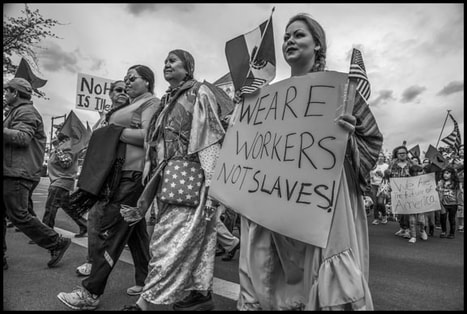
Black-and-white photo of women marching with a sign reading “We are workers, not slaves!”

By David Bacon
Jacobin, 3/9/20
https://jacobinmag.com/2021/03/biden-guest-worker-program-immigration-farmworker (opens in a new tab)
https://davidbaconrealitycheck.blogspot.com/2021/03/joe-biden-should-roll-back-exploitative.html (opens in a new tab)

Members of the Yakama Nation of Native Americans join farmworkers and other immigrants to celebrate May Day in 2017 and protest continued deportations and detentions. (Photo (c) David Bacon)


The current guest worker system prioritizes agricultural growers' profits over immigrants' and workers' rights. Joe Biden should seek a different way: building an immigration system based on family reunification, community stability, and immigrant workers' rights to decent wages, health, and housing.


The intention of the US guest worker program for agriculture, called the H-2A program, couldn't have been stated more clearly than it was by agriculture secretary Sonny Perdue in a January 2020 speech to growers. He wanted, he said,


0 Comments on JOE BIDEN SHOULD ROLL BACK EXPLOITATIVE GUEST WORKER PROGRAMS
International Women's Day

3/5/2021

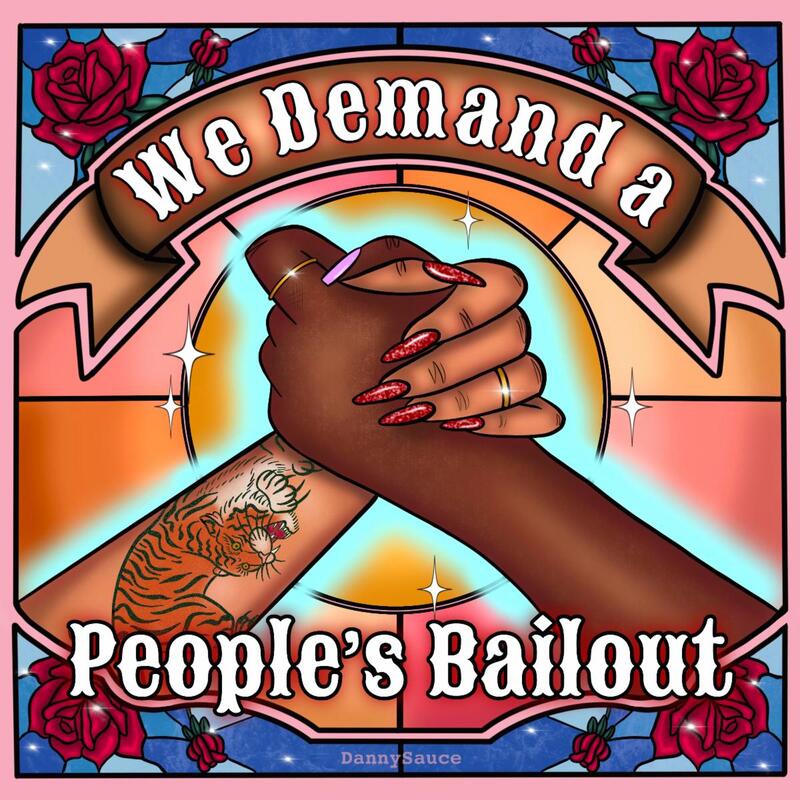
Illustration in stained-glass style of two clasped hands, reading “We demand a people’s bailout”
International Women’s Day is intended to honor the contributions of women and femme-identified folks. What we know for a fact is that women, femmes, girls, and their families are suffering. This ongoing pandemic has created illness, joblessness, challenges caring for small children, and shuttered businesses. The American Rescue Plan (opens in a new tab) is not perfect, but it’s a start towards the relief we need to thrive during these unprecedented times.
 
The People's Bailout (opens in a new tab) is hosting a Livestream event at 7pm ET on International Women's Day, Monday, March 8, called Bread & Roses: Demanding Care & Relief (opens in a new tab). International Women’s Day is the eve of what may be the Senate vote for the American Rescue Plan. Senators will be voting on a bill that would mean relief to millions of hurting families.
 
During The People's Bailout Bread & Roses: Demanding Care & Relief livestream (opens in a new tab), we'll hear from organizers and leaders across the nation; we’ll also have an opportunity to take action demanding bread, a bailout, and roses, too! Highlander is proud to support by sharing the livestream on our Facebook page Monday.
 
Register today: http://bit.ly/bread-roses-21 (opens in a new tab).

Poor People's Campaign

Healing the earth means healing our people. That’s why on Monday we’re lifting up struggles from across the nation to protect our land and freedom from the evils of ecological devastation, poverty wages, environmental racism and denial of health care. From the struggle to defend Apache sacred land in Oak Flats from a corporate mining giant to Cancer Alley in Louisiana to toxic factories in West Virginia and Chicago, to name just a few, we’ll hear directly from communities that are fighting back and demanding economic and environmental justice. 
 
Join us on March 1, 2021 for Moral Monday: Heal the Earth, Heal our People (opens in a new tab) at 3pm ET / 12pm PT and hear the stories of communities who have been targeted with destructive practices by corporations and governments, but are building movements that hold the key to a sustainable future. Join us Monday as we continue to push Congress and the White House to enact our 14 Policy Priorities to Heal the Nation. (opens in a new tab)
 
***The online event will be ASL interpreted and open captioned***


0 Comments on International Women's Day

THE LIBERAL-TO-ULTRALEFT PIPELINE: BREAKING THE CYCLE

3/2/2021


BRIAN W. (opens in a new tab)
Reposted from the Washington Socialist.
 
I have been in DSA since the spring of 2016. Like many, I was tired of feeling politically lonely and isolated. I saw DSA as one of the only places where I could find others that shared my anger at the state of the world, but with a focus on doing whatever possible in our area to improve things. By joining in early 2016, I was fortunate to watch as wave after wave of new members came into the chapter. Each new group helped propel the organization forward and continue our momentum.

Regardless of the particular circumstances around each new wave of members joining, I found one trend that repeated itself over and over again: the “liberal-to-ultraleft pipeline.” This discovery is not my own and I have heard it talked about in chapters across the country, so I don’t believe it is unique to my own chapter either. Many people are familiar with Peter Camejo’s work on the subject, but he was fortunate enough to organize before the existence of online aesthetic leftism. Almost a year after the zenith of the Sanders campaign, this pipeline has become increasingly relevant as prominent left podcasters declared that they “radicalized so quickly over the past year” that they “basically skipped DSA.” I hope to talk about the pipeline briefly so we can identify it when it is happening, specifically address it in our organizing practices, and hopefully, break the cycle from repeating itself over and over again.

Identifying Ultraleftists: Liberals with Radical Aesthetics

It is funny to use the term ultraleftist in 2021 when thinking back on what it meant historically. To the Bolsheviks, an ultraleftist was typically someone that wanted to do a bombing or assassination campaign.  In the contemporary US left, this phrase refers broadly to the amalgamation of anti-capitalists whose entire ideological motivation and self-conception is that they are “to the left” of XYZ, typically DSA. While there are organizations that participate in this sort of branding, it is most commonly done on an individual level. We can disagree on whether ultraleftist is a helpful term, seeing as it is best defined by an “I know it when I see it” approach, but I think the title applies to enough of a grouping that it is worthwhile. Terminally online, constantly accusing others of being sheepdogs or sellouts, and rarely working with others to expand the socialist movement through mass action are some of their calling cards. Their actions speak to wanting to be King of the Smallest Kingdom.

The liberal-to-ultraleft pipeline is often accompanied by an obsession with labels that have no applicability outside of branding on internet forums. What’s the difference between a De Leonist, Council Communist and a Syndicalist when none are able to fill the room they reserved at the library with working people?
So why are newly radicalizing liberals so susceptible to ultraleftism?

First, because it allows them to continue their sense of superiority felt that they had from being the furthest left in the room and most moral for most of their lives. For many newly radicalizing liberals, their political beliefs have always been deeply tied with their sense of self as a good person. This is described by Ben D., another MDC DSA member, as the liberal tendency to imagine politics “as something you have and not something you do.” With this approach, having the correct position, the most moral one, or the one that stakes out the furthest left position, is practically the same as being a good socialist.
‍

A common meme that floated around following both the end of the Sanders 2016 and 2020 campaigns

Secondly, because newly radicalized liberals develop an obsession with “radical tactics.” Many radicalizing liberals look briefly at the history of organized mass movements of working people and correctly gather that we need to learn from their successes. But instead of recognizing the steps in between where the US left is today and where we need to be, it just becomes an army of internet leftists tweeting #GeneralStrike and saying that anyone who has skepticism of its effectiveness is a scab. This also applies to electoral abstentionists, many of whom were loudly and proudly part of the mass support for democratic socialist candidates in the past. These newly radicalized liberals then abandon the very mass work that brought them and countless others into the movement in favor of “more radical tactics.” The obsession with radical tactics comes from the fact that liberals believe that they had always been armed with the right morality and analysis but had simply lacked the right tools to succeed. This ignores the fact that there is no such thing as an inherently radical tactic. Almost all tactics have been used by various political actors of differing opinions throughout history to fit the needs of their strategy at the time.

Thirdly, a skepticism of mass politics. This was ultimately Camejo’s thesis. But the major distinguishing point between those with a socialist analysis and those without one is the role of the masses. Socialists, even those with vanguardist politics, unquestionably support mass politics and do everything in their power to deepen their ties with mass movements with the goal of one day leveraging those connections for revolutionary change. Liberals and ultraleftists view many of these efforts as opportunism or betrayal. For socialists, we recognize that change is only possible with the masses on our side. So even if we have the correct ideas, we are powerless to enact them unless we engage in mass politics.

It's difficult to tell if this image is satire or something else. When asked whether he agreed with the labels, @ProudSocialist shared this image in early February, adding that "It’s not a perfect chart, but it’s not wrong either. The only thing I’d say is the far left box needs more socialists/communists. This moment in history demands revolutionary change so I wouldn’t trust anyone peddling the status quo right now."

Fourth, a view of “the left” as a consumer subculture and not organizations. Many newly radicalized liberals approach politics as if it's about what podcast you listen to or magazine you subscribe to. This thinking promotes acting as a fandom rather than an organization. This can be seen most recently with leftists on social media circulating their own rankings of other left twitter accounts and podcasters as if the left was a fantasy sports league. Whether it's flag emojis in their bio, revolutionary symbols in their handle, or even coordinates on a political alignment chart, all of these are an attempt to signal to others that they’re part of the in-group of real revolutionaries. Think of how many people online spout off how they’re “not a SocDem” as if there truly was any organized coherent social democratic movement in the US currently. What they mean by it is “I’m not a sellout, I want a revolution, unlike those other guys.” But it’s as relevant to modern politics as saying “I shop at Target, not Walmart like those other guys.” It's an attempt to cultivate a unique brand of having correct politics, even if those politics have no bearing or influence on the world at all.

How We Got Here

For the past five years, Democratic Socialists of America has unquestionably been the natural place for the left wing of the movement that supported Bernie Sanders to coalesce. This was key to DSA’s explosion of growth as millions became aware of democratic socialism through Bernie and tens of thousands ultimately joined DSA. The American “Progressive” movement has almost always been extremely incoherent in its beliefs due to its lack of a uniting organization or specific base as is the case for the left in other countries. Though the Sanders campaigns helped shape this progressive movement into having a more clear message around class politics, it was unable to fully convert the existing progressive movement into a democratic socialist one. This meant that many new members of DSA were joining as liberals. This is nothing we should be ashamed of, in fact, it's something that we should be proud of. DSA, through political alignment, branding, and its campaigns was able to bring many liberals into the tent. The issue is thinking about what happens (or doesn’t) next.

DSA is a multitendency socialist organization. From its inception, as the merger of the Democratic Socialist Organizing Committee and the New American Movement, it was conceived explicitly so. This was meant to distance DSA from the sectarianism and splits that were so common during that time. But, this multitendency nature was importantly not meant as a rejection of its socialist identity or place within the socialist tradition. During the upsurge of growth from 2016 onward, many took multitendency to mean “anyone believe anything” and that the organization was not explicitly a socialist one. This hampered efforts to provide coherent socialist education to our members. This problem was exacerbated by the fact that many of our new members were liberals. I want to clarify that I don’t mean this in a derogatory sense. They were liberals because we as an organization were failing to do the education necessary to get them to think and act in a socialist framework.

This lack of education left a void. There comes a time for many people on the left where they realize that Sanders’ platform might not be enough to avert climate catastrophe, enough to root out systemic oppressions or enough to redistribute power in society. It’s at this time that these “former liberals” go exploring for answers. Our members were looking for a “political” political education curriculum but it was nowhere to be found. If there is one thing that can be said about those on the fringes of the socialist movement, is that they often focus on political education and readings to a fault. These groups swooped in. Podcasts, YouTube and caucuses became some of the primary providers of political education within the organization. There was no systematic approach to helping members break with their liberalism. In its place was a Twitter-driven, clout-based media ecosystem that rewards outlandish opinions and is completely disconnected from the way membership organizations function or how to think like an organizer.

Potential Solutions

I wish I had a magic bullet to solve the problem of the liberal-to-ultraleft pipeline. Luckily, for those that stick around in DSA, many of them eventually develop socialist politics based on concrete analysis of concrete situations. I really can’t emphasize this enough, some of DSA’s best organizers are former ultraleftists that developed better politics. But a wait and see approach is not fast enough when we are trying to build DSA into a mass organization. It would be a recipe for an SDS-style disaster, where one half of the room is chanting for Warren and the other is chanting for Hawkins.

I have a few suggestions: one based in political education, one based in recruitment, and the final in mass organizing.

Regarding political education, we really can’t shy away from a DSA-focused approach to political education. This means a curriculum that we strive to get all new members through that doesn’t avoid talking about what we believe, why DSA is different, and how our organization works. We shouldn’t apologize for our work and shouldn’t hide the fact that the US left has been a largely marginal force for decades and our job is to end that. We should also try to explain some of the many dead ends the left has fallen for in the past with the goal of steering our members away from those in the future.

Regarding recruitment, we have to recognize that the era of Sanders-branded passive recruitment might officially be over. The Sanders coalition, especially in the second campaign, was incredibly diverse and fundamentally rooted in the working class. Despite this, DSA’s primarily online approach to recruitment has disproportionately brought in its overly online segments. We need to commit ourselves to recruit less through online outreach and more through organic relationships in our communities and workplaces. The DSA100k campaign was an incredible expression of how powerful our members can be when we collectively prioritize recruitment. Efforts like this should be a natural part of all of our work.

Lastly, we should always prioritize winnable campaigns that place members into direct contact with other working people. Campaigns that involve canvassing or speaking with workers outside of the left are the ultimate antidote to ultraleft opinions. It’s hard to believe that the General Strike is just a few weeks away when you meet a worker at their door who will only vote for your socialist candidate if they ban 5G. These campaigns shouldn’t aim to dispirit the newly radicalized or curb their ultimate ambitions, but show them how well planned and strategic collective action can help make a difference.

These proposals may seem insufficient to the scope of the problem we’re facing. But I am confident that this organization and movement, with more members and supporters, will be able to win bigger and better victories until the day when revolutionary questions are actually relevant. I am confident of this future because I am a socialist and I believe in mass action.

ed. note. I recommend going to the on line issue of Washington Socialist to see the great graphics in this piece. Use the link below. 

SEE MORE IN CATEGORY RETURN TO ISSUE


1 Comment on THE LIBERAL-TO-ULTRALEFT PIPELINE: BREAKING THE CYCLE

Atlanta DSA and the PRO Act

2/28/2021

by José Pérez,

Atlanta DSA met Saturday, February 27; first meeting I've gone to in a few months. I did so specifically to oppose a resolution that at its core stipulated that: 
 
Atlanta DSA will campaign to pass the PRO Act as our number one priority through May 2021.


I opposed it because right now there is a war raging in our state legislature over Republican voter-suppression bills. Dozens have been introduced because Republicans know that come 2022, they are likely to lose statewide again, and the way to prevent it is to try to stop "those people" from voting. DSA is abstaining from this fight, even though among those leading the resistance at the state house are actual DSA members, even if they're not too public about it (and given the DSA's reputation among Black and Latino activists, never mind the other political liabilities, I can hardly blame them). I just posted on twitter a thread explaining my position. Here it is:


As the battle against Republican voter suppression bills rages in the Georgia state legislature, today the Atlanta DSA voted to instead "campaign to pass the PRO Act as our number one priority through May 2021." 
 
I say "instead" because I spoke against adopting that as "our number one priority," saying that the fight to defend the right to vote had to be our top priority. A supporter of the resolution spoke after me saying the Democratic Party was already taking care of that issue.
 
The PRO Act is a very good and necessary proposal but it is simply not an issue people are talking about or moving on in Georgia. By focusing on it, Atlanta DSA is, in effect, taking a dive, deserting the Black and Latino communities in the heat of battle.
 
And it is not just Atlanta: the DSA's national leadership has also has made the PRO Act "our top external priority," even though the huge political fights in the country are around Biden's Covid rescue bill, $15 and legalization of the undocumented. 
 
In practice, this class reductionism is white supremacy in socialist drag. You prioritize "class wide" demands that also directly benefit anglos; but those that "only" address the specific needs of the most oppressed, like Black and Latino communities, go to the back of the bus
 
Moreover, there is a total disconnect between the DSA and the democratic socialist movement's real national political leaders, Bernie in the Senate and the squad in the House, especially AOC. They support the PRO Act but that is not a central battle they are waging right now.  
 
And this is a repeat of what happened in November, when Bernie campaigned for Biden and DSA did not. And it was just repeated in the GA runoff: AOC endorsed Ossoff, and DSA would not put his name on DSA's canvassing palm card.
 
Is DSA becoming a bait-and-switch fraud? People join inspired by Bernie or AOC but then chapters like Atlanta follow a different, sectarian policy. Result? Atlanta has maybe 2,000 members, less than 100 came to a Saturday afternoon zoom meeting.
I honestly believe that almost certainly the DSA is headed towards a catastrophic explosion, and I'm thinking perhaps that would be preferable, compared to it becoming a socialist sect, given the size, influence and resources it now has.
 
I honestly believe that unless it changes course, the DSA might be headed towards a catastrophic explosion as happened to SDS a half century ago, and over exactly the same issues.
 
José Pérez, Atlanta 

Another view of the vote.


At the Atlanta DSA meeting yesterday I spoke out and voted in favor of making the PRO act a priority for Atlanta DSA. I did so for the following reasons. 

First, the PRO act would do much to increase union power in representation elections and collective bargaining. The act provides for serious penalties for violations of worker rights, ends captive audience meetings, prevents the replacement of workers on strike, prohibits the misclassification of workers as independent contractors, overrides right-to-work laws, and removes restrictions on boycotts and picketing in support of other workers.

Second, Atlanta DSA members were already actively engaged in support of PRO since one of Georgia's Democratic members of Congress had voted against it. Working groups targeted this rep over the past month with a blizzard of calls urging support of PRO and made contacts with unions who were lobbying the rep as well.

Third, the chapter was intent on building relationships with unions thru joint work. The labor working group had initiated programs on labor history, begun planning a labor film program, surveyed its members about their work and union affiliation, organized industry circles for teachers, nonprofit and digital workers.

Finally, the chapter would not be able to provide added value as a separate organization in taking on voter suppression. With Tracey Abrams organizing network and Coalition for a Peoples' Agenda doing the critical heavy work, the best that DSAers could do would be to volunteer in their organizations.

The discussion on the resolution at the meeting was open. Only one person spoke against it. The vote in support was near unanimous. The chapter also endorsed one member who is running for Atlanta Council, heard reports from the Afro-socialist caucus, defund the police working group and the social event "eat drink and be Marxist." I am impressed with the work of this newly elected chapter leadership.

Milt Tambor


0 Comments on Atlanta DSA and the PRO Act

To Honor Black History, Fund Our Front Line Workers

2/27/2021

To Honor Black History, Fund Our Front Line Workers 
By Lee Saunders and Rev. Dr. William J. Barber II February 25, 2021
AFSCME.medium.
 
AFSCME President Lee Saunders and Rev. Dr. William J. Barber II address delegates to AFSCME’s 42nd International Convention in Las Vegas on July 20, 2016. (Photo by Tessa Berg)

You cannot add jobs by subtracting jobs.

That is the simple truth behind desperately needed aid for states, cities, towns and schools. Over the last year, some 1.3 million public service jobs, many of them held by African Americans — including nurses, teachers, EMTs and sanitation workers — have evaporated because of holes the pandemic blew open in state and local budgets.

One of the most effective ways for Congress to crush this virus and get our economy moving again is to help states, cities, schools and towns bring these workers back and hire more of them. It would also be a way, during Black History Month, to remain faithful to our past and continue advancing the cause of racial justice.

For generations and to this day, public service jobs have been a sturdy ladder of opportunity for African American families climbing their way to the middle class. At a time when systemic discrimination blocked so many pathways, African Americans were hired in the public sector as postal workers, teachers, librarians and more.

These jobs came with security and stability — not just a decent income, but good health care benefits, a pension and very often a union card that provided surefire rights and protections. To this day, one in five African American workers have public sector jobs, helping close the racial wealth gap. Among those employed in the public sector, white households have about twice the wealth of Black households. That is troubling to be sure; but, by comparison, in the private sector, that gap becomes a chasm — Black households have only about a dime of wealth for every dollar held by white households.

Through their work in public education, public transit and public health, millions of African Americans have been able both to provide for their families and strengthen their communities. But now, those jobs are on the chopping block. Without federal aid, more layoffs loom, dragging down the entire job market with it. How do we know? The same thing happened a decade ago.

With the nation in the throes of the Great Recession, politicians of both parties responded by drastically cutting spending. Austerity became the watchword. Right-wing activist Grover Norquist, who once famously said he wanted to shrink government to the size he could drown it in the bathtub, had his day in the sun. States and communities nationwide slashed public services to the bone, and African American families took the biggest hit. In 2012, 200,000 fewer African Americans held public sector jobs than just four years earlier.

Ten years later, inexplicably, we are in danger of making the same public policy mistakes again. It is devastating enough that African Americans are disproportionately contracting COVID-19 and dying at higher rates than the population at-large. But because of the gutting of public services, we are also being pummeled economically. In just a year’s time, between September 2019 and September 2020, the number of Black people on the nation’s public payrolls shrunk by 211,000. This is one of the critical, yet often unspoken, reasons the pandemic has raged out of control. Giving pink slips to the very people who can bring the virus to heel is the worst possible crisis management strategy.

And things will get worse if Congress does not step in. Who will get shots into arms if more public health professionals are axed? How will laid off Americans get the unemployment benefits they have paid into when states shed more claims processors? How will small businesses survive when basic services like sanitation, clean water and road maintenance — normally so dependable that they are never included in any business model — erode even further?

In the immediate term, we need Congress to come through with emergency aid to save these jobs and services. But in the long term, to vanquish the virus, build a prosperous economy for all and ensure that people earn a living wage as well, it is time to bury for good the fake news of austerity: that somehow a race to the bottom will take us to the top.

This is the moment to remind people about the power of government action, especially but not exclusively during moments of crisis. When it is run competently, when public services are performed by dedicated and compassionate people, government can affirm human dignity, provide basic needs and improve lives on a grand scale.

Let’s get public service workers back on the job and bring back real investment in the essential services that sustain us all.

Lee Saunders is President of the American Federation of State, County and Municipal Employees. The Rev. Dr. William J. Barber II is the President & Senior Lecturer of Repairers of the Breach, Architect of the Moral Monday Movement and Co-Chair of the Poor People’s Campaign: A National Call For Moral Revival.


0 Comments on To Honor Black History, Fund Our Front Line Workers

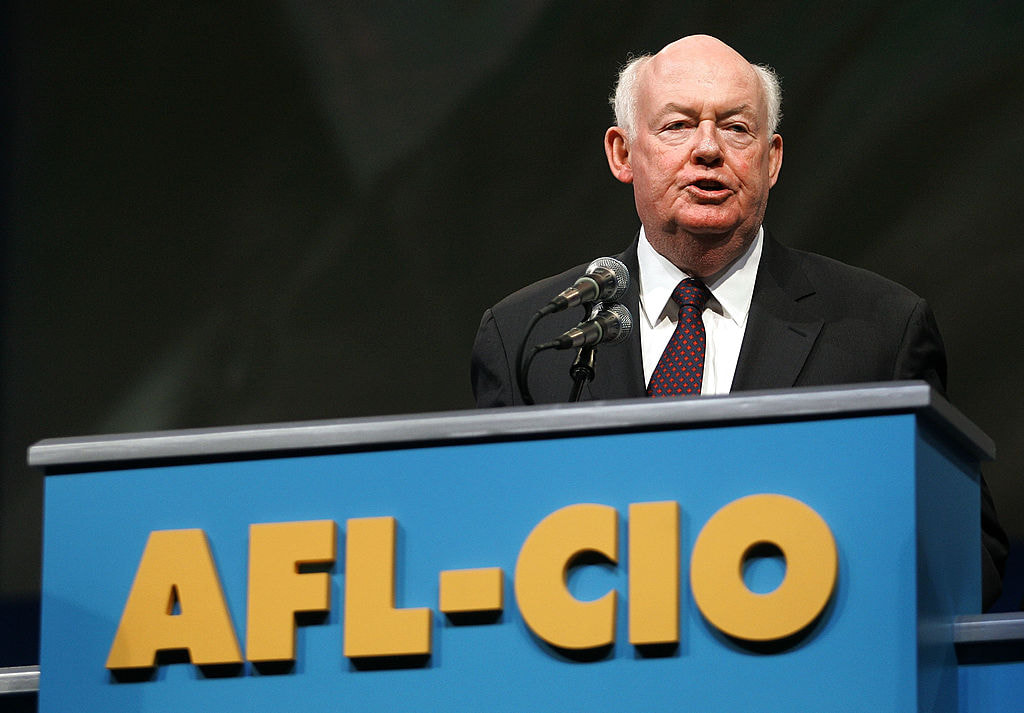
John Sweeney Was Our Era’s Most Influential Labor Leader

2/16/2021

John Sweeney speaking at an AFL-CIO podium


BILL FLETCHER JR 
FERNANDO E. GAPASIN

The late AFL-CIO leader John Sweeney was an admirable figure who had a vision for reinvigorated US labor unions. But he only tried to reform a union movement that needed a more fundamental refoundation.
 
Essay in Jacobin Magazine.
https://jacobinmag.com/2021/02/john-sweeney-obituary-seiu-afl-cio-labor
 
Of course John Sweeney was a member of DSA for a number of years. It was not a part of his leadership of the AFL-CIO.
This history is important in understanding labor’s past, present and future. 


0 Comments on John Sweeney Was Our Era’s Most Influential Labor Leader

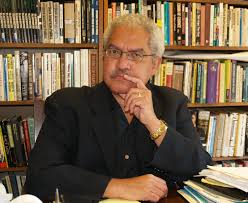
Manning Marable  1950- 2011,  A Radical Intellectual – A DSA Founder

2/6/2021

Portrait of Manning Marable at his desk in front of bookshelves

In Celebration  of Black History Month. 


Manning Marable was a prolific  African American  scholar,  academic, writer and political organizer who made significant contributions to  building   the U.S. left and  Black left   from 1980 until his passing in 2011. He was the founding director of the Institute for Research in African-American Studies and the Center for the Study of Contemporary Black History at Columbia University.  
Manning’s first book, How Capitalism Underdeveloped Black America (1983 & 2015), along with Race, Reform and Rebellion- The Second Reconstruction and Beyond in Black America, 1945-2006, ( 1983 & 2007), provide crucial political and social history of African American struggles while developing a Marxist tradition of scholarship and activism Let Nobody Turn Us Around (2000 and 2005 co-edited with Leith Mullings), which traced the history of “transformational” (left) politics in black political writing from the time of slavery to the present, became one of the most widely used textbooks in black studies.   He wrote or edited more than twenty-two books throughout his extraordinary career. His final book, Malcolm X: A Life of Reinvention, 2011,  a carefully researched, critical study of an extraordinary, political leader, was awarded  the Pulitzer Prize.  Marable’s scholarship and publications were superb and widely recognized within academia,  and were read by activists throughout the world
 
In 1983, Dr. Marable was a professor of economics and history and the director of the Race Relations Institute at Fisk University. He went on to direct  the Africana and Latin American Studies program at Colgate University, and then  chaired the Department of Black Studies at Ohio State University. Marable also taught at the University of Colorado at Boulder. In 1994, he joined the faculty at Colombia University, where he established the Institute for Research in African American Studies. During the 10 years he directed the Institute, he molded it to be not only a center of critical scholarship, but also to produce initiatives and work that was useful and accessible to the black community. He was also the founding editor of Souls: A Critical Journal of Black Politics, Culture, and Society, where many currently well-known black scholars published their early work. He completed his academic career as a professor of public affairs, political science, history and political science at Columbia University where he directed the university’s Center for Contemporary Black History. until his death in 2011.   In these programs Dr. Marable created pathways for graduate study for generations of  African American  scholars that are now  teaching  in universities throughout the nation. 
 
In addition to his academic career, Manning was extraordinary for his lifelong commitment to his role as a  public intellectual  making his scholarship accessible to all.  Beginning in 1976,  his nationally syndicated column “Along the Color Line, “ was distributed  free of charge to more than  100 newspapers and journals in the United States, the Caribbean, Africa and India.  
 
Democratic Socialists of America
Dr. Marable played a significant role in creating left organizations and promoting  left unity in the U.S.  He was particularly interested in  bringing a Marxist analysis to the project of creating a left built upon pursuing racial and gender justice. He was a leader in NAM ( New America Movement) and the National Black Independent Political Party  and helped to negotiate the merger of NAM and DSOC (the Democratic Socialist Organizing Committee)  in 1980-1982.    The new organization became DSA. With  his participation, the negotiated  points of unity between NAM and DSOC were carefully drafted to reflect the strengths of each organization including the vision of creating a multiracial, feminist inspired, left- a major step forward for this time.   
In the summer of 1983 Manning  organized a conference of Third World Socialists (people of color ) at Fisk University, bringing together a diverse group of  left academics and activists.  At this conference DSA created new commissions each  focused on self-determination: a Latino Commission, an African American Commission and an Anti-Racism Commission within DSA.  These commissions went on to  support  the Jesse Jackson run for President in 1984,  and then convinced the  DSA itself  to support  the Jackson effort in 1988. 
    One of Manning’s many   contributions to DSA  was to develop a new journal, Third World Socialist,  that brought together a  widely diverse group of activists and scholars of color.  In addition to writing  columns in the African American press with the by- line Along the Color Line, he spoke at hundreds of college campuses promoting a multi -racial democratic socialist perspective among faculty and students.       
            Dr. Marable was both a Vice Chair of DSA  and a member of the National Executive Committee ( later the National Political Committee)  where he provided a strong  Black voice for supporting the efforts of socialists in Third World struggles and for  attracting a significantly multiracial membership to  DSA. 
             As a result of his frustration that DSA’s anti-racists work did not grow significantly over time, Manning shifted some of his political activism to the Committees of Correspondence for Democracy and Socialism in 1995. Nevertheless, he remained a strong supporter of anti-racism efforts within DSA and was a frequent speaker at DSA Youth Section conferences.
 
Committee of Correspondence for Democracy and Socialism      

   On December 6-8, 1991,  some 900 plus members left the Communist Party and  formed the Committees of Correspondence. The new  Black led C of C  was dedicated to” renewing the struggle for social progress and socialism, and putting an end to what they saw as the undemocratic practices  that damaged  the Marxists and Communist movement.” 1
Manning Marable joined  the new CofC and made enormous contributions to the building for the new  CoC’s national conference in July 1992 which brought together 1,300 diverse left individuals and organizations.  He and others drafted the declaration of principles of the Committees of Correspondence – “Where We Stand”-- for the founding conference, reflecting the need to seek the broadest possible unity to achieve immediate goals. 
    Manning Marble was elected as one of the five co-Chairs and he served on the National Coordinating Committee.  Within the CoC he  guided the development of the People of Color committee and provided political guidance on left unity and anti-racism. Manning  Marable enthusiastically undertook the organizational tasks of building a new organization (e.g. CoC), but always held firm to the idea  of left unity and multi-racial action – that  the unity of left forces was essential for building independent progressive political forms.  (In 2000, the CofC  changed the name to the Committees of Correspondence for Democracy and Socialism.)
 
The Black Radical Congress

 In 1995 Manning,  along with 4 other prominent Black activists Barbara Ransby, Abdul Alkalimat, Bill Fletcher, and  Leith Mullings, each from diverse political backgrounds   met to plan a response to the deterioration of the lives of Black people in the nation and around the world.     They were soon joined by some 35 prominent Black activists from diverse left organizations—socialist, communist, radical feminism, revolutionary nationalism  from around the country to organize what became the Black Radical Congress. 
  They had not initially planned   to form a new political organization but instead find ways to encourage coalition building and joint activities among existing groups. 

   However at the first conference,  in June  1998, with over 3,000 in attendance, the  energy and enthusiasm of  assembled group convinced them to form a united front of Black progressive politics--a network   that self-identified as anti-capitalist and rejected the class reductionism among the white left and the growing patriarchal trend in Black U.S. politics.
The National Council of the BRC adopted a mission statement on 26 September 1999 in East St. Louis, Illinois.

The opening paragraph states:
The purpose of the Black Radical Congress (BRC) is to promote dialogue among African American activists and scholars on the left; to discuss critical issues on the national and international scene that pertain to the Black community; to explore new strategies and directions for progressive political, social and cultural movements; and to renew the Black radical movement through increased unified action.[4]
 
The BRC formed local chapters that worked on a range of issues including police brutality, incarceration, public education, labor rights and gender justice, promoting  a Black left with the critical inclusion of Black feminist  positions  within the Black community , Black scholarship, and Black politics until 2008. 
Several members attended the World Conference Against Racism, Racial Discrimination, and Xenophobia sponsored by the United Nations and held in Durban South Africa in 2001. This conference, and the follow up reports from the conference highlighted the long tradition of including an internationalist perspective within the movements of the Black Left. 
The struggle of  Marable and the BRC  attempted to address  the longstanding  tendency in much of the left-leaning social movements and  scholarly literature to view black social movements with ambivalence, dismissing them as “identity politics” that compare unfavorably to social movements  explicitly calling for revolutionary change.3
Noting that the black freedom struggle has always contested both race and class inequality,   scholar and co-founder of the BRC  Leith Mullings notes,
“If progressive forces are to move forward in the United States, it is essential that they deal honestly with the role of racism and recognize the coproduction of racism and capitalism rather than dismissing anti-racist struggles
as “identity politics.” 3.

 Marable’s work and that of the others in the BRC:,  as well as the National Rainbow Coalition; the successful electoral campaigns of Harold Washington for Chicago’s mayor in 1983 and 1987  and the tens of thousands of community-based organizations produced many activists  connections  to the  exciting explosive growth of the  current broad based Movement for Black Lives.

Notes. 
  1. “Upheaval in the CPUSA: Death or Rebirth ?,  Max Elbaum,  Crossroads. January 1992, No.17. 
  2.  "Mission Statement of the Black Radical Congress (BRC) Archived February 2, 2007, at the Wayback Machine", accessed 2 January 2007
  3.  Leith Mullings, “Neoliberal Racism and the Movement for Black Lives in the United States.”, Chapter 8.
Black and Indigenous Resistance in the Americas : From Multiculturalism to Racist Backlash, edited by Juliet Hooker,
Lexington Books, 2020. 

This tribute by: 

Duane Campbell, retired professor Bilingual/Multicultural Education, California State University -Sacramento  former chair of Anti Racism Commission of DSA (1983-2004)  and currently a co-chair of DSA’s Immigrants’ Rights Working Group,
Carl Pinkston. Operation Director of Black Parallel School Board (Sacramento) and  former member of Liberation Road and Institute for Social and Economic Studies.

This tribute written for the forthcoming, ENCYCLOPEDIA OF THE AMERICAN LEFT,


0 Comments on Manning Marable  1950- 2011,  A Radical Intellectual – A DSA Founder

A New Vision for DSA: The Socialist Voice in a Progressive United Front

2/2/2021

DSA should focus our energies on joining and building a Left alliance capable of winning socialist demands.
BY SUSAN CHACIN - WINTER 2021  


The Left in the US is facing unprecedented challenges. Fortunately, we bring unprecedented resources to this struggle. In this article, I will argue for a refocusing of DSA’s resources to join and build a Left alliance capable of winning socialist demands.


The ruling elites in this country have managed to mobilize widespread support for an anti-democratic, authoritarian assault on our civic institutions and the very democratic process by which we purport to govern ourselves. They have done this by feeding conscious and unconscious white supremacy and jingoistic patriotism, by channeling well-founded working class mistrust of the power structure, and by nurturing and amplifying disagreements among progressives.


The strength of right-wing forces mobilized against us must not be minimized. Historical precedents suggest that we could see a demagogue more capable than Trump attempt an authoritarian, neo-fascist takeover in the mid-range future. But even without considering dangers down the road, we face a current majority of white voters, even white women, who supported the most racist, grifting, con man ever to occupy the Oval Office. Adherents of ludicrous right-wing conspiracies are a minority of Trump’s supporters, but they demonstrated their virulence when they stormed the US Capitol in January.


The self-styled “Christian” Right originally gained power opposing the Equal Rights Amendment, abortion, gay rights, diversity in textbooks, and most recently transgender rights. “Patriot” churches have recently emerged supporting an explicitly pro-Trump gospel. The Business Roundtable and rightwing think tanks funded by deep pocket donors such as the Koch brothers and Robert Mercer have been organizing to defend capitalism since before Reagan. The California “taxpayer revolt” movement that originated in 1978 was still strong enough in November 2020 to defeat restoration of equitable industrial and commercial property taxes. The opposition overcame labor, community, and DSA support with a massive advertising campaign. California’s nominally “blue” electorate in November also defeated gig-workers’ employee rights and refused to restore affirmative action.


The white supremacist movement surged after Obama’s election and new adherents such as the Proud Boys have joined the older neo-Nazi, skinhead, militia, and KKK varieties of racists. Death threats against election officials and elected representatives since Trump’s defeat and the invasion of the Capitol prove that the right’s violent rejection of democratic norms and repudiation of our institutions have become widespread. Racist police murders defended by cities around the country and the reported strength of proto-fascist elements in the military represent an armed element in the array of forces against us. The number of Republican representatives and senators who voted to overturn the election is further evidence of the erosion of support for democracy.


At the same time, in part because of the Right’s success, progressives have mobilized unprecedented forces. The Left’s mobilization has been fueled by the crisis of the neoliberal economy, horrifying evidence of fast worsening climate chaos, rampant homelessness, crimes against immigrants, the erosion of workers’ rights, student and consumer debt, widespread hunger, and police violence. This mobilization is continuing, committed to achieving universal healthcare, climate and environmental justice, immigrant and refugee rights, income equality, workplace safety, protection for Social Security, reproductive rights, housing, police accountability, and voting rights. The Left must fortify itself in the Biden administration’s early days and be ready to surge forth when needed to confront Congress and the administration.

Where Does DSA Stand in This New Political Landscape?

I am worried that DSA will miss the opportunity to make the most positive contribution we are capable of in the coming political period. DSA could represent a socialist voice in a strengthened united front if we are willing to stand in solidarity with other progressives. The reason I am worried is not because we lack energy or momentum. It is because as an organization we were on the sidelines of the historic campaign and strong voter turnout for the 2020 elections. Elections are not, and should not be DSA’s principal focus. However our approach to electoral coalition work is indicative of our general attitude toward the rest of our organizing. To be part of a unifying progressive Left, we must learn to play well with others.

In a recent article titled “On the Sidelines: DSA Abstentionism on Biden vs. Trump,” labor organizers Peter Olney and Rand Wilson argue that “It’s time to acknowledge that ‘Bernie or Bust” was a major tactical and strategic error.” They compare the challenge national DSA will face in attempting to influence the new administration to “a faction within the union deciding that they don’t like the leaders of a strike or their politics. The faction doesn’t participate in picketing, or the strike kitchen, or the mass demonstrations. Then these ‘do nothings’ who essentially sat out the strike, come to the union hall insisting on a major role in determining the terms of the strike settlement.”

Olney and Wilson acknowledge that members of DSA were more aware of what was at stake than our leaders. “The heroes of this election victory are the thousands of grassroots political activists who busted their butts to defeat Trump by working for Biden, particularly in the key battleground states. Thousands of our comrades in the Democratic Socialists of America (DSA) and other socialists worked side-by-side with leaders and activists in black and brown organizations, women’s organizations, and labor unions like UNITE-HERE and SEIU.” Local DSA members did this work despite the refusal of our National Political Committee to encourage swing state members to participate in the broad anti-Trump mobilization. When Bernie lost the nomination and urged his supporters to support Biden to defeat Trump, DSA leadership refused.

Thanks to the rest of the Left spearheading the grassroots drive that pushed Biden over the top, DSA dodged the bullet of being blamed for a catastrophic defeat. But it was a much nearer thing than most of us realized.

Willingness to work to defeat Trump did not mean that grassroots DSA members ignored Biden’s shortcomings. Olney and Wilson agree that “few if any of the comrades we campaigned with had illusions about the reality of who Biden actually is or what he represents.” Denunciations of Bill and Hillary Clinton’s roles in collaborating with the right on many issues including criminal injustice, trade deals that handicap labor and regulatory rights, welfare “reform,” and the financial powers’ raids on the economy are chapter and verse among progressives organizing in the Democratic Party. So are criticisms of Barack Obama’s refusal to hold the financial class to account, his administration’s role in massive deportations, and his inability to end the pointless wars in Iraq and Afghanistan. Centrist apologists minimize these betrayals, but honest progressives take them into account and agree that the Democratic Party has a great deal to answer for concerning these issues.

What the broad range of progressive activists that mobilized to defeat Trump do not accept is that these failings rule out working inside the Democratic Party. Bernie was far more successful contending for the Democratic Party nomination that he ever could have been running as an independent, and scores of progressive candidates are running and winning on the Democratic ballot line without sacrificing their principles. The presence of winning progressive candidates at all levels is catalyzing class struggle within the Democratic Party.

With the inauguration of Joe Biden and Kamala Harris, we are entering a new era of political struggle. Predictably, allies brought together to oppose Trump will regroup and even oppose each other under the new administration. Many progressives who mobilized support to defeat Trump are old hands at advocacy and will not be surprised to find the Biden-Harris administration resistant to demands that they fulfill the 2020 Democratic Party platform. Newer and less wary activists may be disappointed by the administration’s anticipated reluctance to implement even portions of the platform that they could make good on. In both cases, socialists in general, and DSA in particular, must accept that electoral organizing always entails exacting accountability. It is our job to point out gaps between campaign promises and implementation without snarkily claiming “we told you so, this is what you get when you trust a Democrat.”

The Sanders campaigns of 2016 and 2020, the election of significant numbers of leftists to congressional, state and local offices in both 2018 and 2020, and even Elizabeth Warren’s 2020 campaign have moved the goal posts of the “possible” to the left. Medicare for All, the Green New Deal, and the Fight for $15 are being accepted more and more as common sense demands rather than radical socialist fantasies.

The Congressional Progressive Caucus is stronger than ever, and has issued “The People’s Agenda: A Progressive Roadmap for Congress in 2021.” In the face of media attempts to blame socialists for down-ballot Democratic defeats, Congresswoman Alexandria Ocasio-Cortez has countered, arguing that progressive candidates were able to win by advocating the progressive agenda even in “swing” districts. AOC emphasizes that Democrats can prevail when they go to the grassroots and campaign on an activist, working people’s platform. AOC’s example of pressing Nancy Pelosi to demand support for younger, more progressive leadership while offering support for the Speaker’s reelection should be instructive to us. In real life, we must combine confrontation with collaboration.

What were the sources of DSA’s refusal to join in the broad coalition working to defeat Trump? Olney and Wilson suggest that “DSA’s experience in the 2020 election can be a teachable moment.” I agree. However to use this opportunity to its best advantage, we have to examine a number of hard truths about the organization.

There are a number of deep-seated sources of harmful ideas in DSA. As a veteran of socialist organizing, I recognize many of these wrong-headed tendencies because I have had to admit them in my own work. It is important for us not to repeat the history of socialist organizations around the world in which disagreements lead to divisions. A classic joke about how misguided criticism can become is that when the Left needs a firing squad, we draw up in a circle. As a “big tent” organization, DSA must not try to enforce ideological purity. We are not bound by the Leninist policy that all members must commit to carrying out the line once it is decided by the members or their leaders. This openness allows us to point out when a position adopted by some of us has failed, without calling for their expulsion.

I am calling on members of all our opinions and caucuses to examine the following ideas. If they are helpful, they may contribute to growing our organization and making it more welcoming. There may be others I have not identified. As an organization that has experienced an extraordinary surge in membership, we owe it to each other to increase positive dialogue and learn from each other. Finger pointing, trolling, and subterranean maneuvers to gain organizational influence are toxic and must be identified when they occur.

Here is my list of what some Marxists call “deviations,” tendencies I believe are distorting our political positions:

Ultra-leftism: DSA members tend to come to socialism from middle-class backgrounds and have college educations. That’s me too. As soon as I rejected my class background, I affiliated with a movement for “third-world” revolution and spent years ignoring the evidence that “the people” were not winnable to the revolution we imagined. I believe my ultra-left fervor reflected fear that I could be sucked back into my white middle-class privilege if I didn’t become sufficiently radical.

DSA seems to have many converts to socialism who think that the farthest left positions are the most righteous. It’s not okay to chant “Eat the rich!” or “Defund the police!” if doing so alienates people we could attract. If we only support avowedly socialist candidates, it can isolate us from community movements that have local working class support. Calling for the founding of a labor party in today’s political landscape marks DSA members as wildly unrealistic. We also must beware of not listening to smaller DSA chapters and chapters in conservative areas. Those of us in “blue” enclaves need to support what works for our members in other places and environments. These chapters and members can help the organization relate to a broader, more working class constituency than we currently attract.

DSA’s refusal to campaign for Biden against Trump in swing states proclaimed that we valued our ideological purity above taking part in the dynamic mobilization organized to defeat Trump. It also showed that DSA did not take seriously the huge damage to environmental, racial justice, and labor protections done by Trump’s administration and supporters. Our purity was more important than fighting neo-fascism. We did not take a stand against his animation of the worst right-wing resurgence since the civil rights movement.

Unconscious white privilege: The Left has a problem accepting that our views are shaped by white supremacy. We overtly reject racism and are committed to equality. But that is not enough. I reacted to the assault on Congress with optimism: it was showing how violent Trump’s supporters can be, it discredited them. An interracial friend told me it frightened her: troupes of racist thugs perpetrating violence are terrifying. I apologized to her for minimizing the danger she feels. Unconscious bias is impossible to overcome completely, it has taken me years of work to even be aware that I am subject to it.

DSA is not exclusively white, but we have acknowledged for years that we do not have strong enough participation by people of color or a credible presence in racial justice movements. I believe this is why the organization did not stand in solidarity with the strong anti-Trump movement among organizations representing people of color. Bernie Sanders’ positions on racial justice fell short of what many of us hoped for and are widely believed to have cost him support among constituencies of color, particularly older Black voters. I believe that DSA’s racial makeup, coupled with our socialist ideology–seeing the capitalist economic base of society as the fundamental cause of inequality and oppression–have blinded us to the role that racism is playing in the growth and virulence of the Right.

In mid-2020, I contacted labor activist and DSA member Bill Fletcher Jr. and asked “I wonder if you share my concern over the strong tendency in DSA to minimize the danger of the mobilized Right? I think part of DSA’s problem is an intellectual position minimizing the role of white supremacy in U.S. politics. It is popular in DSA to oppose ‘identity politics’ under the rubric of advocating working class leadership. I think this is a reflection of intellectual arrogance and a form of ultra-leftism. It is not exclusively white members who maintain this position.” Fletcher responded: “I think that you are absolutely correct. Too many DSAers fail to grasp the essence of right-wing populism. DSA has never has a solid grasp of racism and national oppression.”

Ian Haney López’s recent book Merge Left: Fusing Race and Class, Winning Elections, and Saving America, presents hard data on how progressives can best argue against right-wing “dog whistles” that animate racial anxiety in undecided constituencies. The Race/Class project, in collaboration with the progressive think tank Dēmos, helped me understand why Sanders’ message fell flat with important segments of the African American electorate. Sanders claimed that fighting economic inequality would lift African Americans’ lives and solve their oppression. His references to having marched for civil rights were weak and outdated for audiences asking how he would address white terrorism, police violence and other current forms of Black oppression

López points out that Sanders’ message relied heavily on economic measures to “lift all boats.” But economic uplift does little to interrupt systemic white supremacy. DSA’s approach to racial injustice is hampered by members’ unwillingness to admit that all of us are affected by the prevailing caste system. We have work to do. Joining Black Lives Matter demonstrations does little to counteract the anti-identitarian positions frequently voiced in DSA.

Patriarchal attitudes: Socialist feminism does not consist solely in supporting gender and reproductive rights, advocating for equal pay, or electing more women to office. Radical feminism provides a lens to critique the competitive, hierarchical social norms enshrined in our domestic, economic, and civic interactions. As a lesbian feminist, I find DSA rife with organizational dynamics and attitudes that reflect the dominance hierarchy prevalent in traditional gender relationships. Too often, DSA members approach organizing as if it were a competition with other groups and philosophies rather than a collaboration to build “the beloved community.” Attitudes toward liberals in DSA are particularly bitter. Seeing other groups as enemies rather than potential allies alienates potential recruits and can lead to hostile interactions.

The “Bernie Bro” meme was true enough that when the Working Families Party endorsed Elizabeth Warren’s candidacy, I could not tell whether the vicious reactions were coming from comrades or had been planted by malicious bots. Various groupings in DSA voice open hostility toward the positions of other tendencies. I have had a harder time writing this article than I expected because I am aware that I may receive personal attacks as a result of my opinions.

Ageism and negative attitudes toward DSA’s history: DSA’s rapid growth and organizing successes following the 2016 presidential election have led many new members to disregard the experience of DSA’s elder statesmen and women. Ageism is a thing, it leaves many older members feeling unseen, disrespected and patronized. It is the flip side of the capitalist marketing of youth and beauty. Remember: if some of us had not worked hard to keep DSA alive for years, there would have been no gathering place for the thousands of people radicalized by Bernie’s campaigns and Trump’s election.

We face a generation gap between graying DSA culture-bearers and the huge number of newer members. Political positions do not align neatly with this division, but many older, longstanding members profess more moderate socialist positions, and many younger members and members joining from other socialist tendencies advocate a 180 degree change away from our grounding in democratic socialist principles. Adding to this dichotomy, older members are often less skilled at using social media tools, and may have less energy for organizational struggles and contention. It is right for young, enthusiastic socialists to question what has gone before them, to challenge received wisdom. It is also healthy for DSA to conserve our roots and sustain an ongoing dialogue between revolutionary and evolutionary socialists. Making this a productive, comradely enterprise is everyone’s responsibility.

What is to Be Done?

There is a strong tendency in DSA to “go it alone,” to believe that because we have become the predominant socialist organization in the US we should catalyze the progressive agenda and drive it toward revolutionary change. Proud of our growth and the militancy of our membership, important sectors of DSA run the risk of isolating us from the very forces that should be our best allies and comrades in struggle. This stance harms DSA’s reputation and credibility, but more importantly, it shirks the leadership role that we should be playing on the left.

I am arguing the DSA should reach out and build relationships with honest individuals and groups from the broadest progressive sources. DSA, organized labor, and a wide swath of advocacy groups have been doing this. Witness the new acceptability of concepts such as the $15 minimum wage, free higher education, and the Green New Deal. If socialists see ourselves as competing with other progressive organizations, we are failing to meet our political potential. Denouncing other progressive groups and positions rather than cooperating, collaborating, and coordinating marks us as sectarian. A primary task of the Left today is building greater solidarity among ourselves as we take action to implement our vision for society.

The anti-Trump social justice forces defeated the head of the Republican Party in 2020, but to win as leftists, we have to continue and strengthen this mighty mobilization across our ideological differences. To actually win demands, we have to carry the collaboration into community work, particularly important in the crises generated by COVID-19, massive unemployment, and climate chaos.

Building this kind of Left unity will also allow us to withstand the inevitable realignment that will be necessary to carry our demands into an administration governed by Democrats. If we unite rather than “punching horizontally,” we build support for our policy demands and demonstrate the strength of our agenda to centrists and to the institutional elite of the Democratic Party. If we are not unified, the Left will be more easily dismissed as “fringe elements” without the organizational power to demand accountability. By refusing to pull each other down, we wage class struggle inside as well as outside, and we can pull the Democratic Party further to the left.

In the current political landscape numerous organizations such as the Poor People’s Campaign, Swing Left, the Movement 4 Black Lives, Dēmos, MoveOn, Indivisible, the Women’s March, and the Working Families Party are our allies, not our opponents and certainly not our enemies. My understanding of history says that Hitler’s success was facilitated by mutual attacks between the communists and social democrats, failing to see the extreme danger posed to both by fascism. It is hard to believe that anyone can doubt the harm that has been done by the ultra-right acting through Trump’s first term. This constituency is not going away! No one is asking DSA or any other group to stop explaining how capitalism has brought us to this pass – but this is not the moment to be excoriating progressives who do not call themselves socialists.

Within DSA, like-minded folks must continue to coalesce. I am a member of the North Star Caucus. I hope that North Star and other groupings will be able to present a unified and unifying coalition at the national convention. Internal organizing is an urgent task. DSA’s 235 chapters and organizing committees deserve to be encouraged to connect and forge the kind of unity that will sustain us as DSA grows into its potential.

Share This
 
 
Want to submit a response to this article? Send an email to socialistforum@dsausa.org

About Susan Chacin

Susan Chacin is a veteran socialist and labor movement activist. She is a former member of the New American Movement of the 1970s, and served two terms on DSA’s National Political Committee (NPC) in the late 1990s and early 2000s. She is a member of East Bay DSA.
More from This Issue

1 Comment on A New Vision for DSA: The Socialist Voice in a Progressive United Front

Essential Workers in Georgia Ask for Help from  Biden Labor Departments

2/1/2021

 
Last week there was a deadly chemical explosion at a food processing plant in Gainesville, GA where the majority of the workers are immigrants. The Georgia's Immigrant Rights Alliance, which Atlanta DSA is a part of, released a letter with demands around Foundation Food Workers Are Fearful of Retaliation Based on Immigration Status and their Cooperation with Federal Investigators which can be found here:


Open+Letter+to+Federal+Invest… (opens in a new tab)

0 Comments on Essential Workers in Georgia Ask for Help from  Biden Labor Departments

DSA and Coalition Politics After Trump

1/28/2021

Returning to the Fold: DSA and Coalition Politics After Trump
By David Duhalde

Since the 2020 general election, the Democratic Socialists of America – locally and nationally – have been moving towards a coalition politics that puts the organization and its chapters in a unique niche that is differentiated from the Democratic Party, from mainline liberal-left organizations, and from marginal tendencies in U.S. left-wing politics. As socialists, we must hold Democrats accountable to the base that elected them, and also avoid returning to the obscurity in which DSA spent the years before Bernie Sanders’ 2016 presidential bid. To do so effectively, the DSA must avoid self-imposing many of the constraints that limited its work in the 2020 presidential race after the end of Sanders’ candidacy.
The Bernie or Bust resolution of DSA’s 2019 convention exemplified such a voluntary foreclosure on political possibility. The delegates overwhelmingly voted for DSA to refrain from endorsing any Democrat besides Sanders in the 2020 general election. At the event, I spoke against the proposal on the grounds it would limit DSA’s potential to help Sanders leverage support at the 2020 Democratic convention (DNC) such as coordinating actions by DSA members serving as DNC delegates should he back another candidate.

To be clear, affirmatively throwing DSA’s support behind any candidate besides Sanders would not be a particularly viable or likely outcome. As I wrote in The Nation, DSA had only endorsed two Democratic presidential candidates – John Kerry and Barack Obama in his first race – since 2000. I was also heartened to see the lukewarm reception across the organization to the handful of chapters who encouraged DSA to actively back Howie Hawkins’ Green Party candidacy. Despite my critiques of the resolution binding DSA outside of any coalition politics that involved Democratic presidential candidates, the socialist organization did avoid hitching our political capital to a marginal, but socialist, campaign too — one which ended up receiving only one quarter Jill Stein’s 2016 vote total despite 25 million additional ballots being cast.

SELF-IMPOSED ISOLATION

My real concern, which I then saw validated, was that the resolution would close off DSA to allies. While DSA convention delegates in 2019 reached a clear consensus on only endorsing Bernie — the same could not be said for membership’s orientation towards the general election — particularly as the election consumed more and more of the public’s political imagination. While people knew DSA was “not endorsing Biden,” it was unclear what the largest group of socialists in the country would do. It also was the only group in the People Power for Bernie coalition to opt out of its follow-up, the United Against Trump coalition to coordinate activism to defeat the now-former president.
The National Political Committee (NPC, or DSA’s elected leadership) debated but voted down a proposal at its May 5 meeting to turn out anti-Donald Trump votes in swing states. They agreed to provide guidance to chapters in the short term and prioritize defeating fascism through social movement work. The NPC issued a statement a week after their vote expressing opposition to Trump and solidarity with Sanders’ call to defeat him — but did not provide open guidance for what members and chapters could do to specifically engage with the presidential election beyond broad calls to build the socialist movement. By September, the NPC gave internal guidance to chapter leaders on strategy and messaging, an action kit focused on a united front of the left, and guidance on incorporating the urgency of the moment in the recruitment drive.

DRIVING TURNOUT WITH DOWN-BALLOT RACES

In the absence of any public direction, I and two comrades – former Bernie 2020 labor staffer Jonah Furman and NPC member Maikiko James – organized a letter for individual DSA members to state their support for organizing as socialists to defeat Trump by driving turnout for progressive down-ballot candidates. Several hundred people signed and volunteered throughout the fall. During the Bernie or Bust debate, advocates of the resolution repeatedly assured delegates that individual members could support the nominee on their own. And while our letter never endorsed electioneering for Joe Biden, even if we had, we would be doing so in our individual capacity, respecting the letter and spirit of our convention’s democratic decision for DSA as an organization.

Others did not see it this way. Our open letter faced public pushback from fellow DSA members who did not share our urgency in taking specific action to remove Trump via down-ballot work. They did so not because they viewed Trump favorably, but out of a firm conviction that socialists shouldn’t support neoliberal candidates and that the convention resolution mandated that DSA and its members do nothing – direct or indirect – that would advance Biden’s candidacy. The contention, taken to this logical end, meant DSA members ought to be bound against formally endorsing any effort to stop Trump even as his mismanagement of a nationwide pandemic and failure to deliver relief immiserated millions of working families.

Luckily, Biden defeated Trump, in no small part due to mass organizing by UNITE-HERE and other grassroots movements to fill the gap left by the Democratic Party’s refusal to canvass voters door-to-door. Though U.S. Rep. Rashida Tlaib was a shoo-in for the general election, her campaign echoed my proposed fall strategy by driving up turnout in her heavily Democratic district to increase the vote for Biden in Michigan.

POST-ELECTION PIVOT

While DSA hadn’t backed these actions and played no formal role in them, the NPC issued a statement immediately following election day that praised the work of UNITE-HERE and Bernie Sanders to defeat Trump. In that missive, DSA did not celebrate the victory of Joe Biden and Kamala Harris. Instead, the organization explicitly criticized the incoming administration and put them on notice. But for the first time in 2020, national DSA was uplifting the popular front work that defeated Trump. More importantly, the next day, the national and chapter leadership called for members to join the November 7 demonstrations with other allies to demand democracy from Trump and condemn the public attempts by him and his followers to steal the election by overturning the Electoral College results in swing states.

Many of the pro-democracy gatherings that day became victory celebrations as news networks officially called the election for Biden-Harris that afternoon. In New York City, I marched alongside hundreds of DSA members and thousands of other Big Apple residents as we took the streets of Manhattan. Across the country, there was a sigh of relief that Trump at least would be removed from office. None of us knew what would happen nearly two months later in the Capitol. But we did know the Senate balance fell onto Georgia.

Across the country, centrist Democratic Senate candidates substantially underperformed their polling, losing races in states like Maine, North Carolina, and Iowa. Trump’s surprising ability to bring out new voters kept at least 50 Senate seats in Republican hands. But now, control of the Senate, and with it, any hope of the Biden Administration delivering on the commitments that Sanders and DSA’s allied groups had fought for rested on the Georgia runoffs.

Fortunately, DSA took a different stance in the Peach State than it had in the presidential race. Instead of abstaining, DSA chapters in Georgia (with support from the national infrastructure) conducted an anti-Republican turnout effort. DSA’s four Georgia chapters didn’t — and didn’t need to — endorse either Democrat to do that, especially given John Ossoff’s anti-Medicare-for-All stance. Instead, the chapters collaborated with the national DSA and the Ecosocialist Working Group to tie the results to the Green New Deal and other policy outcomes that would only be possible under a Democratic-controlled US Senate.

ISSUE-BASED ELECTIONERING

Georgia DSA members coordinated out-of-state volunteers to text and phonebank Georgia voters with an issues-driven turnout message. Marquita Bradshaw, a DSA-aligned activist and 2020 Democratic-nominee for the Tennessee US Senate race, emceed a volunteer call to rally grassroots energy. In addition, they canvassed with flyers featuring Alexandria Ocasio-Cortez and the progressive agenda she and DSA back, urging Georgians to cast their ballots with those issues in mind.

This strategy wasn’t universally embraced — meeting many of the same critics as our anti-Trump letter. Still others felt it wasn’t vocal enough in supporting the Democrats. This time, absent the chilling effect of a Bernie-or-Bust-style resolution, the NPC was able to back up the work of our Georgia comrades to defeat incumbent GOP senators. This issue-based electioneering paid off as both Republicans lost their seats, tilting the balance of the US back to Democratic control. Without the presidential race’s self-imposed constraints, the organization’s leadership and membership were able to join active struggles required to defeat the far right — which take place regardless of DSA’s actions, and do not require our positive endorsement of neoliberal Democrats to engage with.
January 6, the day after Ossoff and Warnock’s victory, thousands of Trump’s most reactionary supporters stormed the US Capitol in a bizarre and extremely dangerous gamble to overturn the election results. Their putsch failed, sparking a huge backlash across the political spectrum. DSA jumped further into coalition politics at this moment, joining the racial justice-oriented Frontline’s full-page advertisement in The New York Times calling for Trump’s removal. The next day, the national leadership issued a statement in both English and Spanish urging both trade unionists to pass resolutions in support Trump stepping down alongside uplifting of Reps. Cori Bush’s call for an investigation into the insurrection and Ilhan Omar’s resolution for Trump’s impeachment.

DEMANDING DEMOCRACY

Furthermore, the leadership explicitly called for chapters to join coalitions to “demand democracy.” I attended one such event that night outside of Brooklyn’s Barclay Center. New York City DSA leaders called a rally with the city’s Working Families Party, Sunrise chapter, and an SEIU local to stand together against a fascist attempt to violently overturn a democratic election. The cathartic gathering was for democracy in both the short and the long term. “As democratic socialists, we recognize that in the long term, the only way to beat the forces of reaction is to build a multiracial working-class mass movement rooted in justice, solidarity, and liberation,”  said New York City DSA Co-Chair Chi Anunwa.

“And so in addition to our demands for impeachment and electoral reform, we are also committed to fighting for a more just vision of American society that puts people over profit and where the entire working class can experience true democracy in our government, in our workplace, and in our economy,”  she added. Anunwa, myself, and nearly 1,000 others marched on December 7 from the arena to soon-to-be Senate Majority Leader Chuck Schumer’s house to demand he act decisively to defend democracy and hold the Republicans who attempted to throw out millions of votes accountable.

The quick action by DSA and the coalition politics of early January stood in stark contrast to the fall,  when individual members could only coordinate amongst themselves — in a way that could not build power for DSA or strengthen its coalitions — as Election Day drew near. In a hypothetical world where DSA had also passed a binding resolution, over a year in advance, for the DSA to refuse any engagement in the Georgia Senate race, we would have missed this opportunity as well. But instead, we were able to assess the political situation in the moment and act appropriately. Importantly, we were able to do so without moving towards the Democratic Party or even formerly endorsing. Instead we functioned as an independent socialist organization working to mobilize voters to defeat the far right.

DSA will be most effective by keeping its political options open — carving a niche that is apart from the Democratic liberal-left, but that is also separate from the margins of left politics. We cannot solve our political problems through pre-emptive, binding resolutions. Rather, we need collective struggle marked by continued debate in response to the political opportunities before us. I am happy to see the socialist organization to which I have dedicated my adult life returning to its coalition roots- albeit in an updated fashion. That’s the DSA that will change this country and the world.
 
 
Posted on Organizing Upgrade.
https://organizingupgrade.com/returning-to-the-fold-dsa-and-coalition-politics-after-trump/
 
with comments from N.S. members. 


1 Comment on DSA and Coalition Politics After Trump

The Biden/Harris Inauguration: When A Wall Becomes a Door

1/21/2021

Amy Goodman and Denis Moynihan
Amy Goodman, Denis Moynihan

President Joe Biden and Vice President Kamala Harris leapt into action after taking the oath of office on Wednesday. Biden signed 17 executive orders, dismantling many of Donald Trump’s signature policies. Biden rejoined the Paris Climate Agreement and the World Health Organization, ended the Muslim travel ban, halted most deportations and construction of the border wall, fortified DACA, rescinded the permit for the Keystone XL pipeline, implemented a nationwide mask mandate on federal property, and more.

Kamala Harris is the first woman, first African American, first Asian American, first Indian American and the first Caribbean American to hold the office of Vice President. As President of the Senate, she swore in Alex Padilla, California’s first Latinx U.S. Senator, appointed to fill the Senate seat she vacated, as well as Georgia’s two new Democratic Senators, Jon Ossoff, the first Jewish Senator from Georgia, and Reverend Raphael Warnock, the first African American Democrat elected to the Senate from the South. The Democrats thus gained control of the Senate, albeit by a razor-thin, 50-50 margin, with Vice President Harris able to cast tie-breaking votes.

All this was made possible by the mass movements that brought these politicians to power. Like the elected officials they supported, movement organizers also wasted no time, announcing pressure campaigns to push the Biden-Harris administration to pursue progressive policies.

Politicians respond to pressure. “Make me do it,” President Franklin D. Roosevelt famously told union and civil-rights organizer A. Philip Randolph, who was demanding help for African-Americans and working people.

“It is a time for Joe Biden to deliver results for the multiracial majority that delivered the presidency to him,” Waleed Shahid, spokesperson for Justice Democrats, said on the Democracy Now! news hour. “We want to see Joe Biden deliver on the four issues that he says he has a mandate on: the pandemic, the economy, the climate crisis and systemic racism.”

The climate-focused Sunrise Movement started with protests focused on Senators Chuck Schumer and Dick Durbin, and a national Sunrise Day of Action on the day after Biden’s inauguration. “In the midst of major crises, including the hottest year on record, a global pandemic, record inequality and a failing democracy, America is at a crossroads,” Sunrise Movement’s Executive Director Varshini Prakash said in a statement. “The Decade of the Green New Deal must start now.” The Sunrise Movement is calling for a massive mobilization to transition our society off of fossil fuels.

The window to enact change is narrow; Democrats control the Presidency, the House, and the Senate, but the 2022 election may shift control of Congress back to Republicans. Senator Bernie Sanders, whose presidential campaign inspired and engaged tens of millions of progressives, is advocating for swift action using a procedure known as “budget reconciliation,” through which major legislation can be passed in the Senate by a simple majority vote, bypassing the filibuster. Sanders is now the chairperson of the Senate Budget Committee, and thus will wield significant influence over Congress’ power of the purse.

Democrats are also hoping to pass H.R. 1, The For the People Act, a bill to strengthen fundamental aspects of our democratic process. It passed the House in 2019, and has languished in the Senate under Mitch McConnell. It would end partisan gerrymandering, make it much easier to register to vote, declare Election Day as a national holiday, provide public funding for campaigns, and more.

This year, state legislatures will use the results of the 2020 U.S. Census to redraw Congressional districts. Republicans control the legislatures in 31 states, where they are expected to carve up districts to maximize their political power, even while representing a minority of U.S. voters. In 2019, the U.S. Supreme Court, in a 5-4 partisan decision, ruled that federal courts could not hear challenges to gerrymandered districts; H.R. 1 would change that.

“This moment is a once-in-a-generation moment for the United States of America, that Joe Biden really could be known historically as one of the most transformative presidents in American history, like a Lincoln, like an FDR, like an LBJ,” Waleed Shahid said on Democracy Now!.

One of Wednesday’s highlights was the nation’s youngest poet ever to read at an inauguration. Amanda Gorman finished writing “The Hill We Climb” just after the violent January 6th attack on the Capitol. It includes the lines,

“We will not be turned around
or interrupted by intimidation
because we know our inaction and inertia
will be the inheritance of the next generation.”

Progressives faced a wall, literally and figuratively, with Donald Trump. With Joe Biden and Kamala Harris, the wall has become a door. Whether it gets slammed shut or kicked open depends on the efforts of mass movements.
 

0 Comments on The Biden/Harris Inauguration: When A Wall Becomes a Door

Trump Gone- Garbage Out, Government In

1/21/2021

Joe Biden speaking at a podium in front of an American flag in Valley Forge, Pennsylvania, on C-SPAN


Harold Meyerson 
January 20, 2021
The American Prospect

Joe Biden’s call for unity is a stretch, but that doesn’t mean progress is off the table.


Joseph R. Biden’s presidential inauguration came as a golden oldie, a restoration of the familiar even as it broke new ground by also inaugurating Kamala Harris as his veep.

But January 20th was a day when new ground was broken simply by the necessity of invoking values so old that merely to affirm them is, in normal conditions, boilerplate, lip service, cliché upon cliché. Yes, we value democracy. Yes, we need and value truth.

Affirming those values today, however, wasn’t lip service. That’s how grotesque things had become during the misrule of Donald Trump.

“There is truth and there are lies,” the new president said. The right-wing “intellectuals” who’ve been bemoaning postmodernism for years finally had a president who refuted its central creed. That president, however, was unmistakably referring to the postmodern (or premodern, pre-Enlightenment, pre-empiricism) demagoguery routinely spouted by the Goebbels-esque combine of his predecessor, senators like Josh Hawley and Ted Cruz, congressmembers like Kevin McCarthy and Steve Scalise, Rupert Murdoch’s many henchmen, and the whole of the counterfactual American right.

Biden’s was far from the most eloquent of inaugural addresses, but it surely was among the most heartfelt. It didn’t soar, but it movingly beseeched, calling for an end to the demonization of political differences, to the scourge of white supremacism, to the “uncivil war” that has defined our times. That he personally felt these missions, and the need to mount an effective federal response to the pandemic and the economic havoc it has wrought, was made clear, however inadvertently, by his lapsing into his own Bidenesque forms of sincerity. I can’t recall an inaugural address (and I’m old enough to have heard a whole lot) so punctuated by a new president’s use of the word “folks” as a form of direct address. It’s Biden’s way of suggesting that we’re all in this together—a reflexive, rather than a strategic, word choice; a word that prefaces his appeals to all of us to get serious, a word that signals he thinks of himself as one of us and hopes that we’re part of that “us,” too.

There was a more eloquent statement of Biden’s themes in today’s ceremony; to my surprise and, I suspect, that of virtually everyone, it came from the inaugural’s designated poet, performing what is usually a pro forma part of the services. There was nothing pro forma, though, about 22-year-old Amanda Gorman and her poem, which sounded Biden’s calls for inclusiveness, justice, and democratic norms in a rap-like tempo, making a hoped-for history rhyme. As Biden spoke as the “folksy” grandpa trying to bring the nation around to a more commonly shared sense, so Gorman spoke as the quicksilver street kid demanding a better tomorrow—but both, somehow, sounding the same message and affirming the same values.

Donald Trump, of course, was absent from the ceremony. He had begun the day by rescinding his own executive order that had forbidden former members of his administration from quickly going to work as lobbyists, particularly as lobbyists for foreign powers. This recission followed hard upon his pardoning of Steve Bannon, who now, freed from the looming threat of justice, can go to work directly for Vladimir Putin, or, perhaps, Putin, the Mercer family, Rupert Murdoch, and My Pillow simultaneously.

The transition from Trump to Biden signals many changes, not least of which is a refocusing of government away from the personal needs, hates, and fears of the president himself. During Trump’s term, the Republican Party essentially became the action arm of the president’s psychological deficiencies—in the past several months, of his inability to see himself as a loser, his rejection by the American electorate notwithstanding. By the time he left office, the base of his party had itself embraced that inability.

If that’s not a prime example of mass psychosis, I don’t know what is. When coupled with the party’s failure to produce a platform in 2020, what the nation is left with is a party defined by raging resentments, fear of our multiracial future, and the hungry swallowing of lies that reinforce those fears and resentments. And precious little else.

That puts Biden’s hoped-for unity well out of reach, though some more temperate Republicans have fled or are now fleeing their former political home. What it doesn’t put out of reach is progress—toward a more efficient distribution of vaccines; toward greater racial, gender, and economic equity; toward a political system less dominated by big money. Getting there will require scrapping the ability of a Senate minority to block a Senate majority, which is to say that one of the democratic norms this nation has yet to realize is real majority rule. That’s one more value to which we’ve given lip service but never actualized, one of those old values to which old Joe Biden must give new meaning if his presidency, if his nation, is going to succeed.

Harold Meyerson is editor at large of The American Prospect.


0 Comments on Trump Gone- Garbage Out, Government In

WORD ON THE DOORS: POLITICS SUCK

1/20/2021

Deep canvass conversations, storytelling, acknowledges people’s experiences while suggesting a different way to understand and respond. Race-class narrative highlights the stake that white people have in fighting racism and ways to take action.
Marcy Rein

The worries and problems canvassers heard on the phones and at the doors were no surprise: COVID. Losing, or being afraid of losing, work and housing. Needing unemployment benefits, COVID relief and health care. High utility bills, hospitals closing in rural areas. Scratch the surface, dig under the Fox News talking points, and most people felt the government had abandoned them.

“People feel lonely and isolated especially during COVID,” Jules Berkman-Hill said. “They feel their government abandoned them with not providing enough relief. Small business owners, people experiencing housing insecurity, getting laid off. People were really angry, really upset, and really scared.” People don’t identify as left, right or center, according to Berkman-Hill. “The most common political position was alienation,” she said. At the December 2020 Rootscamp panel on building multi-racial organizing, organizers from different regions confirmed this assessment.

Corruption emerged as the top issue for 10,000 voters surveyed by West Virginia Can’t Wait in summer 2019. “That didn’t imply any allegiance to the Democratic Party,” said panelist Cathy Kunkel, who ran for Congress as part of the group’s effort to bring in a “people’s government.” West Virginia voters feel “disenfranchised” by both parties, she said. Eighty-seven percent of rural voters “believe government reflects the will of the rich and influential,” according to a March 2020 survey by RuralOrganizing.

“A lot of people don’t vote,” Beth Howard said. “But for so many working people where I grew up, things didn’t really change for them no matter who they voted for. In the 80s and 90s when I grew up, when they voted for Democrats NAFTA happened, their jobs were gone, unions were broken up. They’ve been lied to by both parties. The party that is supposed to be taking up for poor people isn’t. They’re also run by billionaires.”


Can We Crack the Right’s White Block
https://organizingupgrade.com/can-we-crack-the-rights-white-bloc-these-organizers-say-yes/


Can We Crack the Right’s White Bloc? These Organizers Say Yes
Marcy Rein  ORGANIZING UPGRADE
Deep canvass conversations, storytelling, acknowledges people’s experiences while suggesting a different way to understand and respond. Race-class narrative highlights the stake that white people have in fighting racism and ways to take action.

0 Comments on WORD ON THE DOORS: POLITICS SUCK

Martin Luther King, Economic Justice, Workers’ Rights,and Multiracial Democracy

1/18/2021

Black-and-white photo of Martin Luther King Jr. raising his arm as he speaks at the March on Washington, with other march leaders beside him


by Thomas Jackson


In 1968, a united black community in Memphis stepped forward to support 1,300 municipal sanitation workers as they demanded higher wages, union recognition, and respect for black personhood embodied in the slogan “I Am a Man!” Memphis’s black women organized tenant and welfare unions, discovering pervasive hunger among the city’s poor and black children. They demanded rights to food and medical care from a city and medical establishment blind to their existence.

That same month, March 1968, 100 grassroots organizations met in Atlanta to support Martin Luther King’s dream of a poor people’s march on Washington. They pressed concrete demands for economic justice under the slogan “Jobs or Income Now!”

King celebrated the“determination by poor people of all colors” to win their human rights. “Established powers of rich America have deliberately exploited poor people by isolating them in ethnic, nationality, religious and racial groups,” the delegates declared.

So when King came to Memphis to support the strike, a local labor and community struggle became intertwined with his dream of mobilizing a national coalition strong enough to reorient national priorities from imperial war in Vietnam to domestic reconstruction, especially in America’s riot-torn cities. To non-poor Americans, King called for a “revolution of values,” a move from self-seeking to service, from property rights to human rights.

King’s assassination—and the urban revolts that followed—led to a local Memphis settlement that furthered the cause of public employee unionism. The Poor People’s March nonviolently won small concessions in the national food stamp program. But reporters covered the bickering and squalor in the poor people’s tent city, rather than the movement’s detailed demands for waging a real war on poverty. Marchers wanted guaranteed public employment when the private sector failed, a raise in the federal minimum wage, a national income floor for all families, and a national commitment to reconstruct cities blighted by corporate disinvestment and white flight. And they wanted poor people’s representation in urban renewal and social service programs that had customarily benefited only businesses or the middle class. King’s dreams reverberated back in the movements that had risen him up.

It is widely believed that King’s deep dedication to workers’ rights and international human rights came late in life, when cities burned, Vietnamese villagers fled American napalm, and King faced stone-throwing Nazis in Chicago’s white working-class inner suburbs. But King began his public ministry in Montgomery in 1956, dreaming of “a world  in which men will no longer take necessities from the masses to give luxuries to the classes.” He demanded that imperial nations give up their power and privileges over oppressed and colonized peoples struggling against “segregation, political domination, and economic exploitation”—whether they were in South Africa or South Alabama.
 
King’s commitments to economic justice and workers’ rights are becoming more widely appreciated today as we continue to confront all of the unresolved challenges King confronted in his day.

Beyond Civil Rights
Around 1964, King announced that the movement had moved “beyond civil rights.” Constitutional rights to free assembly, equality in voting, and access to public accommodations had marched forward with little cost to the nation, he said. Human rights—to dignified work, decent wages, income support, and decent housing for all Americans—would cost the nation billions of dollars. In other speeches, however, King recognized that human rights and civil rights were bound up with each other, part of a “Worldwide Human Rights Revolution.”

The practical experience of building a movement had already made these connections. In Montgomery’s struggle to desegregate bus seating, for example, King heralded the American “right to protest for right,” but discovered that it was inseparable from the human rights to work and eat.

Why? Hundreds of African Americans were fired or evicted or denied public aid for expressing themselves politically, and King was intimately involved in campaigns for their material relief.
This pattern continued throughout the 1960s. The southern struggle for rights became a struggle against poverty long before Lyndon Johnson’s wars in Vietnam and on poverty.

Similarly, in New York City in 1959, King joined A. Philip Randolph and Malcolm X in supporting the white, black and Puerto Rican workers of New York’s newly organized Local 1199. Over 3,000 hospital workers— laundry workers, cafeteria workers, janitors and orderlies—struck seven New York private hospitals. At the bottom of the new service economy they were legally barred from collective bargaining; excluded from minimum wage protections and unemployment compensation; and denied the medical insurance that might give them access to the hospitals where they worked. Harlem’s black community rallied to their defense. King cheered a struggle that transcended “a fight for union rights” and had become a multiracial “fight for human rights.”

Today We Continue the Struggles
King’s commitments to economic justice and workers’ rights are becoming more widely appreciated today as we continue to confront all of the unresolved challenges King confronted in his day. Joblessness is still pervasive under the official unemployment statistics, and wages remain too low to lift millions of people out of poverty.
Conservative politicians and globalizing corporations have relentlessly chipped away at union rights and workplace safety. Tattered safety nets have become even shoddier for poor people who are not capable of earning. Forty-seven million Americans are, medically, second-class citizens. Unequal landscapes of wealth and opportunity in housing and schools still make the words “American apartheid” a dirty but accurate epithet. And again, in a different part of the world, our military wages a war of empire cloaked in robes of democratic idealism. On the right, complacent religious leaders preach family morality and personal responsibility, while neglecting our collective moral commitments to materially supporting “the least of these.”

But across the country too, citizens are uncovering stones of hope and finding new democratic determination. We have come a long way, but we have a long way to go, as King would say. Lost ground and shattered dreams are bearable, he would have preached, as we continue the struggles for multiracial democracy, economic justice, and human dignity that were begun long ago, under even more challenging circumstances than we face today.

Thomas F. Jackson is Associate Professor of History at the University of North Carolina Greensboro, and author of the prizewinning From Civil Rights to Human Rights: Martin Luther King Jr. and the Struggle for Economic Justice (University of Pennsylvania Press, 2007) Originally published on Democratic Left. 
Democratic socialists A. Philip Randolph and
Bayard Rustin worked closely with King


We also feature the Poor Peoples Campaign and an interview with Bayard Rustin's biographer about nonviolence:

https://www.religioussocialism.org/

And over at Democratic Left, we have

https://www.dsausa.org/democratic-left/saving-martin-luther-king-jr-and-others-from-the-capitalist-memory-hole/

https://www.dsausa.org/democratic-left/on-the-shoulders-of-others-three-black-giants-for-today/

Resources
 
  • Poor People’s Campaign:  National Call for Moral Revival on the Events of January 6, 2021 by Rev. Dr. William Barber, II and Rev. Dr. Liz Theoharis , visit: https://www.poorpeoplescampaign.org/january-6th-statement/
  • 14 Policy Priorities to Heal the Nation: A Moral and Economic Agenda for the First 100 Days, visit:https://www.poorpeoplescampaign.org/resource/policy-and-legislative-priorities/


0 Comments on Martin Luther King, Economic Justice, Workers’ Rights,and Multiracial Democracy

How Fascism Works

1/10/2021


Trump, the Big Lie, and Fascism   Post-truth is pre-fascism, and Trump has been our post-truth president. When we give up on truth, we concede power to those with the wealth and charisma to create spectacle in its place. Without agreement about some basic facts, citizens cannot form the civil society that would allow them to defend themselves. If we lose the institutions that produce facts that are pertinent to us, then we tend to wallow in attractive abstractions and fictions.


The American Abyss
A historian of fascism and political atrocity on Trump, the mob and what comes next.
By Timothy Snyder
  • Jan. 9, 2021  New York Times. 


https://www.nytimes.com/2021/01/09/magazine/trump-coup.html?

0 Comments on How Fascism Works

Fight the Right, Fight for Democracy/Luchemos contra la Derecha, Luchemos por la Democracia

1/8/2021

JANUARY 7, 2021
Yesterday’s events were an ugly attempt by white nationalists — led by President Trump and emboldened by right-wing political elites like Senator Josh Hawley — to overturn the results of a democratic election.
The last year has been a particularly brutal one for the multiracial working class. The crisis of capitalism, exacerbated by the pandemic and the ongoing austerity measures imposed by Republicans and corporate Democrats alike, has continued to devastate our communities. The brunt of this has fallen disproportionately on Black people, Indigenous people, people of color, incarcerated people, immigrants, women, queer and trans people and the poor.

And yet, the working class, through our organizations and labor unions, came together in November, and again in Georgia this week, to not only overwhelmingly reject Trumpism and white supremacy but to expand the electorate and fight for democracy.

We are socialists. We must embrace the struggle to create a true multilingual, multiracial democracy in the United States. We must abolish the racist system of policing that aided and abetted the instigators of yesterday’s attempted coup. We must reject the white supremacist and anti-democratic politics enshrined in the Constitution and the Electoral College. We must replace capitalism with socialism: a system built for human need and run democratically by the working class.

We know we cannot trust the corporate Democrats to do it. We must mobilize across the country to force our congresspeople to reconvene and advance the measures put forth by Representatives Cori Bush and Ilhan Omar: to remove Trump from office and expel the Republican legislators who instigated the violence.

We must continue our struggle for the better world we know is possible: a world without white supremacy, a world where no one goes hungry or sick or cold or poor. That’s why we fight:
  1. For immediate COVID relief payments of $2,000 a month.
  2. To defund the police and move toward abolition, shifting resources away from the institution of racist policing and toward human needs such as mental health counseling, youth programs, and public health initiatives. We must work alongside our comrades in the Movement for Black Lives to pass the Breathe Act.
  3. For democracy and to abolish the Electoral College, expand electoral reform, and fight voter suppression.
  4. For Medicare for All and emergency health care in the pandemic. Congress must pass the Healthcare Emergency Guarantee Act and the COVID-19 vaccine should be free.
  5. For workers’ rights and to pass the PRO Act. To build our power, we must expand and protect workers’ rights to organize in their workplaces.
  6. To address the climate crisis, the economic crisis and to win a Green New Deal. We must demand an eco-socialist program, starting with a public jobs guarantee.
  7. To Abolish ICE and ensure that immigrants, undocumented people and incarcerated people are included in relief efforts.

We call on our members to: 
· Engage with the work of their chapter and organize in their neighborhoods and workplaces.
· Where possible to do so safely and in large numbers, we encourage all chapters to coordinate with local coalition partners and mobilize to demand democracy. There are more of us than there are of them.
  • For members who are in unions, use these sample resolutions (opens in a new tab) and bring them to your union. Follow the example of unions such as IBEW, AFL-CIO, and CWA (among others).
Los acontecimientos de ayer fueron un feo intento de los nacionalistas blancos — dirigidos por el presidente Trump e inspirados por los élites políticos de la derecha como el senador Josh Hawley — de anular los resultados de una elección democrática.

El último año ha sido particularmente brutal para la clase obrera multirracial. La crisis del capitalismo, exacerbada por la pandemia y las medidas de austeridad impuestas por los republicanos y los demócratas corporativos por igual, ha seguido devastando nuestras comunidades. El peso de esto ha recaído de manera desproporcionada sobre los negros, los indígenas, las personas de color, las personas encarceladas, los inmigrantes, las mujeres, las personas homosexuales y trans y los pobres.

Y sin embargo, la clase obrera, a través de nuestras organizaciones y sindicatos, se reunió en noviembre, y de nuevo en Georgia esta semana, no sólo para rechazar abrumadoramente el trumpismo y la supremacía blanca, sino para ampliar el electorado y luchar por la democracia.

Nosotros somos socialistas. Debemos abrazar la lucha por crear una verdadera democracia multilingüe y multirracial en los Estados Unidos. Debemos abolir el sistema racista de la policía que ayudó a los instigadores del intento de golpe de ayer. Debemos rechazar la política supremacista blanca y antidemocrática consagrada en la Constitución y el Colegio Electoral. Debemos reemplazar el capitalismo con el socialismo: un sistema construido para la necesidad humana y dirigido democráticamente por la clase obrera.

Sabemos que no podemos confiar en que los demócratas corporativos lo hagan. Debemos movilizarnos por todo el país para forzar a nuestros congresistas a volver a reunirse y hacer avanzar las medidas propuestas por los representantes Cori Bush e Ilhan Omar: quitar a Trump de la presidencia y expulsar a los legisladores republicanos que instigaron la violencia.

Debemos continuar nuestra lucha por un mundo mejor que sabemos que es posible: un mundo sin supremacía blanca, un mundo donde nadie pase hambre o enfermedad o frío o pobreza.

Es por eso que luchamos:
· Para pagos de socorro inmediatos de COVID mensuales de $2,000,
· Desactivar a la policía y avanzar hacia la abolición, trasladando recursos de la institución de la policía racista hacia las necesidades humanas, como consejería de salud mental, programas para jóvenes e iniciativas de salud pública. Debemos trabajar junto a nuestros camaradas del Movimiento por la Vida de los Negros para aprobar el Breathe Act.
· Por la democracia y la abolición del Colegio Electoral, ampliar la reforma electoral y luchar contra la supresión de votantes. 
· Para Medicare para Todos y atención médica de emergencia en la pandemia. El Congreso debe aprobar la Ley de Garantía de Emergencia Sanitaria y la vacuna COVID-19 debe ser gratuita.
· Por los derechos de los trabajadores y para aprobar la Ley PRO. Para construir nuestro poder, debemos ampliar y proteger los derechos de los trabajadores a organizarse en sus lugares de trabajo.
· Para abordar la crisis climática, la crisis económica y ganar un Nuevo Pacto Verde. Debemos exigir un programa eco-socialista, comenzando con una garantía de empleo público. 
· Abolir el ICE y asegurar que los inmigrantes, indocumentados y encarcelados sean incluidos en los esfuerzos de ayuda.
Instamos a nuestros miembros a: 
· Comprometerse con el trabajo de su sección y organizarse en sus vecindarios y lugares de trabajo.

· Siempre que sea posible, lo hacemos de forma segura y en gran números, alentamos a todos las secciones a que se coordinen con los asociados de las coaliciones locales y se movilicen para exigir democracia. Tememos más a nuestro lado que de ellos.

Para los miembros que están en los sindicatos, utilicen estas resoluciones de muestra (opens in a new tab) y llévelas a su sindicato. Sigue el ejemplo de sindicatos como IBEW, AFL-CIO y CWA (entre otros).
 

0 Comments on Fight the Right, Fight for Democracy/Luchemos contra la Derecha, Luchemos por la Democracia

Trump's Republicans

1/8/2021

When The Washington Post runs its "Democrats Win Control of the Senate" piece on page 6, as it did today, you know something big must be going on.


As indeed it is. The conversion of the base and a good deal of the superstructure of the Republican Party to a neo-Confederate rabble that stormed the Capitol yesterday to prevent the certification of a presidential election isn’t merely news. As an uncharacteristically eloquent Chuck Schumer noted yesterday, it enters history as yet another Day of Infamy.


By now it’s clear that the Trumpified Republican Party can trace its roots to the Night Riders and Southern Filibusterers who blighted our history for centuries. Josh Hawley’s Missouri heritage runs straight back to Quantrill’s Raiders and the James gang, who, like Hawley yesterday, wreaked deadly havoc in the cause of white supremacy.


The pivotal year in the creation of the modern Republican Party is 1964, when Lyndon Johnson’s lobbying for and signature on the Civil Rights Bill cast the formerly Democratic Dixiecrats adrift, and when Barry Goldwater, one of just six Republicans who voted against the bill, won the Republican presidential nomination. With that, the 65-year devolution of the Republican Party into a neo-Confederate, white supremacist party of lumpen bigots and the lumpen rich began. While Donald Trump has taken this transformation to greater depths with his complete indifference to the concepts of equality before the law, democracy, and majority rule, we must remember that this transformation has been ongoing for more than half a century.


During that time, voter suppression, once the Jim Crow property of the South, spread north as Republicans placed obstacles to minority voting everywhere they could. The union-busting "right to work" laws of Southern states—reincarnating the antebellum practice of Southern slavery as a kinder, gentler disregard for worker rights—came to the industrial heartland when Republicans with Dixiecrat values won control there in the early 2000s. That Trump entered our current political landscape by insisting that Barack Obama had been born in Kenya and is leaving it by inciting a Confederate flag–waving mob to disrupt the ratification of the pro–civil rights Joe Biden is, of course, heinous, but it’s also just the latest developmental stage of the transformation of the GOP into a dangerous thugocracy divorced from reality.


Today, a number of prominent Republicans are looking in the mirror and suddenly beholding what they’ve become. It’s been clear to a lot of us for a very long time. 
~ HAROLD MEYERSON, the American Prospect 
Follow Harold Meyerson on Twitter

0 Comments on Trump's Republicans

A Message from CWA on the Attempted Trump Coup

1/7/2021

CWA logo
A message from CWA  President Chris Shelton:
Thursday, January 7, 2021

Yesterday, the world watched as armed insurrectionists, with the encouragement of the President of the United States, launched an attack on the Capitol in an attempt to undermine our democracy and prevent Congress from certifying the results of the Presidential election.

Two images from their failed attempt to violently invalidate the votes of millions of Americans make their motives absolutely clear: the sight of the confederate flag being paraded through the halls of the Senate and a message scrawled on a door, “Murder the media.”

White supremacy is a poison that has been with us since the beginning of our country, and the confederate flag is its symbol, meant to subjugate and terrorize Black, brown, Asian and Pacific Islander and Indigenous people. That was the goal of this mob and the President who asked them to assemble on his behalf.

Freedom of the press is the first target of fascists everywhere, as they seek to silence opposition and suppress any information that contradicts the alternate reality that their narcissistic leader creates to support his racist fantasy world. This freedom is enshrined in our Constitution because a healthy democracy is not possible without a free press.

There is no doubt that each day that Donald Trump continues to hold the powers of the Presidency presents a grave threat to the safety of millions of American and to the stability of our country. He organized an insurrection while ignoring a pandemic. Legislators and members of the Cabinet have taken an oath to defend our Constitution and they must act to remove him from office immediately before he does greater harm to our country and democracy.

But we must not fool ourselves. The end of Trump’s presidency does not mean an end to white supremacy in our government. After forcing Congress to flee and vandalizing the Capitol for hours, the insurrectionists were free to walk out the door and head home. After they returned to the Capitol, half of the Republican members of the House of Representatives, who are guilty of aiding and abetting this insurrection, voted to overturn the will of the American people.

Far too many politicians enabled Donald Trump to build and sustain power. Corporate CEOs and board members, driven only by the size of their fortunes, continue to extract wealth from our labor and cynically exploit racism for their own gain.

Along with the free press, free, democratic labor unions like ours are targets of fascists who fear the power of workers united in common cause. We must remain committed to the fight to strengthen our democracy and resist white supremacy and fascism. We must continue the process we began last spring to deepen our efforts to dismantle racism, including racism within our union. Together we will build power for all working people.

Also see:
The Insurrection Was Predictable
by 
DAVID SIROTA
Yesterday’s events were the expression of a dangerous authoritarian movement that has been long in the making. 
 
On Jacobin.
 
https://jacobinmag.com/2021/01/capitol-building-storming-far-right-election


0 Comments on A Message from CWA on the Attempted Trump Coup

Biden Needs to Spend Big— And Fast. Here Are 4  Immediate Priorities.

1/4/2021

Joe Biden, wearing a mask, holding flowers and cash outside a shop

Forget about the debt. Boosting the economy and sending people money isn’t just good policy, it’s smart politics.


Max B. Sawicky 

Expectations are high for the incoming Joe Biden administration, not because the political circumstances are advantageous, nor because of Biden himself, but because our troubles are so great. 

Tens of millions of Americans are unemployed. The death toll from Covid-19 in the United States now tops 300,000. An avalanche of evictions and foreclosures is on its way. And this is on top of our ongoing political crisis: A stubborn minority of voters refuse to recognize the results of the election, while many of President Trump’s supporters remain unwilling to observe elementary safety measures to reduce the further spread of the virus. In Washington, D.C. last week, a rampaging mob of fascist goons assaulted random passers-by and vandalized black churches -- ostensibly as a way to show fealty to Trump. To put it mildly, America is in bad shape.

Much of the Biden administration’s ability to respond to the health and economic crises we face depends on the outcome of the January 5 run-off elections in Georgia that will determine which party controls the Senate. But even with victories in both of those races, centrist Democrats in Congress will continue to oppose major progressive policies. And Democrats’ narrow majority in the House (and, if we’re lucky, the Senate) will make it difficult for President Biden to spend as much money as necessary. 

Nevertheless, there is a lot of new spending we need, and elevating the most urgent priorities is an important political task: It applies pressure on current Democratic officials, including the president himself, and educates and motivates people who can vote for a new, more progressive Congress in 2022. 


Here are four of the top priorities:

1. Send money now! When it comes to stimulus, there are always dual objectives: boosting the economy, and providing relief for those in the greatest need. Sending checks to everybody, extending unemployment benefits, and bailing out beleaguered small business have already been shown to be effective. The recession and pandemic are far from over, so these policies should continue. The skinny compromise that might be struck in Congress provides no more than a small respite. To speed up a return to economic health, the first step is to avoid sinking deeper into the current rut. 

Just as important is providing relief to state and local governments, which provide services of vital importance to working people. These governments never quite recovered from the Great Recession of 2007 – 2008. They are obliged to balance their budgets, so unlike the federal government, their borrowing capacity is restricted. The triple hit to state and local finance -- reduced tax revenue, added recession-related spending, and additional virus-related expenses -- has depleted their reserves.

2. Public investment and the Green New Deal: do everything. A recession is always an opportune time to ramp up public investment on a permanent basis. Many possibilities will compete for funding. Two important angles should be kept in mind.

The traditional sort of investment in “infrastructure” -- roads, bridges, school buildings, airports and rail systems -- has been neglected for decades. A revival, however, needs to be done through the lens of climate change awareness. Among other things, this means a preference for public, mass transit rather than roads; the upgrade of public facilities (including rail systems) with a view towards reducing carbon emissions; and the modernization of the nation’s power grid. 

The other consideration is to take seriously what might be called an infrastructure of care: workers and facilities devoted to housing and caring for those unable to do so for themselves, including the persistently unemployed, the indigent elderly, the differently abled, those in failing mental health, those without housing, the incarcerated, and beleaguered immigrants.

3. The Peace Dividend. Currently, the federal budget devotes $697 billion to national defense. When it comes to the federal government actually doing things other than mailing checks to individuals and medical care providers -- what is classified as “discretionary spending” -- defense takes nearly half. Much of this money is devoted to supporting the capacity to wage war, and we have to ask, against whom? The interventions in Iraq, Syria, Libya and Yemen have not gone well, to say the least.
 
It is possible to overstate how quickly a peace dividend could be pried out of the defense budget. Workers and uniformed military cannot be summarily dismissed -- they will need transition assistance. Big-ticket hardware contracts that are set for a period of years cannot be instantly canceled. Even so, there is an opportunity to redirect a large quantity of funding to non-defense purposes.

4. Forget about the national debt. In a downturn, the economy loses more than it gains by failing to ramp up federal deficit spending. Of course, Republicans have shown themselves to be comical hypocrites when it comes to worries about deficits. Unfortunately, some influential Democrats may actually believe such nonsense. They would be well-advised to read a recent paper by Jason Furman, Obama’s chief economist, and Larry Summers, omnipresent Democratic Party economist, wherein they basically admit everything they used to say about budget deficits was hogwash and is particularly inappropriate under current circumstances. As far as elite economic thinking is concerned, there should be no obstacle to massive increases in non-defense deficit spending.

Biden will also have important tools that do not depend on Congress. A recent column by Dave Roberts provides a nice overview, both technical and political. Biden can issue executive orders, make recess appointments of nominees the Senate refuses to approve, fumigate Trump’s termites from the woodwork of the federal civil service, re-regulate what has been deregulated, and un-fire good people who were dismissed by Trump. 

Trump flouted every conceivable legal and informal constraint on his rule, to the utter silence of the Republican Party. He has given Biden a license to do likewise. No credibility should go to any Democratic stuffed shirt who bleats about restoring norms. Working people are desperate. This is class war, folks.


MAX B. SAWICKY is a Senior Research Fellow at the Center for Economic and Policy Research (CEPR.NET). This column is adapted from a forthcoming report.

Reposted with thanks from In These Times (link):
https://inthesetimes.com/article/biden-stimulus-covid-debt-green-new-deal (opens in a new tab)


1 Comment on Biden Needs to Spend Big— And Fast. Here Are 4  Immediate Priorities.

Declaration of principles Adopted by the XVIII Congress, Stockholm, June, 1989

12/29/2020

Black-and-white photo of Michael Harrington

Statement on DSA Internationalism.
DSA voted to leave the Socialist International in 2017. 


In 1989, the Socialist international (S.I.) updated the Frankfurt declaration, which was originally set forth in 1951 under the title, The Aims and Tasks of Democratic Socialism.The revised document in 1989, principally written by American MIchael Harrington, is known as The Stockholm Declaration. It has been said that The Stockholm Document is truly a DSA Internationalist document. 
 
With its soaring grammar, it is a manifesto of hope and a call for global democracy, equality, human rights, liberation for the oppressed, ecological justice, and new forms of decentralized democratic ownership of the means of production. 
 
Michael Harrington was a well-read and informed democratic Marxist, however, the document is light on class struggle. It’s revisionist perspective could have been written by Edward Bernstein. Harrington saw a collectivist future, but also questioned whether this collectivist future would be authoritarian or democratic; a collectivism dominated by financial and corporate elites, and functioning for their primary benefit, or a democratic collectivism, created by and for the benefit of all humanity. 
 
Daniel Frankot

  to https://www.socialistinternational.org/about-us/declaration-of-principles/.


1 Comment on Declaration of principles Adopted by the XVIII Congress, Stockholm, June, 1989

On the Sidelines: DSA’s Abstentionism on Biden vs. Trump

12/19/2020

Deep Canvass to Defeat Trump town hall with Rep. Alexandria Ocasio-Cortez, Sen. Bernie Sanders and Sen. Robert Peters, October 27, 8 to 9pm EDT, featuring musical guest Vic Mensa. ppls.ac/town-hall. People’s Action and Student Action
Both the Stansbury Forum and Organizing Upgrade felt it important to maximize the exposure of this piece and are co-publishing.

The results are in: Trump was defeated and Joe Biden will be sworn in as the 46th president on January 20, 2021. This victory is the product of a broad, popular united front. Popular, because there was an alliance of cross-class forces that opposed Trump. United, in that these forces agreed on a shared objective – electing Biden and Harris – to remove him from office. In such a broad front, the reasons for uniting to throw out Trump were varied. Many were offended and outraged by his anti-democratic rhetoric and conduct. He repulsed millions with his overt racist, jingoist and sexist behavior, and his cultivation and encouragement of white supremacists. 

Activists in the labor movement saw his attacks as weakening our already feeble bargaining power and ability to fight for our members. Regulations protecting everything from air quality and wilderness areas to labor and occupational health standards were gutted.  The left clearly understood that four more years of Trump and his deepening authoritarianism would make it nearly impossible to realize progressive reforms like Medicare for All, a Green New Deal and the much needed labor law reforms proposed in the Protecting the Right to Organize (PRO) Act. 

The heroes of this election victory are the thousands of grassroots political activists who busted their butts to defeat Trump by working for Biden, particularly in the key battleground states. Thousands of our comrades in the Democratic Socialists of America (DSA) and other socialists worked side-by-side with leaders and activists in black and brown organizations, women’s organizations, and labor unions like UNITE-HERE and SEIU.  Because of our collective participation in this struggle to elect Biden and Harris we have forged new or deeper ties with organizations and individuals open to discussion and struggle over the way forward in the future Biden administration.

Few, if any, of the comrades we campaigned with had illusions about the reality of who Biden actually is or what he represents. They can recite chapter and verse his personal flaws and long history of complicity with the neo-liberal project. Nevertheless, there was a broad understanding that Trump had to go — and that our efforts would be key to an electoral victory. 

BERNIE OR BUST

But where was DSA — the largest socialist organization in the U.S. — during this Presidential election? While many members individually were leaders in the work to elect Biden — as an organization, we sat on the sidelines. This was the result of a “Bernie or Bust” position requiring DSA to abstain from supporting Biden pushed through by a narrow majority of delegates at DSA’s 2019 convention. 

That puts DSA in the embarrassing position of now advancing a program and promoting actions for the first 100 days of the Biden administration, while as an organization it played no formal role in achieving that opportunity. Are we to understand that it would have been an equally useful result to be heading into the first 100 days of a Trump administration? Of course not! As long time trade unionists, we view this refusal to come off the sidelines as analogous to a faction within the union deciding that they don’t like the leaders of a strike or their politics. The faction doesn’t participate in picketing, or the strike kitchen, or the mass demonstrations. Then, these “do nothings” who essentially sat out the strike, come to the union hall insisting on a major role in determining the terms of the strike settlement.

A SOCIALIST’S PLACE IS IN THE STRUGGLE

DSA’s formal abstention from the Biden campaign reflects a larger ideological issue that plagues the organization: a flawed understanding of the “special role of socialists.” The constant refrain from many members is, “We are socialists and we have a special role!” Yes, socialists do have a special role to play in leading popular movements by being the most active and dedicated fighters in the struggle. That dedication and commitment — not pontificating about the problems with the “misleaders/sheepherders” or the neo-liberal from Delaware — is what opens up the opportunity to win the “uninitiated” to our socialist ideas and class analysis. 

If this simple concept needs political window dressing from the socialist liturgy, here is a quote from Karl Marx from 1875 in a letter to Wilhelm Bracke: “Every step of real movement is more important than a dozen programmes.”

Bernie Sanders’s entrance onto the national election stage as a Democratic Socialist in the 2016 Democratic primaries was one of the principal causes of DSA’s rapid growth. Instead of choosing a third party route, Sanders wisely jumped into the admittedly murky swamp of Democratic Party politics. And by doing so, his socialist message and working class perspective blossomed and flourished in the mainstream in ways that were hitherto unimaginable.

Again in 2020, Sanders ran as a Democrat in a much more complicated candidate field. Bernie’s campaign forced the other candidates to contend with his programmatic initiatives addressing a rigged economy and our broken democracy. After the Democratic Party consolidated its support behind Biden and Bernie withdrew, he clearly understood what was at stake. Facing “the most dangerous president in US history,” he actively campaigned to get his base to support Biden and Harris.

DSA’s experience in the 2020 election can be a teachable moment. It’s time to acknowledge that “Bernie or Bust” was a major tactical and strategic error. Now, with critical reflection, it can lead to a more mature approach to our electoral politics. That maturation should begin with a disavowal of the position taken by many DSA chapters in local races that they can only support self-proclaimed socialist candidates. This too has again led to the isolation of socialists from the actual struggle over the needs and interests of our class. Many candidates stand with us on the issues. They stand for positions that will benefit the lot of working people and people of color. Their successful election would result in policies benefiting the lives of the working class. Again, this abstention is contradictory to the needs and interests of the people we purport to fight for. It just isolates us from the potential to make gains, win reforms and win respect for our analysis and ideas.

Let’s learn from 2020. Now it’s time to fight for two Senate seats in Georgia to create the most favorable playing field on which to challenge — and push — the neo-liberal President-elect Joe Biden. 

…
Peter Olney is on the Steering Committee of DSA’s Labor Commission and a lifelong union organizer.   In 2020, he volunteered with Seed the Vote (STV) to work on the Biden campaign in Maricopa County Arizona. Rand Wilson, also a lifelong union organizer, has been a member of DSA since 1986. After Sanders declared for the Democratic nomination in 2015, Wilson registered as a Democrat for the first time. He was elected a delegate to the 2016 DNC convention and was a member of the DNC Credentials Committee for the 2020 convention.
 

3 Comments on On the Sidelines: DSA’s Abstentionism on Biden vs. Trump

Building a Multiracial Working-Class Movement Alongside the Immigrant Rights Movement

12/17/2020

Building a Multiracial Working-Class Movement Alongside the Immigrant Rights Movement
 
DEMOCRATIC LEFT 2020 BY ALEXANDER HERNANDEZ
 
“¡Aquí estamos, y no nos vamos! ” is a chant you’ll hear from Latinos in the movement that translates to “We are here and we are not leaving.” We mean it: the immigrants’ rights movement is everywhere, and it’s from and by the working class!

At the August 2019 DSA convention, delegates overwhelmingly passed Resolution #5, “Defense of Immigrants and Refugees,” which reads, in part, that
“the Democratic Socialists of America support the struggle of immigrant communities, including around partial demands as well as the right of immigrants and their communities to lead this struggle and determine its tactics” [Emphasis added]

If you look at the immigrants’ rights movement today, you can see that there is no shortage of leaders to learn from as we build the truly multiracial working-class base necessary to win power. The Immigrants’ Rights Working Group (IRWG) of DSA recently hosted several of those leaders for a webinar covering work being done exposing human rights abuses at ICE detention centers, indigenous migrant workers winning union contracts, dairy farm workers in Vermont calling on dairy companies to ensure respect for human rights in their supply chain, and the importance of workers’centers as a place for workers to learn about their rights and organizing.


It’s clear that the movement is broad and everywhere, engaging in struggles wherever power can be contested. If we are serious about building a powerful multiracial working-class base, we, too, have to be part of the immigrants’ rights movement. The key word here is “part.” We must be willing to be led by those most affected.

Here are some steps you and your chapter can take now:

Educate yourselves

Following the 2019 convention, the Steering Committee of the Immigrants’ Rights Working Group (IRWG SC) put together an Organizing Guide to introduce DSAers to the initial steps in understanding and getting involved in the immigrants’ rights movement. This is a living document that will be changed as the situation changes.

Having a basic understanding of the immigrants’ rights movement and the issues of the day will give members context for the moment we are in and help guide chapters and individuals. We understand that some of the more heinous crimes of the Trump administration will end, but the policies and conditions that lead to migration continue.

Connect with the movement

In Atlanta, the Georgia Latino Alliance for Human Rights (GLAHR) is an immigrant-led grassroots organization that has helped expose human rights abuses in detention centers, organize communities into resistance, and promote civic and political education. “If there’s a vanguard of the working class in Atlanta, it’s those organizations like GLAHR and Mijente, rooted in and led by working class immigrants,” said Metro Atlanta DSA member Daniel Hanley.

GLAHR has been waging an over-10-year campaign against the 287g program, a Federal program that deputizes local law enforcement for ICE. Following GLAHR’s lead, MADSA was part of the coalition victory that saw the Dekalb County Sheriff end cooperation with ICE.

During the 2020 election, GLAHR Action Network and Mijente led a campaign to oust sheriffs who supported 287g in Cobb and Gwinnett counties. This down-ballot work was crucial to the coalition that put Biden over the top in Georgia.

The likelihood is high that there’s ongoing immigrants’ rights work near you. Hanley added that “any coalition work must be undertaken in earnest to support and learn from those closest to the struggle.” If you haven’t already done so, find those links and learn from and connect with those organizing near you.

Make local demands

 The movement is everywhere. There are surely local links to highlight and organize around our demands of abolishing ICE, Closing the Camps, and gaining permanent status and citizenship for all.

On a recent IRWG call we heard from members in Los Angeles engaged in coalition work with the Black Alliance for Just Immigration (BAJI) focused on Black immigrants who continue to be disproportionately arrested by ICE. In Atlanta, coalition efforts contributed to the city ending its contract with ICE and moving toward shutting down the Atlanta City Detention Center.

We also heard from students organizing around Sanctuary Campuses and around MiJente’s national call for #NoTechforICE, raising awareness and fighting to end the cooperation of tech companies with ICE. YDSA Georgia Tech turned out one of the most successful pledge drives, with tech students pledging not to work for Palantir, one of the contractors facilitating ICE in their abuses. Metro Atlanta DSA and YDSA Georgia Tech organized in a coalition that included GLAHR, MiJente, BAJI, labor, and more. 

The immigrants’ rights movement will not shy away from a diversity of tactics with a clear political strategy. Keeping in mind that the risks faced by immigrants, particularly undocumented folks, is growing exponentially, DSAers must understand that those who have the privilege of citizenship cannot endanger those who do not. There is work to plug into right now, if we are willing to learn.

Posted with permission from Democratic Left
(opens in a new tab)

 
About Alexander HernandezAlexander Hernandez is co-chair of the Immigrants’ Rights Working Group and a union representative working in Atlanta and throughout the Southeast.


1 Comment on Building a Multiracial Working-Class Movement Alongside the Immigrant Rights Movement

The Number Of Democratic Socialists In The House Will Soon Double. But The Movement Scored Its Biggest Victories Down Ballot

12/11/2020

Rashida Tlaib and Alexandria Ocasio-Cortez speaking on a panel
The resurgence of democratic socialism has occurred during a period of growing activism against widening inequality, persistent racism and looming environmental disaster. 


WASHINGTON, DC - SEPTEMBER 11: Rep. Alexandria Ocasio-Cortez (D-NY) speaks during a town hall hosted by the NAACP on September 11, 2019 in Washington, DC. Also pictured is Rep. Rashida Tlaib (D-MI). 
 

By Peter Dreier
|
December 11, 2020 
 
While Democrats debate whether the party has moved too far to the left or not far enough, Democratic Socialists of America — the nation’s largest socialist organization — scored its biggest victories in this year’s election cycle. There are currently 71 DSA members holding public office. This year, one was defeated for reelection and two did not run for reelection. 

Another 33 DSAers were elected this year for the first time, bringing the total to 101 when the new winners take office in January. This is greater than at any time since about 1912, when the Socialist Party had a strong foothold in both urban and rural America. Most of the socialists who have recently been elected to office represent safe blue areas, but they have also made inroads in purple areas, including Montana, Indiana, North Dakota, Texas and Tennessee. DSA also spearheaded several impressive ballot measure victories around progressive causes like the minimum wage, rent control and universal pre-school.

The number of democratic socialists in the U.S. House of Representatives will soon double — from two to four. Reps. Alexandria Ocasio-Cortezs (D-NY) and Rashida Tlaib (D-MI), both elected as part of the 2018 blue wave, will be joined in January by Cori Bush (D-MO) and Jamaal Bowman (D-NY), who were elected in November. 

Bush, a registered nurse, pastor and formerly homeless single mom, became politically active as part of the Ferguson protests in 2014. In 2018 she garnered only 37 percent of the vote in her Democratic primary fight against long-term incumbent William Clay, but this year she defeated him by almost 5,000 votes and went on to win in November on a platform that included Medicare for All, public housing, nationwide rent control, tuition-free public college and a Green New Deal. Bowman, a founder and principal of the Cornerstone Academy for Social Action, a public middle school in the Bronx, upset 16-term incumbent Eliot Engel in the Democratic primary and easily won the seat on November 3.

And, of course, over in the Senate, there’s Bernie Sanders, the Vermont democratic socialist, whose vote-getting and fundraising success for his two presidential campaigns caught America by surprise. These five politicians mark an all-time high for the socialist presence in Congress. 

DSA had only 6,000 members a few years ago but now it has over 87,000 dues-paying members with several hundred chapters in all 50 states. A much larger number of Americans embrace its ideas and its activities, too. Many of DSA’s rank-and-file activists have become skilled political operatives, helping elect progressive candidates, at all levels of government. In addition to helping its own members win election campaigns, DSA has endorsed at least 45 other progressive candidates who will be serving in office in January, including 31 elected for the first time this year. Among them community organizer Carroll Fife, who was elected to the Oakland (CA) City Council, Torrey Harris, the first LGBTQ candidate elected to the Tennessee legislature, Kim Roney, a piano teacher and founder of a local alternative radio station, who won a seat on the Asheville (NC) City Council, teacher Jessica Vaughn, who was elected to the Hillsborough County (Tampa, FL) school board and attorney Shadia Tadros, who won her campaign for judge on the Syracuse (NY) municipal court. 

Recent polls show that Americans — especially young people — are warming up to the idea of socialism. A Gallup Poll last year discovered that 43 percent of Americans say socialism would be a good thing for the country. Among 18-34-year-olds, 58 percent embraced the idea, compared with 40 percent of those between 35 to 54, and 36 percent among those 55 and older. Among Democrats, 70 percent said they think socialism would be a good thing for America, in contrast to 45 percent of independents and 13 percent of Republicans.  

Many people who express positive views of socialism have only vague ideas on what that would mean in practice, but the poll reflects widespread frustration with American-style hyper-capitalism. The resurgence of democratic socialism has occurred during a period of growing activism against widening inequality, persistent racism and looming environmental disaster. The COVID pandemic has exposed the fragility of our economic, health care and housing system. A growing number of Americans seem to be saying: if this is capitalism, what’s the alternative? Let’s give socialism a try and see if it works.

“I’m so scared of this anti — Wall Street effort. I’m frightened to death,” Frank Luntz, an influential GOP pollster and strategist, warned the Republican Governors Association at its Florida meeting in December 2011, a few months after the emergence of the Occupy Wall Street movement. “They’re having an impact on what the American people think of capitalism.” 

The Republicans took Luntz’s warning seriously, ratcheting up their red-baiting campaign. Donald Trump embraced it with fervor. 
“We are alarmed by new calls to adopt socialism in our country,” President Donald Trump said in his State of the Union speech in January. “Tonight, we renew our resolve that America will never be a socialist country.” 

There are parts of the country where the label “socialist” would annihilate anyone running for office. But Sanders’ two presidential campaigns demonstrated that many voters will support a “democratic socialist” if they think his or her ideas will improve their lives. In 2014, voters in Seattle elected socialist Kshama Sawant, a community college professor and Occupy activist, to city council. The next year, she helped spearhead that city’s path breaking $15 minimum wage law. 

Neither Sanders nor Sawant are DSA members, but their examples inspired many DSAers to run for office, typically with the backing of local DSA chapters as well as local unions, the Sunrise movement, Black Lives Matter and other progressive activists.

In the last few years, New York City DSA has become a powerful electoral machine. In 2018, it helped elect Ocasio-Cortez to Congress and Julia Salazar to the state Senate. This year, they catapulted Bowman to Congress and DSA member Jabari Brisport to another state Senate seat. Brisport will be the first openly gay person of color in the state legislature. Five DSA activists — tenant organizer Marcela Mitaynes, union nurse Phara Souffrant Forrest, housing advocate Zohran Mamdani, community organizer Emily Gallagher and immigrant rights and health care activist Jessica Gonzalez-Rojas — won seats in the state assembly. With many progressive allies in both houses, the DSA caucus will have a voice in legislative maneuverings. 

Two community organizers with Reclaim Philadelphia, DSA members Nikil Saval and Rick Krajewski, were elected on their first try to the Pennsylvania state Senate and State House, respectively. In the Democratic primary, Saval beat a 10-year incumbent while Krajewski dethroned a 35-year party stalwart. When they arrive at the state Capital in Harrisburg in January, they will join three other democratic socialist who were all reelected to second terms. 

Minnesotans sent two DSA members — community activist Omar Fateh (the son of Somali immigrants) in Minneapolis and labor lawyer Jen McEwen in Duluth — to the state Senate. In January, state legislatures in that state as well as Rhode Island, Maine, Maryland, Massachusetts and New Hampshire will have two DSA members. DSAers will also add their left-leaning voices to the debates in the legislatures in California, Connecticut, Hawaii, Montana, Michigan, Vermont, Virginia and North Dakota, joined by other progressives who DSA endorsed and worked for. 

Voters in a traditionally Republican Fargo district reelected DSA member Ruth Buffalo, a native American, to represent them in North Dakota’s state House of Representatives. In 2018 she defeated incumbent Republican Randy Boehning, the primary sponsor of a voter ID law designed to disenfranchise Native Americans. 

Twenty-five old Alex Lee, who had previously worked as an aide to two state legislators, beat out a crowded field in the Democratic primary to become California’s first Gen Z state legislator as well as its only bisexual member. He won 73 percent of the vote to win a vacant Assembly seat in the San Jose area. Lee, the offspring of Chinese immigrants, told the New York Times that even though the Democrats have a supermajority in both houses of the legislature and control all statewide offices, “we can’t seem to do the things that are big and progressive. We haven’t gotten universal health care, or even close to it. We haven’t guaranteed housing for everyone. Wealth inequality is out of control. There’s something deeply wrong about that. And I think that frustration in the system drove me to run.” 

In 2017, Lee Carter, a 30-year old Marine veteran and DSA member, ran for the Virginia state legislature after he was injured at work and discovered the inequities of the state’s workman’s compensation system. A Democrat, he beat a six-term Republican incumbent, but quickly learned that he would have little influence in the Republican-controlled legislature. While many of his legislative colleagues had cushy jobs with corporations that influenced their votes, Carter worked as a low-wage Lyft driver in order to give him the flexibility to attend legislative sessions and meet with constituents. Last year, however, the Democrats won a majority of seats in the legislature and Carter was reelected, buoyed by support from DSA, the Democratic Party, the Sierra Club, Indivisible, NARAL and Planned Parenthood. Earlier this year, the legislature finally passed one of his bills — to extend the state’s minimum wage to workers at Dulles and Reagan airports.  

Besides Sanders, DSA’s only statewide elected official — Michelle Fecteau, who was elected in 2012 to an eight-year term on the Michigan state Board of Education — did not run for reelection this year. She remains the executive director of the faculty union at Wayne State University. 

Sixty-one DSA members will be serving in local and county government offices come January, as well. They range from planning commissions and town councils in small towns to city council members and law enforcement officials in some large counties and municipalities, including New York City, Denver, Los Angeles, Chicago, Knoxville, Austin, Houston, New Haven, Sacramento and Washington, D.C.

The upsurge of protests around the nation’s criminal justice system led voters to elect a wave of progressive District Attorneys and county sheriffs to challenge police misconduct, racial profiling, cash bail, prosecutions for low-level drug crimes and mass incarceration. One of them is Austin, Texas DSA member José Garza — a public defender and labor and immigrants’ rights attorney — who defeated Travis County’s incumbent DA and then trounced his Republican opponent on November 3 with 70 percent of the vote. He joins reformer Franklin Bynum, a DSA member from Houston who has been a public defender and defense attorney, who two years ago was elected a judge on the Harris County Criminal Court in order to challenge the criminal justice system’s “oppressive punishment bureaucracies” because, he said at the time, “people need care, not cages.” 

Six DSAers currently serve on the 50-member Chicago City Council, although none of them were up for reelection this year. In San Francisco, DSAer Dean Preston, a leader of the statewide renters’ rights group Tenants Together, won reelection to the Board of Supervisors, while first timer Nithya Raman, an urban planner, won a huge upset, beating pro-business incumbent David Ryu for a seat in one of Los Angeles’ most conservative city council districts.
 
DSA member Bertha Perez has a new position on the city council in Merced, a city in central California where almost one-third of its 84,000 residents live in poverty. Shortly after starting her $31,000-a-year job cleaning buildings at the University of California’s Merced campus, mostly working the graveyard shift, she got involved with her union — the American Federation of State, County and Municipal Employees  — and was soon elected to its negotiating team by her fellow workers. She helped lead a three-day strike and was part of the team that won a new contract worth over a $1 billion for 27,000 service workers in the UC system. ” Emboldened by her union experience, Perez decided to run for the city council, explaining, “working class people like myself need to take action and get involved if we want a city council that reflects the needs and desires of every resident.“

DSA member Konstantine Anthony, a formerly homeless Uber driver, SAG-AFTRA union member, and rent control activist, won a seat on the Burbank (CA) city council. Tenant activist and DSA member Katie Valenzuela defeated an incumbent for a seat on the Sacramento City Council, while DSAer Janeese Lewis George, a prosecutor in the Washington, D.C. District Attorney’s office, upended an incumbent on the City Council in the nation’s capital. DSA member Jovanka Beckles, a Black lesbian and former Richmond, CA city council member, won a seat on the board of BART, the Bay Area’s regional transportation agency. This month, DSAer Gregorio Casar, a long-time labor organizer who was elected to the Austin (TX) city council in 2014 and reelected in 2016 and again this year, was elected co-chair of Local Progress, a national network of lefty local government officials.

DSA was the driving force behind the People First Portland (PFP) coalition that last month won four out of five game-changing ballot initiatives in Maine’s largest city. These include creating a $15 minimum wage (with time-and-a-half hazard pay during emergencies), local rent control and other tenant protections, a ban on the use of facial surveillance technology by local police and support for a local Green New Deal for sustainable construction. Voters defeated one PFP measure, which sought to restrict short-term rentals like Airbnb, with 52.1 percent voting “no.” The PFP campaign was embraced by Progressive Portland, the Southern Maine Workers’ Center, Black Lives Matters, the Maine People’s Housing Coalition, the Southern Maine Labor Council and several building trade unions. The DSA-led coalition prevailed despite being massively outspent by business groups like Airbnb, the National Association of Realtors, the Portland Regional Chamber of Commerce and the Southern Maine Landlord Association.

In Multnomah County, Oregon — which includes the other Portland — DSA spearheaded a successful campaign called “Preschool for All.” Sixty four percent of voters approved the ballot measure to provide tuition-free preschool to all three- and four-year-olds whose parents want it, while also raising the pay of preschool teachers to parity with pay for kindergarten teachers. The county will pay for the program with an additional 1.5 percent income tax on individuals earning more than $125,000 and couples making over $200,000. 
In Boulder, Colorado, DSA was the catalyst for the successful No Eviction Without Representation campaign. Fifty-nine percent of voters approved the measure to tax landlords and use the money to provide legal representation for tenants facing eviction, provide rental assistance and help educate renters of their housing rights. Boulder is now the seventh city in the country with a right to counsel program. Florida’s DSA chapters invested significant resources in the ballot measure campaign to raise the state’s minimum wage from its current rate of $8.56 to $15 in September 2026. Sixty-one percent of the voters approved this landmark victory for fast-food cooks and cashiers and other essential workers from nursing home attendants, to janitors, to airport employees and more, which will raise wages for 2.5 million working people in the state over the next six years, and will continue to rise with inflation. Florida is now the eighth state to pass a $15 minimum wage.
"
While it’s currently regaining popularity as a new mainstream concept, democratic socialism history has deep roots in American politics "

The resurgence of democratic socialism may be a surprise, but the idea and the movement have deep American roots. In the early 1900s, socialists led the movements for women’s suffrage, child labor laws, consumer protection laws, the progressive income tax and workplace safety. Their constituents included activists from old American families, among them some wealthy “traitors to their class,” as well as many recent immigrants, including Jewish and Italian garment workers, Scandinavian farmers, Polish and Czech steelworkers, and Milwaukee’s German brewery workers.

Labor leader Eugene Debs, who founded the Socialist Party in 1901 and ran for president five times under its banner, never received more than six percent of the national vote (garnering more than 900,000 votes in 1912), but he was a popular public figure. At its peak in 1912, about 1,200 Socialist Party members held public office in 340 cities, including 79 mayors in cities such as Milwaukee, Buffalo, Minneapolis, Reading and Schenectady. Many cities had socialist newspapers. The Appeal to Reason, based in Kansas, had national circulation of over 500,000. Local socialist leaders, whose ranks included working-class labor union members and middle-class professionals such as teachers, clergy and lawyers, worked alongside progressive reformers to improve living and working conditions in the nation’s burgeoning cities. They pushed for public ownership of utilities and transportation facilities; the expansion of parks, libraries, playgrounds and other services; and a friendlier attitude toward unions, especially during strikes. Candidates running as Republicans, Democrats and Progressives stole many of the Socialist Party’s ideas, watered them down and got elected.

Voters in Milwaukee elected Victor Berger, a Jewish immigrant from Austria-Hungary, editor of several labor-oriented newspapers and a founding member of the Socialist Party, to the U.S. House of Representatives in 1910. In 1914, voters in Manhattan’s Lower East Side sent another Socialist Party founder, Meyer London, a Jewish immigrant from Lithuania who became a lawyer for the city’s burgeoning clothing workers labor movement, to Congress. 

Berger and London pushed such then-radical, now commonplace, issues as unemployment insurance, abolition of child labor, women’s suffrage, a system of public works jobs for the unemployed, self-government for the District of Columbia and Puerto Rico and anti-lynching legislation, as well as federal ownership of the railroads and the withdrawal of federal troops from the Mexican border. London consistently fought against the federal government’s racist immigration quotas on Asian migrants as well as Jews. Such restrictions, he argued, “violate the fundamental principle of Socialism, which prohibits you from discrimination.” Berger sponsored the first bill in support of old age pensions. It got few votes but FDR resurrected the idea two decades later and called it Social Security — an idea that even today’s conservatives embrace. 

Elected president in 1932, when one-quarter of Americans were out of work, Roosevelt tapped into Americans’ frustrations — and reacted to mounting protests among workers, consumers, farmers, renters, and others — by promoting ideas that a few years earlier would have been unthinkable. He met with Socialist Party leader Norman Thomas and other leftists and invited a number of pragmatic radicals like Frances Perkins, Harry Hopkins and Sidney Hillman into his inner circle. They crafted the New Deal program — public jobs, Social Security, the minimum wage, unemployment compensation, the right of workers to unionize, tough regulations on banks — ideas that were first espoused by socialists. 

Right-wing groups, business leaders, Republicans and much of the press branded Roosevelt as a socialist. In a 1934 speech defending his New Deal goals, Roosevelt said: “A few timid people, who fear progress, will try to give you new and strange names for what we are doing. Sometimes they will call it ‘Fascism’, sometimes ‘Communism’, sometimes ‘Regimentation’, sometimes ‘Socialism,’ But, in so doing, they are trying to make (a) very complex and theoretical something that is really very simple and very practical.”
The New Deal was a mosaic of left-wing and liberal ideas. After World War 2, big business feared that FDR had whetted Americans’ appetite for an even bolder role for government to tax the rich, expand the safety net, and strengthen unions. They instigated another wave of hysteria designed to discredit liberalism by calling it communism. Anyone who questioned the nuclear-arms race, supported racial integration, believed in government-subsidized health insurance, or called for higher taxes on the rich could be branded an anti-American Communist. Not even Martin Luther King Jr. was exempt. In the 1960s, segregationists and right-wing groups erected billboards around the country vilifying him as a communist. The Cold War red-baiters didn’t make distinctions between socialism and communism, even though American socialists opposed the totalitarian governments of the Soviet Union, China, and their satellites.

From the 1950s through the 1970s, socialism had almost disappeared from the American political landscape. But some activists kept the ideas alive. One was Michael Harrington, a charismatic orator, writer, organizer, and close confidant of King. His best-selling 1962 book, “The Other America,” helped inspire the war on poverty. In 1973, Harrington pulled together his friends among labor activists, writers, student radicals and civil rights crusaders to form the Democratic Socialist Organizing Committee (DSOC), which changed its name to DSA a decade later. Harrington’s goals were modest. He had abandoned the idea that a separate Socialist Party should run candidates for public office. Instead, he hoped to keep alive the moral values of democratic socialism as well as encourage activists in the labor, women’s, civil rights, and environmental movements that, working together as a coalition, they could transform the Democratic Party into a more progressive force, more closely aligned with Europe’s social democratic parties. 

During the 1970s and 1980s, a few DSA members ran for public office and some of them won, including New York City Mayor David Dinkins, Cambridge City Council member David Sullivan, San Francisco Supervisor Harry Britt, and Sanders, who was elected Burlington’s mayor in 1981 and re-elected twice. Voters in the Bay area elected DSA member Ron Dellums to Congress from 1971 through 1998, while Brooklyn voters sent DSA member Major Owens to Congress from 1983 through 2007. Rep. John Conyers, who represented Detroit in Congress from 1965 to 2017, was a frequent speaker at DSA-sponsored events. They were joined by Sanders, whom Vermont voters sent to the House in 1991 and to the Senate in 2007. 

Since the end of World War 2, Republicans have consistently used red-baiting against Democratic candidates. That tactic never went on hiatus, even after the fall of the Berlin Wall in 1989 and the collapse of the Soviet Union two years later. After Barack Obama was elected president in 2008, the GOP, Tea Party, Chamber of Commerce and conservative media gurus like Glenn Beck, Ann Coulter, Sean Hannity and Rush Limbaugh labeled anything he proposed, including his modest health-care reforms and his efforts to restore regulations on Wall Street, as “socialism.” 

The Republicans ratcheted up their crusade against socialism after the Occupy Wall Street movement emerged in September 2011, attacking corporate greed and the “1 percent.” During the 2012 election, Republican candidate Mitt Romney attacked Obama for trying to make America “far more like Europe, with a larger, more dominant, more intrusive government”— all code words for socialism. 

Over the centuries, many horrors have been done in the name of patriotism, Christianity and socialism. In this year’s elections, we saw no ads attacking candidates for their commitment to patriotism or Christianity. But Republicans spent (and continue spending) a fortune trying to persuade voters that every Democrat running for office — President, Senate and House as well as local races for mayor, city council, and state legislator — is an unrepentant socialist. 

In one speech in September, Trump said: “The Democrat Party is pushing a socialist nightmare. Their plans will result in rationing care, denying choice, putting Americans on wait lists, driving the best doctors out of medicine and delaying lifesaving cures.”

Trump’s red-baiting rants were part of the GOP’s overall strategy to stoke up fears of a new Red Menace. Across the country, but especially in key swing states and congressional districts, Republicans sought to discredit even moderate Democrats by falsely branding them as socialists. 

In an unsuccessful effort to unseat freshman Democrat Abigail Spanberger from her swing district seat in Virginia, the conservative Club for Growth PAC claimed in a TV ad that she “votes nearly as much with socialist AOC.” A Republican attack ad accused another freshman Democrat,  Abby Finkenauer of Iowa, of supporting a “socialist takeover of your prescription drug benefits.” Spanberger narrowly won her reelection bid, but Finkenauer lost hers. 

In the Georgia Senate races, a precursor to the upcoming run-off in January, GOP Senator David Perdue referred to his Democratic challenger Jon Ossoff as a “socialist,” while fellow Republican Senator Kelly Loeffler falsely accused Rev. Raphael Warnock, her Democratic opponent, of hosting Cuba’s then-leader Fidel Castro at his Atlanta church when Warnock was a youth pastor decades ago. In their most recent debate, Loeffler called Warnock a “radical” 23 times and claimed that “he wants to fundamentally change America into a socialist country.”

For Trump and other Republican candidates, branding Democrats as socialists is red-meat to increase turnout among their base. The Gallup Poll last year found that among Republicans, only 13 percent viewed socialism favorably, while 84 percent had an unfavorable view.

Of course, most Americans don’t consider themselves socialists, but an increasing number of voters are now willing to support candidates who call for bold reforms of our political and economic system, depending on how these ideas are presented and whether voters think they are viable and effective. 

The policy ideas espoused by American socialists today are considered mainstream in most European countries, and even in Canada and Australia. If today’s American socialists have any model at all, it is not Russia, Cuba, or Venezuela, but the social democracies of Scandinavia, like Denmark, Sweden, Finland, and Norway — countries with greater equality, a higher standard of living for working families, better schools, free universities, less poverty, a cleaner environment, higher voter turnout, stronger unions, universal health insurance, and a much wider social safety net. Sounds anti-business? Forbes magazine ranked Sweden as the number 2 country for business. The United States ranked number 17.

What most DSA members want — indeed, what the Congressional Progressive Caucus, which will have over 100 members when the new Congress is seated in January, also wants — is an updated version of the New Deal. Their vision is bold but pragmatic. They don’t want the federal government to take over Walmart, Microsoft or Wells Fargo. They do want to reduce the political influence of the super-rich and big corporations, increase taxes on the wealthy to help pay for expanded public services like childcare, public transit, higher education and decent housing. They want to make it easier for workers to unionize. Many agree with Sen. Elizabeth Warren (D-MA) and Sanders’ idea to require corporations to allow workers to elect representatives to the boards of directors. 

Along with most Americans, they want to reduce barriers to voting and enact background checks on gun purchases and limit the sale of military-style assault weapons. They support strengthening regulations of business to require them to be more socially responsible in terms of their employees, consumers and the environment. 

They believe that banks shouldn’t engage in reckless predatory lending. Energy corporations shouldn’t endanger the planet and public health by emitting too much pollution. Companies should be required to guarantee that consumer products (like cars and toys) are safe and that companies pay decent wages and provide safe workplaces. They want to allow undocumented immigrants brought to the country as children to stay in the country. Like three-fourths of Americans, they support federal legislation to require pharmaceutical companies to reduce prices for prescription drugs.

Even progressive  Democrats’ most left-wing idea — Medicare for All — doesn’t call for government ownership of hospitals, pharmaceutical companies and health-care clinics. It views the government as a provider of insurance, and setter of standards, while doctors, nurses, lab technicians, and other practitioners working for private and nonprofit organizations provide the services. (The one exception is the Veterans Administration, a government owned and run health-care system.)
"
Polls consistently show that a majority of Americans (and even some Republicans) agree with these ideas.  "

What most Americans emphatically do not want to “defund” the police. Not a single Democrat running for Congress this year embraced that idea, but the Republicans nevertheless used it as a weapon against them. A recent Gallup Poll found that only 15 percent of Americans, and 22 percent of Black Americans, support abolishing local police departments. But most Americans now believe that the police and criminal justice system do not treat people of color and whites equally and are concerned over racial profiling and other forms of police misconduct, mass incarceration of people of color and the racial disparities of the war on drugs. 

While Trump sought to tamp down these attitudes with racist appeals to “law and order,” including the use of federal troops to quell protests in Portland, Oregon, and other cities, the idea that “Black Lives Matter” echoed from the streets into the voting booth. This year, voters in many cities, suburbs, and states embraced candidates and ballot measures to reign in the police, restore voting rights to people on parole, relax drug laws and challenge long-standing racist practices.  

Young people, many of whom got their first taste of political activism in one of Sanders’ campaigns, account for most of the dramatic increase in DSA membership. They have translated their youthful idealism and energy into practical politics, learning the organizing skills needed to win issue campaigns and electoral races. Many DSAers have become staffers and activists with unions, environmental groups, community organizing and tenants rights groups, and other parts of the broader progressive movement. They have learned to forge coalitions that make DSA’s influence greater than its numbers would suggest. 

Unlike some of the more zealous leftists during the 1960s, most DSAers don’t expect to see a revolution any day soon. But within DSA, a small but vocal number of members pursue ideological purity over political pragmatism.  Several years ago, for example, some DSAers sought to expel an elected member of its national board — an effective activist for immigration, worker and LBGT rights who had helped build DSA in Texas — because he had once worked for a union that represented police officers. 

Most members DSAers initially embraced Sanders and (to a lesser extent) Warren, but voted for Biden last month, some more enthusiastically than others. Even so, outbursts of rhetorical posturing occasionally lead to awkward moments, such as a statement issued by DSA’s National Political Committee on November 19.  

“While we’re glad Trump lost and we celebrate our wins, we are also not welcoming Biden,” it proclaimed. “We’re warning his administration: a better world is coming, and it’s time we put those who stand in our way on notice.” 

Such hubris does not reflect the thinking of most rank-and-file DSAers, who recognize that while the left, liberals and centrist wings within the Democratic Party don’t agree on many policy matters, the success of the left depends on its ability to work in coalition with the party’s more moderate officials and voters. 

Biden has moved significantly leftward over the past year, in part due to the reality that nation’s deepening problems require bold approaches, but also because he  understands that public opinion has shifted in that direction. Even if the Democrats gain control of the Senate with two victories in the Senate run-offs in Georgia in January  — a big if — Biden’s administration will, out of necessity, be a center-left coalition, reflected in both his key appointments and his policy initiatives. For example, his key economic team includes at least two well-known progressives — Heather Boushey and Jared Bernstein — who will serve as the left flank within the administration. But they won’t be the only voices in Biden’s inner circle.

“Biden is right that we’re in a battle for the soul of our country, but that battle will be won not by giving platitudes,” said Maria Svart, DSA’s long-time national director. “It will be won by fighting for material improvements in the lives of the multi-racial working class.”
Left-wing radicals often fear that their ideas will be “co-opted” by the establishment, but that’s a misreading of history. The success of radical movements occurs when it is co-opted by the forces of reform. Read the 1892 Omaha Platform of the People’s Party, or the 1912 platform of the Socialist Party, or Upton Sinclair’s 1934 “End Poverty in California” platform for his campaign for governor of California, or the 1948 platform of Henry Wallace’s Progressive Party campaign for President.

Many of the ideas proposed in these documents were considered radical in their day. Eventually, aspects of these platforms were adopted by one of the two major parties. That’s success, not failure. 

When there’s enough political pressure, the reactionary and conservative wing of the establishment tries to beat the movement back using repression. But the moderates and liberals within the establishment use the fear of disorder and radicalism to push through reforms that are modest versions of what radicals have been demanding. Those changes often become stepping-stones for further reform.

The challenge for today’s democratic socialists, including DSA, is to find ways to turn their ideas into practical reforms that politicians and voters can embrace, and that move the country in a more progressive direction. DSA’s founder Michael Harrington argued that the role of American socialists should be to push for the “left wing of the possible.” From New York to New Mexico,  North Dakota to North Carolina, DSA is putting that strategy to the test. 


Talking Points Memo
talkingpointsmemo.com/cafe/number-democratic-socialists-congress-soon-double-down-ballot-movement-scored-biggest-victories. (opens in a new tab)  


Peter Dreier is professor of Politics and the founding chair of the Urban & Environmental Policy Department at Occidental College. His books include Place Matters: Metropolitics for the 21st Century, The 100 Greatest Americans of the 20th Century: A Social Justice Hall of Fame, and the forthcoming Baseball Rebels: The Reformers and Radicals Who Shook Up the Game and Changed America.


0 Comments on The Number Of Democratic Socialists In The House Will Soon Double. But The Movement Scored Its Biggest Victories Down Ballot

Is There a Socialist Re-awakening?

12/8/2020

NOVEMBER , 2020 BY PAUL BUHLE.  DEMOCRATIC LEFT 
  (opens in a new tab)

Any estimation of socialist prospects in the United States must include the defeat of Donald J. Trump, the election of the Biden-Harris ticket, and… dancing in the streets. Was it Socialist Dancing? We would surely like to think so. Such a massive outburst of joy brought by the defeat of racism, misogyny, and nativism will mean much to DSA, and should turn our careful attention to the subject of socialist possibilities. Cue author John B. Judis and his new book, The Socialist Awakening: What’s Different Now About the Left.
 
This compact and useful little book offers a mostly optimistic prognosis for the revival of socialist ideas and also an optimistic version of a contemporary policy savant’s own turn of mind. Judis, a key drafter of the formulations for the first issue of the journal Socialist Revolution (1970), drifted away, as he told viewers of a recent dialogue with E.J. Dionne, but has come back to socialist faith in a new way. This time, it’s not Marxism, but it has a lot in common with Bernie Sanders and even the recent growth of DSA. Judis believes that if socialists can stay away from wild rhetoric and third party experiments, they may become a decisive lever for progress.
 
Judis makes a strong case for the advance of socialistic ideas, often without the label, especially from the New Deal onward. Insisting upon the progress of a “socialism without capitalism” suggested long ago by Karl Polanyi and elaborated in recent times by Thomas Piketty and others. These steps seem to him a foreshadowing of more and better, within the guise of the Democratic Party mainstream. In order to become victorious, he argues, they must be combined with a clear and positive claim of national identity. Socialism will be American socialism, perhaps even American something-else that adds up, in time, to socialism.
 
Here, some conceptual difficulties kick in. Judis’s otherwise convincing themes and arguments put race, war and the clash of empires aside. These giant and depressing features that toppled the socialist movement early in the twentieth century still haunt us today. Within Judis’s political lifetime, they halted the Great Society and arguably cost Hillary Clinton the 2016 election. 
 
How is the circle to be squared? One of Judis’s strongest arguments draws upon a Bernie Sanders discussion, made even better by famed leftwing historian Eric Foner, in response to a Nation editorial of 2015. In that seemingly distant time, Bernie suggested, and the Nation editors echoed, the value of Scandinavian successes in creating a modern, relatively egalitarian welfare state. Foner, in a provocative open letter to Sanders, argued that it might be better to look at Tom Paine, Frederick Douglass, the Second New Deal and the Second Bill of Rights proposed by FDR in 1944. Pressed by the Congress of Industrial Organizations, crucial in Democratic victories that year, a dying Franklin Roosevelt promised a new slate of fundamental rights. These were not to be delivered by Harry Truman or any other subsequent president, and we are still waiting.
 
Judis also looks usefully at major experiments in social reform, most persuasively by the British Labour Party’s introduction of the National Health Service (NHS) following the Second World War. His description of this Labour history touches upon one of the book’s strongest arguments:, the ways in which the argument was made for an advanced welfare system in the name of national, in this case British, achievement. 
 
The victory of the Left within the Labour Party in 2017, answering the humiliations of neoliberal, war-mad Tony Blair, seemingly offered a way forward. But Brexit proved an issue hugely difficult to handle in 2019, and he argues that Labour’s leadership made the wrong tactical choice, i.e., neither for nor against leaving the EU. Judis does not, however, offer a convincing argument that a bitterly divided Labour Party could have made any better choice without ripping itself apart. It was a no-win situation custom made for Boris Johnson. If the election had been held even six months later, who knows?
 
Coming back home, Judis suggests in the strongest terms that DSA has the opportunity to do what Jeremy Corbyn and his supporters could not do, but only by jumping into the Democratic Party with both feet, arms and other body parts. It’s a good argument as we anticipate a Biden-Harris administration.
 
Is this the road to socialism? None of the legitimate U.S. reform heroes actually argued for socialism, raising once more the old problem of socialism sneaking into the polis described as something else, something more ‘American,” definitely less frightening. And yet it has been precisely the rebranding of “socialism” by Bernie Sanders and Alexandria Ocasio-Cortez in particular, that draws the attention and devotion of young people and not only them.
 
A legitimate and popular socialist movement is not likely to arise without a serious consideration, indeed reorientation, around issues of race, empire and war, all of them causes of the climate crisis already at hand. But Judis makes his case well, and we should be listening.

First published in Democratic Left.
 
https://www.dsausa.org/democratic-left/is-there-a-socialist-re-awakening/ (opens in a new tab)

1 Comment on Is There a Socialist Re-awakening?

Invitation =Post Election Web Call for North Star Members

12/3/2020

Post Election Webinar for North Star members
Note: the notice includes the Zoom link. 


Please join us for a  Zoom webinar with Carl Davidson and Bill Fletcher to discuss their analysis of the 2020 presidential election and the road ahead.

Sunday, December 6, 2020.  
6 PM Eastern Time, 5 PM Central Time,  4 PM Mountain Time, 3 PM Pacific Time.


Please read the essay and prepare to discuss its ideas:
Election  Reckoning: New Hypotheses for the Road Ahead 
Carl Davidson and Bill Fletcher, Jr. 
Organizing Upgrade
November 7, 2020

You may also be interested in the related statement by the North Star Steering Committee:
DSA North Star Steering Committee Statement on the Election and Our Tasks 

To join the Zoom Meeting:
https://us02web.zoom.us/j/5397991255
Meeting ID: 539 799 1255

The webinar will include time for discussion and dialogue.  

Thank you for your participation in DSA North Star: The Caucus for Socialism and Democracy.

In Solidarity
North Star Steering Committee

==================================================================
Duane Campbell, a member of North Star's Steering Committee, recommends guides to dialogue when conversing with allies and building an organization. Dialogue was at the heart of the organizing effort of Paulo Freire and others. 

Dialogue: 
I search for basic agreements.
I search for strengths in your position.
I reflect on my position.
I consider the possibility of finding a better solution than mine or yours.
I assume that many people have a piece of the answer.
I want to find common ground.
I submit my best thinking hoping your reflection will improve it.
I remain open to talk about the subject later on.

Anti-dialogue:
I search for glaring differences.
I search for weaknesses in your position.
I attack your position.
I denigrate you and your position. 
I defend my solution and exclude yours.
I am invested wholeheartedly in my beliefs.
I assume there is one right answer, and that I have it.
I want to win.
I submit my best thinking and defend it to show it is right.
I expect to settle this here and now.
I seek to silence those who disagree with my position.

0 Comments on Invitation =Post Election Web Call for North Star Members

Newer posts >>
<< Older posts

Principles (opens in a new tab)
Join Us (opens in a new tab)

Our Strategy (opens in a new tab)
Blog (opens in a new tab)
Twitter (opens in a new tab)
Facebook (opens in a new tab)

The opinions expressed here are those of members and allies of DSA North Star Caucus meant to educate, inspire discussion and encourage comradely debate.


RSS Feed


North Star caucus members

antiracismdsa (opens in a new tab) (blog of Duane Campbell)

Authory (opens in a new tab) and Substack (opens in a new tab) of Max Sawicky

Socialist Education

Online University of the Left (opens in a new tab)

Left Periodicals

Democratic Left (opens in a new tab)
Socialist Forum (opens in a new tab)
Washington Socialist (opens in a new tab)
Jacobin (opens in a new tab)
In These Times (opens in a new tab)
Dissent (opens in a new tab)
Current Affairs (opens in a new tab)
Portside (opens in a new tab)
Convergence (opens in a new tab)


The Nation (opens in a new tab)
The American Prospect (opens in a new tab)
Jewish Currents (opens in a new tab)
Mother Jones (opens in a new tab)
The Intercept (opens in a new tab)
New Politics (opens in a new tab)
Monthly Review (opens in a new tab)
n+1 (opens in a new tab)
+972 (opens in a new tab)
The Baffler (opens in a new tab)
Counterpunch (opens in a new tab)
Black Agenda Report (opens in a new tab)
Dollars and Sense (opens in a new tab)

Comrades

Organizing Upgrade (opens in a new tab)
Justice Democrats (opens in a new tab)
Working Families Party (opens in a new tab)
Poor People's Campaign (opens in a new tab)
Committees of Correspondence for Democracy and Socialism (opens in a new tab)
Progressive Democrats of America (opens in a new tab)
Our Revolution (opens in a new tab)
Democracy for America (opens in a new tab)
MoveOn (opens in a new tab)
Black Lives Matter (opens in a new tab)
Movement for Black Lives (opens in a new tab)
The Women's March (opens in a new tab)
Jewish Voice for Peace (opens in a new tab)
J Street (opens in a new tab)
National Abortion Rights Action League (opens in a new tab)
ACT UP (opens in a new tab)
National Organization for Women (opens in a new tab)
Sunrise (opens in a new tab)
People's Action (opens in a new tab)
National Network for Immigrant and Refugee Rights (opens in a new tab)
Dream Defenders (opens in a new tab)


  • Home
  • Principles
  • Join Us
  • About
  • About DSA
  • Our Strategy
  • Blog
  • Contact

© COPYRIGHT 2019 - 2026. ALL RIGHTS RESERVED.