DSA NORTH STAR
  • Welcome
  • Principles
  • Join Us
  • Our Strategy
  • Blog
  • About
    • About North Star
    • About DSA
    • Contact
  • Welcome
  • Principles
  • Join Us
  • Our Strategy
  • Blog
  • About
    • About North Star
    • About DSA
    • Contact

Blog, page 24 of 25

Michael Harrington's Legacy

7/31/2019

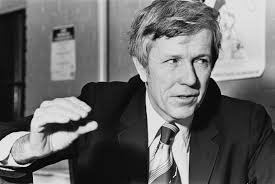
Black-and-white photo of Michael Harrington gesturing as he talksMichael Harrington


Harold Meyerson, 
I was present for a speech Harrington  gave to the 1983 convention of the UAW where he told delegates their enemies weren’t Mexican workers but the companies that pitted workers against each other. The delegates were largely silent at first, but as Harrington’s logic unfolded and his passion exploded, they raised the roof with their cheers.
Harrington died in 1989, just sixty-one years old. He did not succeed in building a mass socialist organization — that would require two decades more of capitalism’s erosion of democracy and economic security, the crash of 2008, and the elite recovery that followed. But no one who’d read Mike’s writing or heard him speak could be completely surprised at the instability and cruelty of capitalism, nor by the current democratic-socialist surge against the devastation that capitalism has wrought.
In a time when America and the world were moving rightwards, Harrington kept the socialist flame burning, and fitted the socialist idea to the global challenges of the twenty-first century.
Maurice Isserman, Maxine Phillips and I each have Mike stories up on Jacobin's website today:
 
https://jacobinmag.com/2019/07/michael-harrington-dsa-dsoc-democratic-socialism (opens in a new tab)
 
https://www.jacobinmag.com/2019/07/michael-harrington-dsa-democratic-socialism (opens in a new tab)
 
https://www.jacobinmag.com/2019/07/michael-harrington-legacy-maxine-phillips



0 Comments on Michael Harrington's Legacy

North Star Convention Endorsements

7/21/2019

The North Star Caucus is a group of DSA members, democratic socialists, who share a broad outlook around the political questions that face DSA and the broader US left. We are not a faction, a group wanting to take over DSA and remake it in our own image. See our statement of principles.
We believe that defeating Trump and the Republican agenda is the most pressing
political priority facing the U.S. left today. 

North Star Endorsed DSA Convention Resolutions

There is a large number of resolutions proposed for discussion at the 2019 DSA Convention, many of which have merit.  In particular, North Start urges votes for the following four resolutions: 
Resolution #5:             Defense of Immigrants and Refugees
Resolution #13:          Defeating Trump, Trumpism, and Electing Democratic Socialists and Progressives.
Resolution #27:           Proposed 2019-2020 National Priorities for DSA.
Resolution #34:           Ecosocialist Green New Deal Priority.

North Star Endorsed NPC Candidates

Based on discussions both within North Star and with other DSA members, North Star endorses the following candidates for the 2019 - 2021 NPC.  They are listed in order of our recommended ranking:  Rank order is important.
1.    Russell Weiss-Irwin
2.    Maikiko James 
3.    Timothy Zhu 
4.    Abdullah Younus
5.    Hannah Allison 
6.    Kristian Hernandez
7.    Theresa Alt 
8.    Jose A. Perez 
9.    Blanca Estevez 
10.   Dave Pinkham
11.   Natalie Midiri 
12.   Marsha Niemeijer 
13.   Marianela D’Aprile 
14.   Megan Svoboda
15.   Rachel Zibrat 
16.   Daniel Merrill


0 Comments on North Star Convention Endorsements

DSA Congress Women Respond to Trump

7/16/2019

0 Comments on DSA Congress Women Respond to Trump

DSA Justice for Immigrants Campaign

7/12/2019

A girl and a woman behind a chain-link fence, reaching through it
An appeal by the DSA National Immigrant Rights Working Group
The National Immigrant Rights Working Group (NIRWG)of the Democratic Socialists of America calls on DSA members and all working people to mobilize in support of actions such as the Lights for Liberty Vigils to End Human Detention Camps on July 12, the demonstrations organized in San Diego and elsewhere by the Coalition to Close the Concentration Camps and the July 13 Action to End Criminalization, Detention, & Deportations in Chicago. 
Trump's attacks on the human rights of the most vulnerable has once again galvanized the nation's conscience. 
We should make this the beginning of a concerted drive against immigration detention and child abuse, as well as the unjust immigration system that has empowered Trump's racist attacks as well as the campaigns to jail and deport the undocumented of past administrations.
We urge our members to call for an end to family separation, to concentration camps, to immigration detention, to criminalization, to deportation. The real solution to the immigration crisis is legalization of the undocumented as permanent residents ("green card" status) with the same rights as all other immigrants, including the right to apply for citizenship.
NIRWG Steering Committee
July 3, 2019
.
The Immigrants Rights Working Group Steering Committee asks DSA members and friends to distribute this statement widely through social media, web sites and mailing lists. We urge DSA bodies, such as chapters, steering committees, working groups and convention delegations to discuss and sign on to this statement at http://bit.ly/SupportDSAImmigrationAppeal.


0 Comments on DSA Justice for Immigrants Campaign

North Star Perspective Missing from Socialist Forum Publication

7/8/2019


A new issue of the DSA publication Socialist Forum has been posted with an emphasis on electoral strategy. Here (opens in a new tab). https://socialistforum.dsausa.org/issues/spring-summer-2019/electoral-politics-class-formation-and-socialist-strategy/
 
The editors selected articles that seem not to notice that Latinos participate in politics and there is a pivotable election in 2020. The Latino vote is growing rapidly in key states. 44% of Latino voters are millennials.   A second item missing from this article and the selection of articles is a recognition of how important the election of 2020 is to communities of color.
 
I had proposed a piece for Socialist Forum based upon the work of the North Star caucus with such an anti-racism focus.  Here is our argument in brief.
 
"Our first priority  in this election is the electoral and political defeat of Donald Trump, the Trumpist Republican Party and all of the authoritarian forces aligned with them. The white nationalist authoritarianism of Trumpism poses a ‘clear and present danger’ to working people and their unions, to people of color, to women, to LGBTQIA people, to immigrants, to members of minority religious faiths and to democracy itself. Trumpist victories in the 2020 elections would mean the consolidation of an authoritarian state with the most reactionary politics, the expansion of imperial aggression abroad and the collapse of the political space for democratic and left forces at home. The defeat of Trumpism is thus a strategic imperative, the most important political task of our time.
 
Given the central role of racism, white nationalism and bigotry against immigrants and Muslims in the political agenda of Trumpism, and the echoes of the most shameful racist moments of past U.S. history in Trumpian discourse, a failure to prioritize its defeat would be nothing less than the abandonment of the struggle against racism. "
 
See here (opens in a new tab).
 
The editors selected articles that seem not to notice that Latinos participate in politics and there is a pivotable election in 2020. 
 
A similar argument has been made by members Bill Fletcher and Carl Davidson in Portside, ITT, and a number of publications. 
https://portside.org/2019-04-23/left-strategy-2020-elections-and-beyond
 
They, too proposed a piece for Socialist Forum and it was also not accepted for publication. 
 
A strategy for DSA and the left needs to look closely at the potential Latino vote. In 2018 the Latino participation was a relatively low 44%.  This vote exists in states critical to the Democratic primary and any Democratic candidates victory. Latinos make up  28 % of Nevada,  in Texas, Latinos are 39.6 % of the population, in California 39.3 %, and 21.7 % in Colorado.  See Pew for more.
https://www.pewresearch.org/fact-tank/2019/05/01/historic-highs-in-2018-voter-turnout-extended-across-racial-and-ethnic-groups/ (opens in a new tab)
 
A strategic direction by DSA should recognize that the electoral victories in 2018 by Alexandria Ocasio-Cortez, Rashida Tlaib  and others, and the 2019 election victories in Chicago occur in districts with large Latino and other People of Color voters. 
 
Most in the democratic left have  recognized this approach since at least the 1988 Rainbow Coalition campaign and it should have been included in the Socialist Forum issue.
We have supported the creation, the recreation, of the Socialist Forum.  At the same time, we  in the North Star Caucus want to be certain that Socialist Forum is fulfilling its mandate to post a wide diversity of views on the topic of electoral participation representing the diversity of views within  DSA.
 
   DSA needs to incorporate a significant anti-racism agenda in its electoral work . North Star resolutions to start from an anti-racism agenda will be considered at the DSA convention, particularly resolutions 13 and 17. We encourage members and allies to cooperate to pass these resolutions. 
 
Latino Vote.  Pew (opens in a new tab)
https://www.pewresearch.org/fact-tank/2019/05/01/historic-highs-in-2018-voter-turnout-extended-across-racial-and-ethnic-groups/
 
Duane Campbell,
Sacramento. 
DSA North Star Caucus  


0 Comments on North Star Perspective Missing from Socialist Forum Publication

Resolution to Establish National Priorities for DSA 2019-2020.

6/26/2019

The National Political Committee (NPC) has announced (opens in a new tab) that it will not submit an organizational priorities resolution to the 2019 DSA National Convention. It has entered resolution # 88 to propose that the Convention endorse this decision. If the National Convention were to acquiesce in the NPC’s failure to present proposed organizational priorities to it for its consideration, the result would not be that DSA does not have organizational priorities, but that they will be determined in less democratic and less transparent ways, by subordinate bodies such as the next NPC or by the national staff. This is NOT how a healthy democratic socialist organization should function.
In the absence of an organizational priorities resolution from the NPC, the DSA North Star Caucus has submitted a Priorities Resolution. # 27.   Now, the National Convention can debate and democratically decide the direction of the organization over the next year. Our resolution reflects what we believe should be DSA’s priorities, but we would urge other caucuses and individuals who have different priorities to prepare amendments reflecting their views of DSA's priorities, so the National Convention can consider the full range of perspectives in our ranks, and make a democratic decision.

Proposed National Priorities for DSA for 2019-2020

WHEREAS for a membership organization to be truly democratic, it is essential that the important decisions about its political positions and its political work be made as close as possible to the membership, with the widest possible discussion and participation;
WHEREAS  as a democratic socialist organization, DSA has among its first principles the importance of collective action, informed by a strategic assessment of the historical moment in which we find ourselves and what it demands of us, and the necessity of deciding how we act collectively through the most democratic processes;
WHEREAS in DSA, the National Convention is established “highest decision making body” in our Constitutions and By-Laws, and has the widest participation of rank-and-file members from across the country;
WHEREAS  the democratic venue for establishing DSA’s organizational priorities must therefore be the National Convention; if the National Convention does not act, the important  decisions over organizational priorities will necessarily devolve to subordinate decision making bodies with less participation, such as the National Political Committee (NPC), or to the national staff, and be less democratic; 
BE IT THEREFORE RESOLVED:
THAT  this 2019 National Convention of Democratic Socialists of America do hereby establish the top three priorities for our organizational work for the period until to our next annual Convention:
Ø  Defeating Trump and Trumpism, and Electing Democratic Socialists, as set forth in resolution entitled “Defeat Trump and Trumpism, Elect Democratic Socialists”;
Ø  Defending Immigrants and Refugees, as set forth in resolution entitled  “Addressing Immigration Policy and Defending Immigrants and Refugees”;
Ø  Promoting the Green New Deal, as set forth in resolution on that subject sponsored by the Eco-Socialist Caucus.


0 Comments on Resolution to Establish National Priorities for DSA 2019-2020.

Making Sense of NAFTA and Its Replacement

6/17/2019

Trump, Enrique Peña Nieto and Justin Trudeau signing the USMCA, captioned “USMCA (NAFTA 2.0)” beside a “For sale, needs work” sign
Why we need new economic policies before we can fix trade deals
By STAN SORSCHER
(June 10, 2019) — In 2016, Donald Trump’s trade message was very simple: the North American Free Trade Agreement (NAFTA) was the worst trade deal ever negotiated. He has renegotiated NAFTA, rebranding the deal as the United States-Mexico-Canada Agreement (USMCA). We never quite understood his objection to the original NAFTA, and we don’t understand how USMCA fixes it. You need to squint to see the difference between NAFTA and its replacement.
“I have a gut, and my gut tells me more sometimes than anybody else’s brain can ever tell me,” Trump has said. His gut instinct said NAFTA was bad. Unfortunately, gut instinct is typically simplistic, often impulsive, and by definition not strategic or coherent.
We need to think of our domestic policy and trade policy together. Tariffs, like trade deals, make sense only as tools within a larger coherent strategy. Trade policy should reinforce the principles in our domestic policy. If trade policy is not working, it’s a fair bet that our underlying domestic policies aren’t either.

Since 1980, the prevailing political messagehas been, “Markets will solve all our problems. Government is the problem.”
The term for this is neoliberalism. “Neo” means new. In the language of economics, “liberal” means “liberated” or free from regulation. Neoliberalism “frees” markets by shrinking government, dismantling social programs, and cutting investment in education and research-and-development.
Many of our biggest problems — climate change, growing income inequality, health care, food safety, and workplace safety — are textbook market failures. Neoliberalism responds with its universal prescription — make business succeed and well-being will follow.
Read more. 
Making Sense of NAFTA and Its Replacement. (opens in a new tab)


0 Comments on Making Sense of NAFTA and Its Replacement

Bernie- Son of FDR

6/13/2019

Bernie Sanders gesturing with both hands as he speaksAndrew Harnik/AP photo


by Harold Meyerson
In 1916, amid the carnage of World War I, the great German-Polish socialist Rosa Luxemburg wrote that humanity was facing a choice between socialism and barbarism.
Earlier today, speaking at the George Washington University, Bernie Sanders noted that we live in a time of rising authoritarianism, citing the regimes of Putin, Xi, Orban, Duterte and Trump as indices of the growing threat. His speech was billed as offering his definition of socialism, which, a la Rosa, was said to be the alternative to oligarchy and authoritarianism.
 
Socialism as Sanders proceeded to define it is indeed an alternative to oligarchy and authoritarianism. What his speech left hanging was whether his socialism was in fact socialism.
In 2015, as his campaign was just taking off, Sanders came to a different D.C. university—Georgetown—to deliver what was also then billed as his definition of socialism. Before a crowd of wildly cheering college students, he reeled off a series of social democratic proposals—the universal right to health care, to college education and the like – with constant reference to the great American leader who did indeed lead the successful war against barbarism in the 1940s: Franklin Roosevelt. His speech was so FDR-centric that I wroteat the time:
Throughout the 1930s, Republicans claimed that Franklin Roosevelt was really a socialist. Today, Bernie Sanders said they were right.
 
Then, as today, Sanders referenced Roosevelt’s 1944 State of the Union speech – FDR’s last great speech—in which Roosevelt proposed an Economic Bill of Rights. Today, Sanders formally proposed “a 21st Century Economic Bill of Rights,” which included a right to a living-wage job, to “quality health care,” to “a complete education,” to “affordable housing,” to “a clean environment” and to “a secure retirement.”
 
As if citing Roosevelt were not enough, Sanders also cited Harry Truman, whose efforts to create a Medicare for All program in the 1940s were thwarted by conservatives and the medical profession. He quoted Truman, talking about his critics, at length:
Socialism [Truman said] is the epithet they have hurled at every advance the people have made in the last 20 years. Socialism is what they called Social Security. Socialism is what they called farm price supports. Socialism is what they called bank deposit insurance. Socialism is what they called the growth of free and independent labor organizations. Socialism is their name for almost anything that helps all the people.
 
Nor did Sanders’s talk simply identify socialism with the social democratic reforms of Roosevelt’s New Deal and Truman’s Fair Deal. It also contained two crucial omissions.
First, even as Sanders cited Roosevelt and Truman, but he also did not cite any avowed American democratic socialists, save, in passing, Martin Luther King Jr. He made no mention of his great hero, Eugene V. Debs. Nothing on Norman Thomas, the Socialist Party’s candidate for president in each of FDR’s four elections. Nothing on A. Philip Randolph or Bayard Rustin or Michael Harrington. No reference to Thomas’ line when asked if Roosevelt had actually carried out the Socialist Party’s program. “He carried it out,” Thomas said, “on a stretcher.”
 
Second, Sanders also omitted his own more socialistic proposals. His speech skipped over some groundbreaking social democratic reforms that Sanders and Elizabeth Warren have both advocated in the course of the campaign, including dividing corporate boards between shareholder and worker representatives. He made no mention of an American version of the Meidner Plan – a 1970s proposal never quite implemented in Sweden that would gradually transfer the ownership of corporations, through the yearly payment of profits in the form of stock to their employees’ organizations, to their workers. 
 
In short, Sanders’s socialism, as he defined it, is an expansion of America’s semi-demi-welfare state to include more economic rights. It’s an effort to make us a more functional social democracy—which, of course, is no small proposal and by American standards, a great leap forward. But he could have made the same proposals and labeled them neo-Rooseveltian liberalism without straining historical accuracy.

How, then, did his speech depart from his 2015 Georgetown outing? Chiefly, in noting that the world had grown more dangerously authoritarian and xenophobic in the intervening years—a discussion that Sanders also cast in a neo-Rooseveltian light. Twice in his talk, he cited Depression-era rallies at Madison Square Garden: the first, the infamous pro-Nazi rally of 1939; the second, FDR’s election eve speech of 1936—surely, Roosevelt’s most radical oration—in which FDR sounded the anti-oligarchic and anti-authoritarian themes that Sanders is sounding today. This speech, too, Sanders quoted at length:
We had to struggle [Roosevelt said] with the old enemies of peace—business and financial monopoly, speculation, reckless banking, class antagonism, sectionalism, war profiteering.
They had begun to consider the Government of the United States as a mere appendage to their own affairs. We know now that Government by organized money is just as dangerous as Government by organized mob.
Never before in all our history have these forces been so united against one candidate as they stand today. They are unanimous in their hate for me—and I welcome their hatred.
No line in Sanders’ speech drew a louder spontaneous standing ovation than that one—the one about welcoming their hatred. And it wasn’t Bernie’s line; it was FDR’s.
Sanders’ conflation of democratic socialism with the progressive reforms of an FDR is at some level eminently understandable. Social Security is indeed a social democratic program, as is Medicare; their shortcomings, as Sanders surely realizes in seeking to bolster the first and universalize the second, is that they’re not social democratic enough. In running as a democratic socialist who seeks to complete and update FDR’s agenda, Sanders straddles the very fuzzy border between social democracy and American left liberalism. There, coming from the socialist side, he meets Warren, coming from the liberal side, and a growing number of their fellow Americans.
 
From The American Prospect.
https://prospect.org/article/bernie-son-fdr
 

0 Comments on Bernie- Son of FDR

A Democratic Socialist Case for the ImpeachmentOf President Donald Trump

6/7/2019

Donald Trump, frowning, in the Oval Office
By Max B. Sawicky
 
One way the liberal/radical divide manifests itself is in what might be called the distinction of outcomes from process. Radicals, for instance, tended to oppose the U.S. invasion of Iraq because we simply rejected the rationale for the policy. Liberals tended to criticize the process under which the invasion was launched – the failure of Congress to declare war, the inability to secure support from the United Nations, the aborted search for “weapons of mass destruction.”
So too in the current political situation, liberals tend to focus on the high crimes and misdemeanors of the president, while radicals prefer to center their appeals on behalf of concrete ‘meat-and-potatoes’ demands for Medicare For All, the Fight for 15, or they emphasize foundational social-justice demands in the fights against racism, sexism, and gender-identity bigotry.
There is really no reason for this divide. Liberals can be won to democratic socialist goals in health care and the like. The question is whether democratic socialists can wrap our heads around impeachment.  
The likelihood of continued disenfranchisement of Democratic-leaning voting constituencies, and the increasing extent to which a minority of mostly white, older voters in rural states can outvote a majority of the nation in the Electoral College, not to mention the U.S. Senate, is a grave threat to any elected Democratic president, not to mention to his or her prospects for a fair election.
Imagine that a genuinely progressive Democrat wins the White House in 2020. The chances of a Democratic Senate right now look slim. Of the Democrats’ xxx seats in the House, over a hundred have identified with the so-called “New Democrat” label that was mainstreamed by William J. Clinton. Not a few Democratic senators are of a similar ilk. Relatedly, the prospects for a liberal majority on the Supreme Court are also dim. 

The viability of any democratic socialist proposal in the vein of health care or social justice requires the elimination of these obstacles, and that means going through Trump, who revels in the destruction of democratic norms and institutions. It is essential that he be removed. Democracy is not merely an identifier or assertion of bona fides for socialists. It is an operational requirement, both to attain power and to employ it.
That any sort of socialist or radical could shrug at the priority of Trump’s removal should be mind-boggling. One needn’t dwell on the Russia material; a charge of treason or collusion is not necessary to justify Trump’s removal. It is plain to all that at the very least, the president is a garden-variety crook and grifter. He is as reactionary as any Republican leader in the 20thor 21stcenturies. He is cementing a majority on the Supreme Court that will block any sort of progressive change for decades to come. He is an ongoing threat to peace.
Why in the world not impeach him? Who on the left could deny that the Republicans’ political power, including their sway on the Supreme Court, rests on decades of racist disenfranchisement of voters, gerrymandering of Congressional districts, and corruptions of campaign finance? Their entire reign is fundamentally illegitimate. They have power but no authority. The career criminal Donald Trump is merely the poster boy for this wider array of interests, interests which by the way stand foursquare behind him.
Everyone is aware that there are probably not enough Republican votes in the Senate to actually vote in favor or removing Trump from office. There are reasonable fears that the president could exploit such an outcome to declare another victory. The president’s problem in this regard is that the public grows more and more weary of his declarations of victory. We are tired of all the winning, because it always proves to be ersatz.
The contrary view here is that the process of impeachment is a political end in itself. The meticulous elaboration of charges and evidence in a due-process setting is the education that the country needs. Knowing something in general is never as compelling as learning all the gory details. If you think such a process would fall on deaf ears, you have to think there is no good case to make against Trump – a strange conclusion for any radical.
There is the fear that a President Pence would present a worse political problem than Trump. This is highly debatable. There is no indication that his appointments would be any worse. In fact, the president seems to enjoy finding the worst possible nominees available for any job he might fill. Pence would not be a formidable political animal in his own right, certainly not more so than his predecessor.
A successful impeachment would deeply split the Republicans, setting off a war between pro-Trump fanatics and any Republicans who voted for impeachment. Of course, if you doubt impeachment would ever happen, there is nothing to fear from a President Pence, since that would never come to pass.
Impeachment is a political process, not a legal one. The bill of particulars against Richard Nixon included the Christmas bombing of Vietnam. It wasn’t because it was illegal; it was because it was a moral atrocity. Impeachment need not be founded on narrowly legalistic, pedestrian matters, such as the blatant payola associated with Trump’s hotels. 
Now you may think the Democratic Congress does not have the stuffing to mount an effective impeachment campaign. Then why suppose they would have the intestinal fortitude to do any difficult thing that progressives are demanding, like taking on the health insurance industry, or big Pharma, or the fast food industry, or the likes of Walmart or Amazon?
Anything big and worth doing is going to be hard. Socialism, in any variety you favor, is going to be hard too. The fear that Trump could exploit impeachment to excite his base is defeatist. The case against Trump is not like the case against Bill Clinton. The latter case was nonsense.
At this juncture, the best defense as a good offense cliché applies. Impeachment is an offensive political weapon. If a Republican senator fails to vote for impeachment, he or she should become more vulnerable at re-election. Insofar as Democrats fail to pursue it vigorously, impeachment is a weapon for the democratic left. After, if a Democrat is not willing to fight as awful a political personality as Donald Trump, what good is he or she? If Rep. Nancy Pelosi is not willing to ramrod this process, she renders herself replaceable.
The root of the case against Trump is the case for democracy. For the foreseeable future, if not indefinitely, democratic socialists will have to work within the framework of the U.S. state. For this to be feasible, the state’s democratic processes need to be preserved, if not strengthened. Now more than ever, democratic socialists need to be serious about democracy, as the beating heart of progressive change, not merely as a means of distinguishing ourselves from some other dudes.*
Accordingly, I would urge the Democratic Socialists of America and like-minded radicals to take up resolutions demanding that the House of Representatives serve up articles of impeachment against our illegitimate, reprehensible president, Donald Trump.
 
*I am indebted to Leigh Phillips and Michael Rozworski for this point, which appears in their new book, “The People’s Republic of Walmart.”
 

1 Comment on A Democratic Socialist Case for the ImpeachmentOf President Donald Trump

Electoral Discussions Within DSA

6/5/2019


The Socialist Majority Caucus of DSA is proposing the following national convention resolution:
http://bit.ly/electoralpriority (opens in a new tab)

This is the North Star Caucus's proposed resolution on the same subject:
Proposed Resolution: Defeating Trump, Trumpism and Election Democratic Socialists and Progressives (opens in a new tab) ?
 
Here is one view:
 
There is nothing objectionable in the Socialist Majority Caucus resolution, but there is something crucially important missing – the necessity of defeating Trump and Trumpism in the 2020 elections. This makes the resolution radically incomplete, an ahistorical discussion of electoral politics that avoids the most central issue of electoral politics of this moment. There is a deference to the political fundamentalism of Momentum/Spring/Bread and Roses and its rhetoric of class struggle electoral politics, even as that caucus absents itself from the decisive class struggle election battles of our day, that leads Socialist Majority to duck the question. And yet there is no more important question for the future of American democracy, the left, and all of the popular forces. The debate over this issue will only take place if we take the lead in making it happen.  Leo Casey.
 
 
A second view.
 
 I favor Leo’s view  above on Trump and Trumpism,  It is difficult to imagin  how much damage the Trump cartel has already caused,  See, for example, Paul Krugman’s opinion piece in the NYT today on how starting many trade wars:  Iran, India, China, Russia, Mexico, the EU  has set back our global system. (That avoids the question of how our global system was used to further neoliberalism).  And see Michael Lewis, the Fifth Risk, on how the Trump brigades have set back science and the feeding of children, among other items, 
 
I do, however, see a reasonable middle ground.
 
We can put all of our efforts in Defeating Trump and Trumpism and electing Democratic Socialists and Progressives.  However if Sanders  or Warren do not get the nomination,  DSA as a national organization does not need to endorse a neoliberal. - like Biden.  That does not mean we will not be active in the elections.  
 
Today Warren  posted a platform on trade that  criticizes Trump’s trade wars, argues for fair trade, and critiques neoliberal trade. This is a step ahead on trade. 
 
DSA can encourage political participation along a broad spectrum of electoral campaigns.  For example, here in California there will be an initiative _ Schools and Communities First- to tax the rich to fund schools and community development, .  There will be various Medicare for All campaigns.   DSA can engage electorally and lead politically to defeat Trumpism  without endorsing a neoliberal Democrat.
Duane Campbell 
What do others think?
 

0 Comments on Electoral Discussions Within DSA

​PROPOSED NATIONAL PRIORITIES FOR DSA FOR 2019-2020

6/1/2019

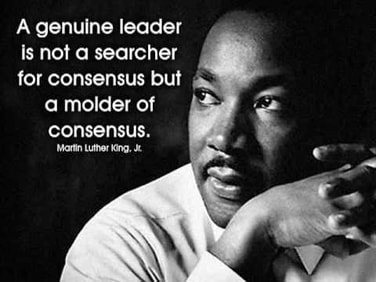
Martin Luther King Jr. with his quote: “A genuine leader is not a searcher for consensus but a molder of consensus.”

DSA’s top three priorities for political work over the next two years, until our next national convention in 2021, will be:
  1. Defeating Trumpism and Electing  Democratic Socialists and Progressives. 
  2. Addressing Climate Change and Promoting the Green New Deal
  3. Addressing the Immigration Crisis and Defending Immigrants and Refugees
 
Proposed amendment to the DSA Constitution re Number of NPC Members

These resolutions have each received the required number of supporters and have been submitted to the appropriate convention committees.  Delegates. Please support these resolutions. 
 
Rather than submitting a resolution on number 2 climate change, we chose to support the forthcoming resolution from the Eco Socialist Committee. 

0 Comments on ​PROPOSED NATIONAL PRIORITIES FOR DSA FOR 2019-2020

Proposed National Priorities for DSA for 2019-2020

5/25/2019

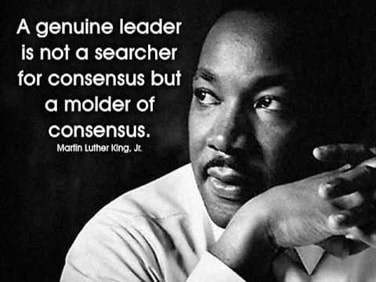
Martin Luther King Jr. with his quote: “A genuine leader is not a searcher for consensus but a molder of consensus.”
The National Political Committee (NPC) has announcedthat it will not submit an organizational priorities resolution to the 2019 DSA National Convention. If the National Convention were to acquiesce in the NPC’s failure to present proposed organizational priorities to it for its consideration, the result would not be that DSA does not have organizational priorities, but that they will be determined in less democratic and less transparent ways, by subordinate bodies such as the next NPC or by the national staff. This is NOT how a healthy democratic socialist organization should function.In the absence of an organizational priorities resolution from the NPC, the DSA North Star Caucus is submitting such a resolution, so the National Convention can debate and democratically decide the direction of the organization over the next year. Our resolution reflects what we believe should be DSA’s priorities, but we would urge other caucuses and individuals who have different priorities to prepare amendments reflecting their views of DSA's priorities, so the National Convention can consider the full range of perspectives in our ranks, and make a democratic decision. 

Proposed National Priorities for DSA for 2019-2020 
WHEREAS  for a membership organization to be truly democratic, it is essential that the important decisions about its political positions and its political work be made as close as possible to the membership, with the widest possible discussion and participation;
WHEREAS  as a democratic socialist organization, DSA has among its first principles the importance of collective action, informed by a strategic assessment of the historical moment in which we find ourselves and what it demands of us, and the necessity of deciding how we act collectively through the most democratic processes;
WHEREAS  in DSA, the National Convention is established “highest decision making body” in our Constitutions and By-Laws, and has the widest participation of rank-and-file members from across the country;
WHEREAS  the democratic venue for establishing DSA’s organizational priorities must therefore be the National Convention; if the National Convention does not act, the important decisions over organizational priorities will necessarily devolve to subordinate decision making bodies with less participation, such as the National Political Committee (NPC), or to the national staff, and be less democratic; 
BE IT THEREFORE RESOLVED:
THAT  this 2019 National Convention of Democratic Socialists of America do hereby establish the top three priorities for our organizational work for the period until to our next annual Convention:
  • Defeating Trump and Trumpism, and Electing Democratic Socialists, as set forth in resolution entitled “Defeat Trump and Trumpism, Elect Democratic Socialists”;
  • Defending Immigrants and Refugees, as set forth in resolution entitled  “Addressing Immigration Policy and Defending Immigrants and Refugees”;
  • Promoting the Green New Deal, as set forth in resolution on that subject sponsored by the Eco-Socialist Caucus.
  • DSA Members. Please endorse here.  https://forms.gle/pB1N1StTkY5ocFJa6 (opens in a new tab)

0 Comments on Proposed National Priorities for DSA for 2019-2020

People Are REady to Fight !

5/23/2019

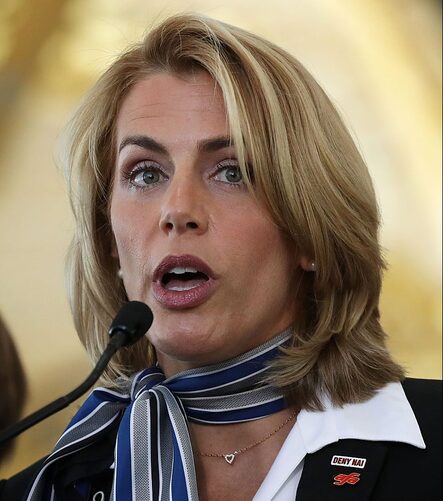
Sara Nelson, president of the flight attendants union, speaking at a microphone


"Only direct action—or the threat of it—will move the boss." Sara Nelson, the flight attendants union president whose strike threat ended Trump's government shutdown, on building a fighting labor movement (opens in a new tab).

On May 10, 2019, Association of Flight Attendants president Sara Nelson gave a speech to the Chicago Democratic Socialists of America’s annual Eugene Debs–Lucy Gonzalez Parsons–A. Philip Randolph Dinner. Jacobin reproduced the speech here in full, lightly edited for online publication.
 
https://jacobinmag.com/2019/05/sara-nelson-flight-attendants-strikes
 
That spirit is what led flight attendants to declare we wouldn’t work flights that facilitated the Trump Administration’s evil policy of immigrant family separations. And it’s that spirit that led us to take a firm stand during the government shutdown, when millions of people were out of work, others were forced to work without pay, all of us were increasingly unsafe, and our entire economy was on the line. With access to 360 million voters in our workplace, we intend to continue to use the spirit of our union for good.
And let me tell you I’m proud to be with you, the Chicago Democratic Socialists of America. You have won some great victories here in this city this year. You have helped elect some incredible leaders. 
Still, some ignorant political hack or media purveyor of hate is likely talking trash right now about democratic socialists. And here’s what I have to say. Helen Keller was a democratic socialist. And so was Albert Einstein. And so was George Orwell. And Bayard Rustin. And the Reuther family.
When Nazi troops came to the Warsaw Ghetto to kill the last Jews left, the men and women on the rooftops who met them with gasoline bombs were democratic socialists, and democratic socialists stood up against dictatorship throughout the twentieth century, they filled Stalin’s camps and Siberian graves.
The minimum wage, national health care, worker safety rules, Social Security — before the Great Society and before the New Deal, this was the democratic-socialist agenda.
And of course our democratic-socialist working heroes, Eugene Victor Debs, A. Philip Randolph, and Lucy Gonzalez Parsons. The police called Lucy Parsons “more dangerous than a thousand rioters” because of her skills as an orator, organizer, and rabble-rouser. 
Her cry that only direct action — or the threat of it — will move the boss is a lesson we can all do well to remember.  Read more. 
 
https://jacobinmag.com/2019/05/sara-nelson-flight-attendants-strikes


0 Comments on People Are REady to Fight !

Proposed Resolution: Defeating Trump, Trumpism and Election Democratic Socialists and Progressives

5/17/2019

Donald Trump smiling at a podium at a campaign rally
Defeating  Trump, Trumpism, and Electing  Democratic Socialists and Progressives


Submission to the national convention.  We need your endorsements. Use this form.  Include your e mail and telephone number. 
 
https://forms.gle/LTURUQ8jCuw3QpsNA
 
Whereas, our first priority is the electoral and political defeat of Donald Trump, the Trump-dominated  Republican Party and the authoritarian forces aligned with them. The white nationalist, patriarchal,authoritarianism of Trumpism poses a ‘clear and present danger’ to working people and their unions, to people of color, to women, to LGBTQIA people, to immigrants, to members of minority religious faiths and to democracy itself.
And whereas, a Trump victory in the 2020 elections would consolidate an authoritarian state with the most reactionary politics, expand imperial aggression abroad and shrinkthe political space for democratic and left forces at home. 
And whereas, failure to prioritize the defeat of Trumpism would be nothing less than the abandonment of the struggles against the racism, sexism, white nationalism and bigotry against immigrants, Muslims and Jews that are central to Trumpism: 
Be it therefore resolved that the defeat of Trumpism is a strategic imperative, the most important political task of our time. 
Be it further resolved that to defeat the Trump regime, the Democratic Party and candidates for office running as Democrats must adopt a progressive platform that breaks decisively with neoliberal politics and economics, rejecting the policies of austerity, privatization, economic deregulation and ‘race to the bottom’ free trade under corporate hegemony.
Be it further resolved that DSA should promote the development of such a progressive platform, which places the interests of working people and their unions over corporations and the 1%, that takes on the economic impact of institutional racism and sexism in employment and social services, that addresses increasingly catastrophic climate change, protects abortion rights and reproductive justice and promotes the well-being of the great mass of U.S. working people, especially in the provision of fully-funded, universally accessible public goods in health care, education, housing and mass transportation.
Be it further resolved that DSA will vigorously support publicly avowed democratic socialists such as Senator Bernie Sanders and  Representatives Alexandria Ocasio-Cortez and Rashida Tlaib (both DSA members), as well as other progressive elected officials. Bernie Sanders’ campaign for President deserves our support precisely because it can advance this progressive platform, even if he does not win the Democratic Party nomination.
And, be it further resolved that DSA’s electoral work is most effective and has the greatest impact when we work cooperatively with other progressive organizations on the left – both mass organizations such as unions, civil rights organizations and community groups, and political  organizations, such as Our Revolution, the Working Families Party, and Justice Democrats. 
And, be it finally resolved that the DSA Electoral Committee shall report to the membership their proposed strategy for achieving the above objectives.
DSA members may endorse the resolution here.
https://forms.gle/LTURUQ8jCuw3QpsNA

Submitted by Duane Campbell for the  North Star Caucus


1 Comment on Proposed Resolution: Defeating Trump, Trumpism and Election Democratic Socialists and Progressives

Proposed DSA Resolution: Addressing Immigration Policy and Defending Immigrants and Refugees

5/14/2019

A man carrying a young girl as they wade across a river with other migrants

Proposal to national DSA Convention;  2019.
WHEREAS   one of the first principles of democratic socialism is the importance of collective action;
WHEREAS   our political work should be informed by a strategic analysis of the political economy of U.S. capitalism and the cutting edge issues of the day, with an eye to identifying the critical points of system leverage where we can collectively intervene to maximum political effect; and

Whereas      DSA individuals, chapters, and the Immigrants’ Rights Working Group have been actively engaged for over six  years, and continue to engage in the defense of immigrants and refugees from racists attacks, and promoting 
and the promotion of comprehensive immigration reform that would secure their place in the U.S., putting an end to corporate induced competition between native born and immigrant workers, and between U.S. workers and workers abroad. ( See resolution #41 from the 2017 convention). 
 
  And, whereas,  In the last half century, there has been a major restructuring of the global economy, conducted largely on the terms of transnational corporations seeking ever greater profits. Neo-liberal ‘free trade’ agreements, such as NAFTA I and II and CAFTA, have produced a global ‘race to the bottom,’ with capital flight sending good paying union jobs away from workers in the U.S. to countries with low wage employment, many of which are ruled by authoritarian states that ban independent unions. In the Americas, this global ‘free trade’ economy has devastated entire sectors of the economies of Mexico, Central America and the Caribbean, leading millions of people attempting to migrate to the U.S. in search of food, jobs, and security. Many also flee the ruthless violence of criminal groups in nations with ‘failed’ states, as well as the effects of climate catastrophes, from drought to increasingly vicious and destructive storms. 
 
And, whereas, the racist nationalism of Trump and his cohort  seeks to exploit the anger of U.S. workers by scapegoating immigrants and refugees, projecting racist fears and resentments on them. 
 
And, whereas, only a politics which breaks with the neo-liberal paradigm can successfully counter the racism of Trump and the nationalist right wing, bringing a measure of justice both to immigrants and refugees and to workers in the U.S.
 
Be it therefore resolved that:


Be it therefore resolved that:
 
In conjunction with the DSA Immigrant Rights Working Group, National staff and the NPC will develop a DSA platform for comprehensive immigration law reform, which shall be the basis for our educational, legislative, and direct action  work. The platform shall include, but not necessarily be limited to, provisions for:
·      A path to legal status (and where desired, citizenship) for DACA dreamers and TPS recipients;
·      The abolition of ICE, and its replacement with a new federal agency located in the Department of Justice  that respects the rights of immigrants and refugees. 
·       The legal recognition and enforcement of international treaties establishing the rights of migrants and refugees;
·       The quick and timely adjudication of claims of refugee status and rights of asylum, and quick and timely processing of applications for visas and ‘green card’ status;
·       An end to racial and ethnic disparities in the provision of visas and ‘green card’ status;
·       The reform of the current system of employment and family visas, including H2A and H1B visas, to end employer misuse of work visas and abuse of international workers, and to respect the right of family reunification; and
·       The securing of the labor rights of immigrant workers, and the full integration of those workers into the organized labor movement.
         A path to legal residence for all those living in the U.S. at this time.
·        A repeal of employer sanctions in all its forms. 
·      Legal status for the currently  undocumented, in a rapid and inclusive process, without excessive fees, fines, waiting periods or a preliminary temporary status.  
·      Opposition to the expansion of guest worker programs. 


Further, national DSA working with the Immigrants’ Rights Working Group  shall develop educational materials which provide a democratic socialist analysis of the underlying causes of the current immigration crisis, including 
·       The role of US government policy – economic, military and diplomatic – in the conditions that create refugees and economic immigrants;
·       The role of drug trafficking and the organized crime and violence associated with it, as well as the role of the U.S. as a major drug market, in the conditions that create refugees and economic immigrants;
·       The role of ‘free trade’ agreements, and the restructuring of the global economy along neo-liberal lines, in the conditions that create economic immigrants; and
·       The role of institutions of the global economy, such as the World Bank and the International Monetary Fund, in the conditions that create economic and immigrants. 

{ End of resolution} 
DSA Members can endorse this resolution here.

https://forms.gle/obzGwsxQEAknyP7N8

The prior post deals with how we arrived at this resolution.
Future posts will deal with revising the other two priorities of North Star  to respond to the NPC format.
Thank you for your support .  
Duane Campbell,
 

0 Comments on Proposed DSA Resolution: Addressing Immigration Policy and Defending Immigrants and Refugees

Resolution: Addressing Immigration Policy and Defending Immigrants and Refugees

5/12/2019

A man carrying a young girl as they wade across a river with other migrants


A man carrying a young girl as they wade across a river with other migrants
 
WHEREAS   one of the first principles of democratic socialism is the importance of collective action;
WHEREAS   our political work should be informed by a strategic analysis of the political economy of U.S. capitalism and the cutting edge issues of the day, with an eye to identifying the critical points of system leverage where we can collectively intervene to maximum political effect; and
Whereas      DSA individuals, chapters, and the Immigrants’ Rights Working Group have been actively engaged for over six  years, and continue to engage in the defense of immigrants and refugees from racists attacks, and promoting 
and the promotion of comprehensive immigration reform that would secure their place in the U.S., putting an end to corporate induced competition between native born and immigrant workers, and between U.S. workers and workers abroad. ( See resolution #41 from the 2017 convention). 
 
   And, whereas,  In the last half century, there has been a major restructuring of the global economy, conducted largely on the terms of transnational corporations seeking ever greater profits. Neo-liberal ‘free trade’ agreements, such as NAFTA I and II and CAFTA, have produced a global ‘race to the bottom,’ with capital flight sending good paying union jobs away from workers in the U.S. to countries with low wage employment, many of which are ruled by authoritarian states that ban independent unions. In the Americas, this global ‘free trade’ economy has devastated entire sectors of the economies of Mexico, Central America and the Caribbean, leading millions of people attempting to migrate to the U.S. in search of food, jobs, and security. Many also flee the ruthless violence of criminal groups in nations with ‘failed’ states, as well as the effects of climate catastrophes, from drought to increasingly vicious and destructive storms. 
 
And, whereas, the racist nationalism of Trump and his cohort  seeks to exploit the anger of U.S. workers by scapegoating immigrants and refugees, projecting racist fears and resentments on them. 
 
And, whereas, only a politics which breaks with the neo-liberal paradigm can successfully counter the racism of Trump and the nationalist right wing, bringing a measure of justice both to immigrants and refugees and to workers in the U.S.
 
The detailed version of the earlier  resolution can be found on this site  at 
 
Addressing the Immigration Crisis

 
Be it therefore resolved that:
 
In conjunction with the DSA Immigrant Rights Working Group, National staff and the NPC will develop a DSA platform for comprehensive immigration law reform, which shall be the basis for our educational, legislative, and direct action  work. The platform shall include, but not necessarily be limited to, provisions for:
·      A path to legal status (and where desired, citizenship) for DACA dreamers and TPS recipients;
·      The abolition of ICE, and its replacement with a new federal agency located in the Department of Justice  that respects the rights of immigrants and refugees.;
·       The legal recognition and enforcement of international treaties establishing the rights of migrants and refugees;
·       The quick and timely adjudication of claims of refugee status and rights of asylum, and quick and timely processing of applications for visas and ‘green card’ status;
·       An end to racial and ethnic disparities in the provision of visas and ‘green card’ status;
·       The reform of the current system of employment and family visas, including H2A and H1B visas, to end employer misuse of work visas and abuse of international workers, and to respect the right of family reunification; and
·       The securing of the labor rights of immigrant workers, and the full integration of those workers into the organized labor movement.
         A path to legal residence for all those living in the U.S. at this time.
·        A repeal of employer sanctions in all its forms. 
·      Legal status for the currently  undocumented, in a rapid and inclusive process, without excessive fees, fines, waiting periods or a preliminary temporary status.  
·      Opposition to the expansion of guest worker programs. 


Further, national DSA shall develop educational materials which provide a democratic socialist analysis of the underlying causes of the current immigration crisis, including 
·       The role of US government policy – economic, military and diplomatic – in the conditions that create refugees and economic immigrants;
·       The role of drug trafficking and the organized crime and violence associated with it, as well as the role of the U.S. as a major drug market, in the conditions that create refugees and economic immigrants;
·       The role of ‘free trade’ agreements, and the restructuring of the global economy along neo-liberal lines, in the conditions that create economic immigrants; and
·       The role of institutions of the global economy, such as the World Bank and the International Monetary Fund, in the conditions that create economic and immigrants. 

{ End of resolution} 
Future posts will deal with revising the other two priorities to respond to the NPC format.
Thank you for your support. (This is known as dialogue).
Feel free to forward this message to other DSA members. 
 
Duane Campbell,
 
DSA North Star.  And DSA Immigrants’ Rights Working Group. 
 

0 Comments on Resolution: Addressing Immigration Policy and Defending Immigrants and Refugees

May Day 2019 Letter to DSA Comrades

5/1/2019

Dear Comrades,

We invite you to
join us as members of the North Star caucus of DSA.

You can find our complete Statement of Principles
here.

We are committed to democracy as both a means and an end. We believe that socialism cannot be achieved except through democratic struggle.

Our current political priorities include:
  1. Defeating Trumpism and Electing Democratic Socialists and Progressives
  2. Addressing Climate Change and Promoting the Green New Deal
  3. Addressing the Immigration Crisis and Defending Immigrants and Refugees

We find this an exciting time to belong to DSA. We’re growing both from some of our electoral victories in 2018 and from the momentum of the 2016 Bernie Sanders campaign, where Senator Sanders forced his opponents and the media to deal with his self-identification as a democratic socialist. We anticipate that DSA’s participation in the 2020 Sanders campaign will continue our growth and the development of democratic socialist politics.

DSA has grown to more than 50,000 national members, with organized groups in nearly every state in the union. In many locations, DSA chapters have developed great programs of activity, ranging from Medicare for All advocacy, to electoral engagement, to defense of immigrant communities, to tenant organizing and more.

So why organize a caucus within DSA at all and why now?

Unfortunately, we saw unhealthy developments in the organization. Nearly 40 percent of the delegates to the 2017 National Convention voted to reject any joint work with Our Revolution, the group explicitly organized by Senator Sanders’ supporters to carry on the work begun in the 2016 campaign. What was the objection to Our Revolution? It’s not pure enough. It doesn’t exclusively support explicitly socialist candidates. That stance of political purism isolates DSA from the very people we need to reach. There remains a tendency to deny political participation to the broader, less active DSA membership. DSA is currently not doing enough to engage with our natural allies in coalition work or movement building. Electoral engagement is still criticized by some members as a waste of time. Political purism continues to distract from socialist organizing, even as some members openly reject the principles and tradition of democratic socialism.

Even more disturbing, we saw a trend of people, often operating anonymously through social media but sometimes identifying themselves openly, behaving in a manner that can be only described as toxic. They demonstrated a willingness to scrap any hint of due process or democratic deliberation and to organize digital mobs to enforce some sort of orthodoxy. The toxicity in DSA has not dissipated. If we continue down this path, the least damaging outcomes would be driving good people away from DSA and a descent into irrelevance; a much worse outcome would be that an organization with a toxic internal culture infects the broader progressive left.

North Star exists to challenge these tendencies and make DSA a better organization. We also dismiss the notion that DSA should exist without caucuses.

In an organization of 50,000 members, many if not most new to democratic socialism, the old DSA without caucuses is no longer viable. The organization needs organized factions – caucuses – that put DSAers who think alike and do similar work in touch with each other, allowing members to develop and present their political views and strategies to the organization as a whole. Interaction among such caucuses is the essence of democracy in any large organization. Without public caucuses, cliques will still form underground to deliberate, organize and push their politics. However, the vast majority of the membership will be left with no access to this decision-making. Insiders ‘in the know’ should not be allowed to make all the important decisions without real accountability in the form of organized dissent.

What does need to be addressed is how caucuses conduct themselves: do they operate in a factional way, putting the interest of the caucus above the interest of DSA as a whole, and even more importantly, above the interest of the movement as a whole? We have organized a caucus to pursue our vision of democratic socialism and we welcome other caucuses that have formed in a democratic manner.

We’d appreciate your response to this invitation, to our Statement of Principles and to content on our blog. If you support our Statement of Principles, please sign on as a member of our caucus. If you disagree, we welcome participation and dialogue.

In solidarity,

DSA North Star: The Caucus for Socialism and Democracy
See who we are: DSA North Star

0 Comments on May Day 2019 Letter to DSA Comrades

Increase the Size of the NPC

4/25/2019

 We are proposing a constitutional amendment to DSA to  increase the NPC from 16 to 24 members while retaining the allocation to various categories of members.  The proposal is virtually identical to the 2017 resolution that received about 63% of the vote - not the 2/3 necessary to pass.  


To get this on the 2019 convention agenda, we need co-sponsorship from 50 (or more) DSA members -  and we need it by May 2.  

 If you agree, RESPOND DIRECTLY TO ME,

If you wan to sign on, your response should include: 
(1) Name;
(2) email (try to use the one you gave to the NO);
(3) Chapter;
(4) zip code


return to this address
chocolatehouse@sbcglobal.net
Resolution below the fold
Proposed amendment to the DSA Constitution re Number of NPC Members
Name(s) of those proposing the resolution who will serve as lead contact(s):Members of the North Star Steering Committee
The Rationale: Statement of why this amendment is being proposed (Motivation for the Amendment) Motivation: DSA’s National Political Committee serves as the organization’s highest decision-making body between National Conventions. In addition to providing political leadership, DSA’s NPC members direct the implementation of DSA’s political and organizational goals. They create and serve on committees and task forces to guide particular areas of DSA’s political work; they also instruct and support the staff in carrying out the organization’s operations.
In the past few years, DSA has experienced immense growth. We have a huge influx of new members who have varying degrees of organizing experience as well as different levels of familiarity with democratic socialist vision and politics. DSA chapters are springing up all over the country; many have formed in areas outside major metropolitan regions and in places not known as hotbeds of progressive politics.
Increasing the size of DSA’s National Political Committee from sixteen to twenty-four members would:
(1) Increase the likelihood that the perspectives and needs of people organizing in diverse political terrain would be taken into account;
(2) Provide more NPC members to be available and accountable for carrying out the body’s responsibilities and serving as resources for the staff and locals, without making the body itself so large that its effectiveness and efficiency are compromised. 
(3) Provide a cushion in the event that some NPC members are unable, for personal or other reasons, to fulfill their NPC responsibilities, resulting in more work for both the remaining NPC members and DSA's national staff.  Inability of some elected NPC members to carry out their responsibilities has been an ongoing problem for the NPC.
(4) By retaining the proportion of NPC seats reserved for women and people of color,  increase their numbers on DSA's national political decision making body.  
Old Language in Constitution (if any) EXISTING LANGUAGE: Section 2. The members of the NPC shall be one representative of the Youth Section and 16 delegates elected at the national convention. Of the elected members, at least eight shall be women and at least four shall be racial or national minority members of DSA. In the event that these minority positions are not filled at the Convention, the position(s) shall be filled by the NPC, except that only minority members of DSA may be elected to fill such vacancies. In case of other such vacancies, except a vacancy of the Youth Section Representative, the NPC shall appoint a member of the organization in good standing to serve until the next Convention. No person shall serve simultaneously on the National Staff and the NPC.
New Language PROPOSED AMENDED LANGUAGE Section 2. The members of the NPC shall be two representatives of the Youth Section and 24 delegates elected at the national convention. Of the elected members, at least 12 shall be women and at least 6 shall be DSA members who identify as racial or national minorities.  In the event that either of the specified representational categories  are not filled at the Convention, the unfilled position(s) shall be filled by the NPC with the requirement that the proportional representation detailed in the above shall be maintained.  In case of other vacancies, except a vacancy of the Youth Section Representative, the NPC shall appoint a member of the organization in good standing to serve until the next Convention. No person shall serve simultaneously on the National Staff and the NPC.
 

0 Comments on Increase the Size of the NPC

Addressing the Immigration Crisis

3/28/2019

A crying young child holding on to the bars of a wire fence
WHEREAS   one of the first principles of democratic socialism is the importance of collective action;
WHEREAS   our political work should be informed by a strategic analysis of the political economy of American capitalism and the cutting edge issues of the day, with an eye to identifying the critical points of system leverage where we can collectively intervene to maximum political effect; and
WHEREAS   to accomplish this objective of effective collective action, it is critical for DSA to develop organizational priorities, determined through democratic processes, to drive our work;
Be It  Resolved:
THAT   DSA’s top three priorities for political work over the next two years, until our next national convention in 2021, will be:
  1. Defeating Trumpism and Electing Democratic Socialists and Progressives 
  2. Addressing Climate Change and Promoting the Green New Deal
  3. Addressing  Immigration Policy and Defending Immigrants and Refugees

  1. Defeating Trumpism and Electing Democratic Socialists and Progressives 
           See prior post.

   2.  Addressing Climate Change and Promoting the Green New Deal
            
See prior post. 

  3. Addressing  Immigration Policy and Defending Immigrants and          
      Refugees
 
Our third priority is the defense of immigrants and refugees against racist attacks, and the promotion of comprehensive immigration reform that would secure their place in the U.S., putting an end to corporate induced competition between native born and immigrant workers, and between U.S. workers and workers abroad.
 
In the last half century, there has been a major restructuring of the global economy, conducted largely on the terms of transnational corporations seeking ever greater profits. Neo-liberal ‘free trade’ agreements, such as NAFTA I and II and CAFTA, have produced a global ‘race to the bottom,’ with capital flight sending good paying union jobs away from workers in the U.S. to countries with low wage employment, many of which are ruled by authoritarian states that ban independent unions. In the Americas, this global ‘free trade’ economy has devastated entire sectors of the economies of Mexico, Central America and the Caribbean, leading millions of people attempting to migrate to the U.S. in search of food, jobs, and security. Many also flee the ruthless violence of criminal groups in nations with ‘failed’ states, as well as the effects of climate catastrophes, from drought to increasingly vicious and destructive storms.

For the last half century, both Democratic and Republican administrations have acquiesced in this corporate restructuring of the global economy, even as it generated a growing anger among U.S. workers on their declining economic status and an increasing desperation among workers and the poor in the global South. The racist nationalism of Trumpism seeks to exploit the anger of U.S. workers by scapegoating immigrants and refugees, projecting racist fears and resentments on them. Only a politics which breaks with the neo-liberal paradigm can successfully counter the racism of Trumpism, bringing a measure of justice both to immigrants and refugees and to workers in the U.S.
 
In conjunction with the DSA Immigrant Rights Working Group, National DSA will develop a DSA platform for comprehensive immigration law reform, which shall be the basis for our educational and legislative work. The process of developing this proposal shall include consultation and collaboration with our friends and comrades in the immigrant and refugee rights community, in the labor movement and in countries from which most immigrants and refugees come to the U.S. The platform shall include, but not necessarily be limited to, provisions for:
  • A path to legal status (and where desired, citizenship) for DACA dreamers and TPS recipients;
  • The abolition of ICE, and its replacement with a new federal agency within  the Department of Justice  that respects the rights of immigrants and refugees and facilitates their integration into U.S. society. 
  • The legal recognition and enforcement of international treaties establishing the rights of migrants and refugees;
  • The quick and timely adjudication of claims of refugee status and rights of asylum, and quick and timely processing of applications for visas and ‘green card’ status;
  • An end to racial and ethnic disparities in the provision of visas and ‘green card’ status;
  • The reform of the current system of employment and family visas, including H2A and H1B visas, to end employer misuse of work visas and abuse of international workers, and to respect the right of family reunification; and
  • The securing of the labor rights of immigrant workers, and the full integration of those workers into the organized labor movement.
  •  A repeal of employer sanctions in all its forms. 
  • Legal status for the currently  undocumented, in a rapid and inclusive process, without excessive fees, fines, waiting periods or a preliminary temporary status.  
  • Opposition to the expansion of guest worker programs. 
     
     
Further, national DSA shall develop educational materials which provide a democratic socialist analysis of the underlying causes of the current immigration crisis, including 
  • The role of US government policy – economic, military and diplomatic – in the conditions that create refugees and economic immigrants;
  • The role of drug trafficking and the organized crime and violence associated with it, as well as the role of the U.S. as a major drug market, in the conditions that create refugees and economic immigrants;
  • The role of ‘free trade’ agreements, and the restructuring of the global economy along neo-liberal lines, in the conditions that create economic immigrants; and
  • The role of institutions of the global economy, such as the World Bank and the International Monetary Fund, in the conditions that create economic and immigrants.
While comprehensive immigration law reform is necessary an immediate measure to protect immigrants and refugees, these broader policies must be addressed to take on the full breadth of the immigration crisis.
 
In conjunction with the DSA Immigrant Rights Working Group, National DSA will organize a national campaign to build public support for comprehensive immigration law reform and to advocate for the inclusion of the specific measures developed in the DSA platform. National DSA will prepare educational materials and resources that can be used in this campaign. DSA locals and members will be provided with opportunities to participate in this campaign through such means as canvassing, lobbying elected officials, organizing public educational meetings, and advocating publications and social media for comprehensive immigration law reform. An important component of this campaign will be non-violent direct action against Trump administration attacks on immigrants and refugees, such as ICE raids and the separation of immigrant families and the kidnapping of immigrant children at the border.
 
 Once approved by vote of the North Star members, these three resolutions will be submitted to the conventions as statements of priorities.  Responses and discussion are welcome. 

3 Comments on Addressing the Immigration Crisis

Addressing Climate Change and Promoting the Green New Deal

3/15/2019

Alexandria Ocasio-Cortez speaking at a Green New Deal press conference in front of the U.S. Capitol, with Senator Ed Markey beside her
   DSA’s top three priorities for political work over the next two years, until our next national convention in 2021,  should  be:
  1. Defeating Trumpism and Electing  Democratic Socialists and Progressives
  2. Addressing Climate Change and Promoting the Green New Deal
  3. Addressing the Immigration Crisis and Defending Immigrants and Refugees
 
  1. Defeating Trumpism and Electing Progressives and Democratic Socialists.
See previous  post. 

 2. Addressing Climate Change and Promoting the Green New Deal  
Our second priority is the promotion of the Green New Deal (GND) to address climate change, through political, educational, direct action, electoral and legislative campaigns.
 
The environmental ravages of unbridled global capitalism have led to increasingly dramatic climate change, with humanity headed toward the brink of planetary ruin. In this crisis, the U.S. has been among the world’s leading polluters, in large measure because corporate interests have put their profits before the health of the environment. Under Trump, the US has even withdrawn from the limited Paris agreement to address climate change with modest reductions in greenhouse gas emissions. Without quick, dramatic and far reaching action, climate change could soon become irreversible, with disastrous effects on humanity and life on earth.
 
The negative effects of this environmental crisis are not limited to the environment. Climate change impacts the economically vulnerable global South in ways that are more severe, with greater cost in human suffering, than the global North. The growing refugee crises out of the global South are inextricably linked to climate catastrophes that are triggering and exacerbating desperate scrambles for safety from many of the poorest areas of the world. While climate change is not the only cause of these refuge crises, it is a central factor: these crises cannot be solved without taking on the cause which is increasingly fueling them.


The emergence of the Green New Deal (GND) as a leading framework for addressing climate change, in no small part due to the extraordinary political strategy of DSA member Representative Alexandria Ocasio-Cortez and the Sunrise movement, is particularly important for democratic socialists.  The GND embeds vital environmental goals such as the achievement of net zero greenhouse gas emissions in a broad social democratic approach that includes the creation of good wage jobs for displaced workers and massive public investments in the development of environmentally friendly technologies in fields such as energy production, transportation and housing. This combined environmental and economic approach is essential.
 
DSA supports House Resolution 109, sponsored by Ocasio-Cortez and Senator Ed Merkley, which recognizes the responsibility of the federal government to develop a GND. House Resolution 109 provides an opportunity to advance democratic socialist solutions to the environmental crisis, such as the building of a new 100%-renewable electrical system with a national “smart grid,” the retrofitting of residential and industrial buildings to reduce energy costs, and the building of a new, low-emission transportation system. Moreover, the GND framework has the potential to unify the political forces which are needed both to meet labor’s demands for jobs, union rights, economic security, full employment, and worker empowerment and to address climate change.
 
In conjunction with the DSA EcoSocialist Working Group, National DSA will organize a national campaign to build public support for the Green New Deal and to advocate for the inclusion of specific programmatic proposals that accord with democratic socialist approaches. National DSA will prepare educational materials and resources that can be used in this GND campaign. DSA locals and members will be provided with opportunities to participate in this campaign through such means as canvassing for GND, lobbying elected officials for GND, organizing public educational meetings for GND, and advocating for GND in publications and social media.
 
Here are the principles of the Green New Deal as developed by the Eco Socialist Working Group
 
https://docs.google.com/document/d/14Nboyoc9Fq_MxE5U_IfGpXP4smQ4pKWp4_AnI7i8IdQ/edit?usp=sharing
 
Here is the  Working Group’s endorsement form:
 
https://docs.google.com/forms/d/1mkGpreN9zoXlG60WiPyTK8HX5T9-uZ2Q0bOGghEb4b8/viewform?edit_requested=true


 3. Addressing the Immigration Crisis andDefending Immigrants and RefugeesNext post. 
 
These posts are proposed priorities for the North Star. They are subject to debate. At a future date we will have a vote on these as priorities for North Star. 
 

0 Comments on Addressing Climate Change and Promoting the Green New Deal

​Defeating Trumpism and Electing Democratic Socialists and Progressives.

3/8/2019

Defeating Trumpism and Electing Democratic Socialists and Progressives.
 A proposed priority policy developed by the North Star Caucus. 
Be It  Resolved:
THAT   DSA’s top three priorities for political work over the next two years, until our next national convention in 2021, will be:
  1. Defeating Trumpism and Electing Democratic Socialists and Progressives
  2. Addressing Climate Change and Promoting the Green New Deal
  3. Addressing the Immigration Crisis and Defending Immigrants and Refugees
 
  1. Defeating Trumpism and Electing Democratic Socialists and Progressives .
 
Our first priority is the electoral and political defeat of Donald Trump, the Trumpist Republican Party and all of the authoritarian forces aligned with them. The white nationalist authoritarianism of Trumpism poses a‘clear and present danger’ to working people and their unions, to people of color, to women, to LGBTQIA people, to immigrants, to members of minority religious faiths and to democracy itself. Trumpist victories in the 2020 elections would mean the consolidation of an authoritarian state with the most reactionary politics, the expansion of imperial aggression abroad and the collapse of the political space for democratic and left forces at home. The defeat of Trumpism is thus a strategic imperative, the most important political task of our time.
 
Given the central role of racism, white nationalism and bigotry against immigrants and Muslims in the political agenda of Trumpism, and the echoes of the most shameful racist moments of past U.S. history in Trumpian discourse, a failure to prioritize its defeat would be nothing less than the abandonment of the struggle against racism.
 
To be best positioned to defeat Trumpism, the Democratic Party and candidates for office running as Democrats must adopt a progressive platform the breaks decisively with neo-liberal politics and economics, rejecting the policies of austerity, privatization, economic deregulation and ‘race to the bottom’ free trade under corporate hegemony. DSA should promote the development of such a progressive platform, one that places the interests of working people and their unions over corporations and the 1%, that takes on the economic impact of institutional racism and sexism in employment and social services, that addresses increasingly catastrophic climate change, and that promotes the well-being of the great mass of Americans, especially in the provision of fully-funded, universally accessible public goods in health care, education, housing and mass transportation.

The promotion of such a progressive platform should go, hand in hand, with DSA’s enthusiastic support for progressive elected officials and candidates for office, such as the incoming class of progressive members of the House of Representatives – largely women and of color. Of the utmost importance is vigorous support for publicly avowed democratic socialists such as Senator Bernie Sanders, and DSA members and Representatives Alexandria Ocasio-Cortez and Rashida Tliab. It is essential that these democratic socialists be defended against efforts to pillory and defeat them, and that the ranks of democratic socialists in office grow. Bernie Sanders’ campaign for President deserves our support precisely because it can advance this progressive platform, even if he is not successful in winning the Democratic Party nomination.
 
DSA’s electoral work is most effective and has the greatest impact when we work cooperatively with other progressive organizations on the left – both organizations of a mass nature, such as unions, civil rights organizations and community groups, and of organizations of a political character, such as Our Revolution, the Working Families Party, and Justice Democrats – and avoid a “go it alone” approach. It was just such a collaborative approach that led to the election of Ocasio-Cortez and Tliab, as well as other DSA members to state and local offices, and it should be maintained.
 
Subsequent posts will develop priorities 2 & 3.
We encourage discussion of this proposal. Discuss here, or on our Google Group, or on the DSA Discussion Board. 
 

4 Comments on ​Defeating Trumpism and Electing Democratic Socialists and Progressives.

​Taming Capital? Three Proposals - Part III

3/6/2019


            - Bill Barclay, CPEG and Ventura DSA
 
The first two posts in this series described two proposals for attacking the overarching problem inequality by directly taxing wealth, one during and after the lifetime of the wealth holder.  The first, Warren's proposal for a wealth tax, is new in U.S. political discourse and the other, Sanders' reform of the Estate Tax, draws on a longer history of assaults against obscene inequality. This post discusses a proposal, the "Jobs for All Act," (Act) that also has a long history as part of countering inequality through restructuring the market for labor but the proposed Act is new in its scope.[i] I'll begin by outlining the history of efforts to create a full employment economy in the U.S., then sketch the major features of the Act and finally discuss the class dynamics of the Act.[ii]

I. The Right to Work: Seeking Full Employment the "Jobs for All Act" (HR 1000)

 At the 2017 convention, DSA passed - by an overwhelming margin - a resolution in support of legislation that would guarantee a well paid job for anyone "willing and able to work."  This was the language of the "Humphrey-Hawkins 21st Century Full Employment and Training Act" that that we in CPEG, as part of the National Jobs for All Coalition,[iii]had worked on during the Great Recession with Rep. John Conyers' (at that time the only DSA member in Congress) staff.  It is also close to FDR's call, in his 1944 State of the Union, that Congress establish "the right to a useful and remunerative job in the industries or shops or farms or mines of the Nation."  
Since FDR spoke, there have been several efforts to assure jobs for anyone willing and able to work.  The most important were the Employment Act of 1946 and the Humphrey-Hawkins Full Employment Act of 1978.  A major component of both Acts was direct job creation by the federal government.[iv] 
Neither Act, nor the policies of the Federal Reserve, have created anything close to full employment, at least in the usual English language meaning of the term.  What has happened is the political redefinition, led by too many economists, of full employment as 4% unemployment - and only counting those people actively seeking a job.  How much difference does the definition make?  In January 2019 the official unemployment rate was 4%, or 6.5 million people.  However, there were another 5.1 million people working part time who wanted a full time job but couldn't find one and 5.3 million people who wanted to work but were not actively seeking a job in the four weeks prior to the unemployment census so not included in the "unemployed."  These numbers total to 16.9 million people or 10% of the U.S. labor force.[v]
II: The "Jobs for All Act" (HR 1000)


HR 1000, to be introduced by Rep. Frederica Wilson (D-FL), is designed to create a true full employment economy. Actual full employment would probably mean that the total unemployed at any point in time would be 1 - 2% of the labor force, not 10%.[i]
 
The mission of the Act is summarized in the following sentences: 


"Congress has also declared and established as a national goal the fulfillment of the right to full opportunities for useful paid employment at fair rates of compensation of all individuals able, willing, and seeking to work."  Accomplishing this goal will require “direct job creation by the Federal Government." 
The key features of the Act are as follows:
 
(1) The establishment of a National Full Employment Trust Fund.  The Fund is charged with funding the employment of workers obtaining jobs under the provisions of the Act.
(2) Revenues for the Fund will come primarily through a financial transaction tax (FTT).  The FTT will be levied on stocks, debt instruments, derivatives, and changes in ownership for trust accounts.[ii]  If the FTT revenue is insufficient to fund the jobs created, the Fund may borrow from the Federal Reserve.
(3) Jobs are created through Employment Opportunity Grants (EOG).  EOGs may be obtained by a wide range of public and non-profit entities but not by for-profits businesses.  
(4) Priorities for job creation include affordable housing, renovating public facilities such as parks and schools, human services such as child and elder care, environmental initiatives, and the arts.
(5) Wages for workers employed by under the Act will be comparable to those for other public sectoror outsourced public sector workers doing equivalent of similar work.  Thus the Act is not providing employment at a minimum wage but much closer to a living wage.
(6) Finally, employment under the Act cannot not be used to displace workers already doing these jobs.

III. Michael Kalecki, the Power of the "Sack" – and NonReformist Reforms

There is much to be enthusiastic about in HR 1000 – and I believe that DSA chapters should seek to have their congressional representative sign on as a co-sponsor of the bill.  The proposed jobs are not minimum wage jobs; the requirement that pay be equal to public sector employees doing equivalent work would  provide people employed under the with a living wage.[iii]  This salary level may disappoint someone working in Silicon Valley or Wall Street who is laid off and is hired under the terms of the Act, but they will not starve. Because the proposal includes a funding source, the MMT controversy does not impact the program.  Further, the choice to fund by way of an FTT will inevitably reign the role of the financial sector, another positive outcome.  And, finally, the focus on work that grows the “social wage” addresses the need to rebuild our public infrastructure as well as expanding the care work sector.  In all of these respects HR 1000 is true to CPEG’s original vision.[iv]
 
What about the politics of the proposal?  In 1943 Michael Kalecki[v]wrote an article titled “The Political Aspects of Full Employment.[vi]  In this article, Kalecki asked whether full employment was possible in a capitalist political economy.  He argued that, from a narrow economic perspective the answer was yes; but he went on to suggest that a program of true full employment, such as HR 1000, would face significant political resistance because it is a challenge to class power.  A full employment program would undercut the power to hire and fire that is a prerogative of capital.  To be clear, a program such as HR 1000 does not destroy that power; after all, as noted above, many higher paying jobs would be largely unaffected.  But it would sharply curtail the exercise of class power in the lower and middle levels of the income and job hierarchy.  Near the end of Kalecki’s article he writes:


If capitalism can adjust itself to full employment, a fundamental reform will have been incorporated in it. If not, it will show itself an outmoded system which must be scrapped.
 
Kalecki and other left critics of full employment are certainly correct in arguing that capital will resist such a program.  But does that doom it – or is that precisely why we should fight for it?  Yes, a true full employment program such as outlined in HR 1000 will pose a challenge to class power.  And it is sometimes argued that, if we can get full employment passed, we should just go for broke and institute socialism.  But that ignores the process by which change, even revolutionary change, is likely to happen in the U.S. (and other wealthy capitalist political economies).  
 
Consider the following.  When queried, a majority of people in the U.S. agree with the statement that the government should assure that everyone willing and able to work can get a job.[vii]  That does not mean, however that these citizens are ready to abolish capitalism tomorrow.
 
It seems to me that the question posed by Kalecki is exactly the way to approach the issue.  If, faced by the implementation of a full employment program that draws upon the support of a majority of the population, capital opts for an economic or political strike, the numbers who are willing to say, it’s an outmoded system and must be scrapped would likely skyrocket.  After all, full employment is a program with majority support and that speaks to everyday needs.  Then, rather than retreat, many, perhaps most, may be willing to go further.  That’s what makes HR 1000 a non-reformist reform and one that should be embraced by all progressives and certainly all socialists.  
 
[i]There will always be some people unemployed due to job changes, etc.  Thus the 1 - 2% number.

[ii]The proposed FTT exempts purchases and sales of mutual fund shares.  This may be a significant reduction in potential revenue and could possibly lead to various schemes to game the FTT levy.

[iii]Of course public sector employees are, on average, paid less than private sector workers with equivalent education and experience.

[iv]CPEG’s original paper is here: https://docs.wixstatic.com/ugd/30e282_2bde05cbdf6245fcad4ae0c4bd1b84c9.pdf

[v]Kalecki was one of the most brilliant economists of the 20thcentury, serving as an advisor to various governments including Cuba and is native Poland.

[vi]https://delong.typepad.com/kalecki43.pdf; Joan Robinson raised similar concerns in her post-WWII pamphlet “The Problem of Full Employment; https://cpb-us-e1.wpmucdn.com/blogs.roosevelt.edu/dist/f/76/files/2012/12/Robinson-on-the-Problem-of-Full-Employment.pdf

[vii]Among other sources: https://www.thenation.com/article/why-democrats-should-embrace-a-federal-jobs-guarantee/

0 Comments on ​Taming Capital? Three Proposals - Part III

Taming Capital?  the Sanders Proposals- Part II of III

2/21/2019

Portrait of Bernie SandersBernie Sanders

                        - Bill Barclay, CPEG and Ventura DSA
 
As I argued in my first “Taming Capital” post, the political landscape defined by the 2018 midterms has reinvigorated the discussion of economic inequality and what we can or should do about it.  The problem of inequality was a focus of the Occupy movement.  It was also the core 2016 campaign message of Bernie Sanders – who just announced he is running for president in 2020.  Like Warren’s wealth tax, Sanders understands that the obscene levels of economic inequality in the U.S. today cannot be countered simply by raising the minimum wage or a more progressive income tax structure.  The concentration of wealth must also be addressed.  And Sanders has put forth an important proposal for doing so – but also one that has a long history in the U.S.

Making the Estate Tax Real: Bernie Sanders

            The really big fortune, the swollen fortune, by the mere fact of its size, acquires qualities which differentiate it in kind as well as in degree from what is possessed by men of      relatively small means. Therefore, I believe in a graduated income tax on big fortunes.
                        - Theodore Roosevelt, 1910
 
Over a century ago under urging from Theodore Roosevelt, Congress created the modern estate tax.[i]  TR understood the need for an estate tax in terms that apply equally or even more so today: the problem of an inherited aristocracy based on private capital accumulation, arising from some combination of good fortune, innovation and, very importantly, coupled with institutional supports that allowed an individual to amass large amounts of wealth in a single generation.  As TR argued, such inheritances were, for the next generation, free and unearned money.  Not only were the inheritors of the next generation no more deserving of this wealth than any other citizen, TR believed that they would all too often fritter in away in lavish living – think of Paris Hilton, the $37 million dollar ranch that Bill Gates bought his daughter Jennifer because she likes to ride,[ii]etc.  


But TR's concerns went deeper.  He also saw, clearly, that the intergenerational transmission of privilege was a threat to democracy and, perhaps ultimately to the very system that allowed such agglomerations to be created and then inherited.  From the perspective of political economy, he was trying to insure that the dead hand of capital accumulated in the past would not smother the needs of the living for public goods and services in the future.  In this respect Theodore Roosevelt, like his distant cousin FDR, was concerned with reforming capitalism.
 
The right has long opposed the Estate Tax (“the Death Tax”) and even now Sen. Mitch. McConnell has proposed eliminating the tax.  This opposition is almost always articulated in terms of the farming family forced to sell off land to pay the tax – despite the reality that, challenged to find an example of such outcome, the American Farm Bureau (and the Geo. Bush administration) failed to do so.  While the right has failed to (so far) eliminate the Estate Tax, the rates and triggers have been chipped away such that today it applies to only inheritances of more than $11 million.  In 2017, only 6420 estates, 0.2% of the 2.7 million deaths in that year – owed any Estate Tax, at an average rate of 16.5%.  Under the 2017 “reforms” to the tax, less than 2000 estates will likely pay any tax.[i]
 
Sanders proposal has two components: 
  1. lowering the trigger for the Estate Tax;  and 
  2. making the rates more progressive.  
 
Sanders proposes to apply the estate tax to inheritances of $3.5 million or more and raise the marginal rate to 77% on inheritances of more than $1 billion.  His plan has, of course, been  attacked by the usual coterie of right wing pundits.  However, it is instructive to compare the proposed $3.5 million trigger to the rates that were in the 1916 Estate Tax legislation.  The tax was levied on the value of any assets above $50,000, equivalent to approximately $1.3 million today – and the economy did not collapse.  
 
Sanders proposal would also make the Estate Tax more progressive.  The initial rate would be 45%, rising to 77% on assets above $1 billion.  This is not dramatically different than the Estate Tax rates in effect from the mid-1930s to the mid-1980s when the top rate varied between 55% and 70%.
 
Sanders goals – and they are ones that progressives and certainly all socialists should support – are much like those of TR.  Of course extreme wealth, left untaxed, creates succeeding generations of inheritors who did nothing to create the wealth except get born into the right family.  But, that is, in some respects the least of the problems in a country where the 3 wealthiest individuals owning more wealth than the bottom 50% of households.[ii]   The more fundamental problem of extreme wealth are its undermining of both democratic decision-making destruction of social cohesion.  
 
There is now a large body of evidence that policies supported (opposed) by the wealthy are more likely to be enacted (defeated) by Congress than those supported (opposed) by large majorities of the citizenry.  Obvious examples include a more distributive tax system and a higher minimum wage, both of which are widely supported by the public as a whole but opposed by the top income and wealth households.[iii]
 
However, just as destructive is the “winner-take-all” society created by the growing concentration of wealth (and income).  In an everyone for themselves world, organizing for social change becomes more difficult, not just because of the mobilization of resources against change, but also because too many of the people we want to organize have trouble envisioning social, as distinct fromindividual, change.
 
Sanders Estate Tax, coupled with Warren’s wealth tax, would not only generate resources needed for programs such as a Green New Deal. These proposals would begin to reverse the dynamics of class power that have left much of us with less and our children with reduced life chances than in the past.  In my third post on economic inequality, I’ll look at one other progressive proposal that would alter the dynamics of class in the U.S., the idea of a guaranteed job for all.


[i]https://www.cbpp.org/research/federal-tax/policy-basics-the-federal-estate-tax

[ii]https://inequality.org/wp-content/uploads/2017/11/BILLIONAIRE-BONANZA-2017-Embargoed.pdf; the three are Jeff Bezos, Warren Buffet, and Bill Gates.

[iii]See for example, https://www.cambridge.org/core/journals/perspectives-on-politics/article/testing-theories-of-american-politics-elites-interest-groups-and-average-citizens/62327F513959D0A304D4893B382B992B.  And the NYT just reported on widespread support for “taxing the rich.”

0 Comments on Taming Capital?  the Sanders Proposals- Part II of III

Taming Capital

2/16/2019

The Charging Bull statue on Wall Street
  
Taming Capital? - Part 1
                        - Bill Barclay, CPEG and Ventura DSA
 
The midterms have not simply given the Democratic Party a majority in the House;  they have visibly expanded the range of political discourse, the so called "Overton Window".  This impact is particularly marked in terms of the issue of economic inequality.  In the past few weeks, three major progressive - perhaps even socialist? - initiatives have been proposed.  In chronological order, these are Elizabeth Warren's wealth tax, Bernie Sanders changes to the Estate Tax, and HR 1000, guaranteeing a job to all willing and able to work, a true "right-to-work."  Each treads on what has been seen by the right as the prerogatives of capital. For those of us on the left, each raises the question of to what extent it is possible to intervene in the market allocation of wealth and income in a capitalist political economy, perhaps even altering the dynamics of capital accumulation and use the resulting revenues for social rather than private ends.  
 
In this first post I'll look at Warren's  for a wealth tax.  The next two posts will analyze Sanders Estate Tax revisions and then HR 1000.  

An Annual Tax on Wealth: Elizabeth Warren

Because it is unique in U.S. political discourse - and probably doomed whatever small chance she had of being the Democratic nominee for president - Warren's wealth tax proposal  
could be considered the most radical of the three. The idea behind the proposal is conceptually simple: she calls for an annual tax on wealth with two rates: 2% on household wealth over $50 million and less than  $1 billion and 3% on wealth over $1 billion.[1]  This is an unprecedented proposal for a nationally known political figure, because it places wealth, rather than income, at the center of the problem of extreme and growing inequality in the U.S.[2]  
 
There are several things to like about Warren's proposal.  


(1) First, it includes all wealth; there are no loopholes, a frequent flaw in wealth taxes found in other countries. Households subject to the tax would pay their 2 or 3 percent on their invested capital such as stocks, bonds, and private business holdings and also on their non-productive capital such as yachts and $100 million penthouses in NYC.  This would likely reduce the rate of private capital accumulation; however, since evidence suggests that the rate of return to high wealth holders exceeds that for most investors, large fortunes could continue to grow, although more slowly, and investments continue to be made.  I'll return to the question of how to significantly reduce the largest aggregations of wealth once in lifetime in my discussion of Sanders Estate Tax proposals.    
 
(2) One obvious and important benefit from Warren's wealth tax is the impact it would have on economic inequality.  The wealth share of the top 0.1% has tripled since 1978, from about 7% to 22%.  Increased concentration of wealth in turn drives the growth of income inequality. Seeking to address income inequality through progressive taxation alone is Sisyphean labor: we try to meliorate some of the worst aspects of gross inequality by setting higher tax rates but the underlying wealth dynamic recreates the extreme income inequality.  This is especially marked at the top since, as Thomas Piketty argued, the returns to wealth, particularly large aggregations of wealth, have been higher than the overall growth of the economy.[1]
 
(3) Warren's wealth tax is also interesting from the perspective of the racial economic inequality.  While the median white/African-American family income gap is 1.4:1 and the white/Latinx is 1.7:1, the wealth gaps are 40: 1 and 22:1, respectively.[2]  The racial wealth gap is much more resistant to tax, minimum wage and other progressive economic policies than is the racial income gap.
 
(4) Estimates for the revenue raised are in the range of 1% of US GDP, or $200 - $250 billion - annually.[3]  About 75,000 households, less than 0.1% of the  U.S. total, would be subject to the tax.  These households would end up with a tax incidence of about 4.3% on their total wealth rather than the current 3.2%; this still leaves them under taxed in comparison with the 7.5% tax rate on total wealth for the population at large. 
 
(5) Finally, Warren’s proposal, like the property tax, is an annual levy, unlike the Estate Tax spearheaded by TDR.   An annual wealth tax would establish the idea that “private” capital can be taken for public purposes.  It is this "invasion" of the prerogatives of capital that has provoked squeals of outrage from billionaires across the board, from the Koch brothers to Michael Bloomberg. It is also embodies Warren's argument that entrepreneurial success is not the result simply of individual talent and ability but is in large part the outcome of social institutions, from the educational system to the rules governing property.  Thus all of us should share in that success - her wealth tax would be a significant step in that direction.


[1]I'm not going to discuss the question of whether a more graduated set of rates would be preferable.  This is an essay on the concepts rather than the specifics of the proposals.
[1]In 2000, Donald Trump proposed a one-time tax on wealth holdings of  over $10 million to pay down the federal debt.    One could perhaps also point to Upton Sinclair's EPIC campaign (1934) since part of the program was to take over idle factories and land if the owner failed to pay taxes.  
 
[1]Whatever the theoretical  merits of Piketty's argument that the relative rates of growth of wealth vs the economy is a long term economic law, it is an accurate empirical description of what has happened in recent decades in the U.S.

[2]See https://itep.org/the-u-s-needs-a-federal-wealth-tax/

[3]See http://gabriel-zucman.eu/files/saez-zucman-wealthtax-warren.pdf for the 1% of GDP estimate.


0 Comments on Taming Capital

DSA Adopts Strategy to Guide Electoral Endorsements

2/8/2019

National DSA, through the NPC, has initiated a process to begin considering the endorsement of a candidate for U.S. President. The process seems structurally sound and open.  Here
Bloghttps://mdcdsa.org/the-washington-socialist/dsas-decision-path-if-bernie-announces-a-candidacy/ (opens in a new tab)

https://docs.google.com/document/d/1wUq6u1UPuccIhwKYryPSciBNA2wFb6x6h9mA1vUcB6c/edit#
(opens in a new tab)


0 Comments on DSA Adopts Strategy to Guide Electoral Endorsements

Newer posts >>
<< Older posts

Principles (opens in a new tab)
Join Us (opens in a new tab)

Our Strategy (opens in a new tab)
Blog (opens in a new tab)
Twitter (opens in a new tab)
Facebook (opens in a new tab)

The opinions expressed here are those of members and allies of DSA North Star Caucus meant to educate, inspire discussion and encourage comradely debate.


RSS Feed


North Star caucus members

antiracismdsa (opens in a new tab) (blog of Duane Campbell)

Authory (opens in a new tab) and Substack (opens in a new tab) of Max Sawicky

Socialist Education

Online University of the Left (opens in a new tab)

Left Periodicals

Democratic Left (opens in a new tab)
Socialist Forum (opens in a new tab)
Washington Socialist (opens in a new tab)
Jacobin (opens in a new tab)
In These Times (opens in a new tab)
Dissent (opens in a new tab)
Current Affairs (opens in a new tab)
Portside (opens in a new tab)
Convergence (opens in a new tab)


The Nation (opens in a new tab)
The American Prospect (opens in a new tab)
Jewish Currents (opens in a new tab)
Mother Jones (opens in a new tab)
The Intercept (opens in a new tab)
New Politics (opens in a new tab)
Monthly Review (opens in a new tab)
n+1 (opens in a new tab)
+972 (opens in a new tab)
The Baffler (opens in a new tab)
Counterpunch (opens in a new tab)
Black Agenda Report (opens in a new tab)
Dollars and Sense (opens in a new tab)

Comrades

Organizing Upgrade (opens in a new tab)
Justice Democrats (opens in a new tab)
Working Families Party (opens in a new tab)
Poor People's Campaign (opens in a new tab)
Committees of Correspondence for Democracy and Socialism (opens in a new tab)
Progressive Democrats of America (opens in a new tab)
Our Revolution (opens in a new tab)
Democracy for America (opens in a new tab)
MoveOn (opens in a new tab)
Black Lives Matter (opens in a new tab)
Movement for Black Lives (opens in a new tab)
The Women's March (opens in a new tab)
Jewish Voice for Peace (opens in a new tab)
J Street (opens in a new tab)
National Abortion Rights Action League (opens in a new tab)
ACT UP (opens in a new tab)
National Organization for Women (opens in a new tab)
Sunrise (opens in a new tab)
People's Action (opens in a new tab)
National Network for Immigrant and Refugee Rights (opens in a new tab)
Dream Defenders (opens in a new tab)


  • Home
  • Principles
  • Join Us
  • About
  • About DSA
  • Our Strategy
  • Blog
  • Contact

© COPYRIGHT 2019 - 2026. ALL RIGHTS RESERVED.